

Fed's Hawkish Tone Grows as 'FedChirp' Sentiment Tracker Shows Shift
Tuesday, August 25, 2026
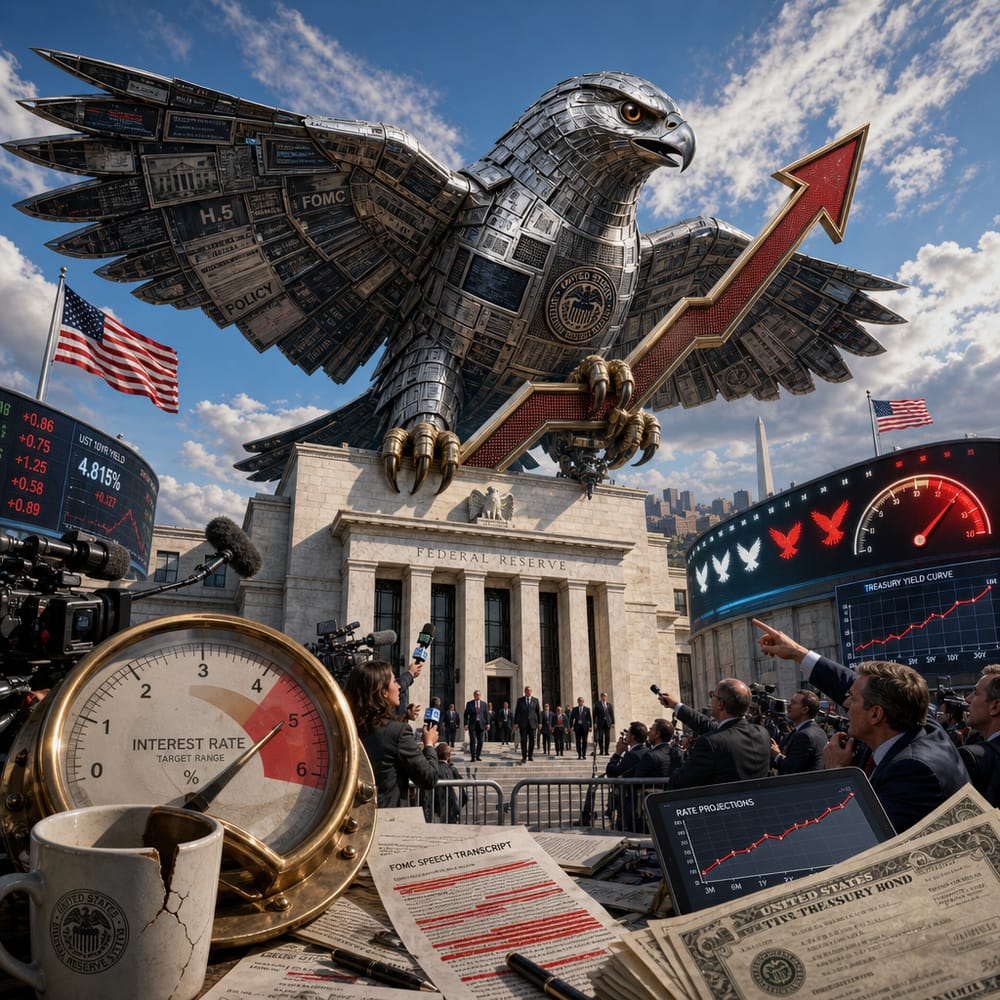
FED'S HAWKISH TONE GROWS AS 'FEDCHIRP' SENTIMENT TRACKER SHOWS SHIFT
Batten down the hatches, folks. The Federal Reserve is chirping a tune that's getting louder, and it's not exactly a lullaby. Lately, our friends over at the Fed have been singing a hawkish melody, and if you're wondering what that means in plain English, here's the scoop: things might just be about to get a little tighter.
Now, before you roll your eyes and swipe left on this financial Tinder, let's talk about this 'FedChirp' tracker. It's like a mood ring for the Federal Reserve — picking up on their vibe and translating it into whether they're feeling dovish or hawkish. And right now, it's lighting up with feathers.
SO, WHAT'S DRIVING THIS HAWKISH SENTIMENT?
For starters, inflation is that unwanted guest who just won't take a hint. It’s overstayed its welcome, and the Fed’s getting itchy to kick it out. Price pressures are simmering, and the Fed’s whispering about raising interest rates to cool things down. Because when folks start spending less, prices tend to simmer down too.
But it's not just inflation making the Fed's talons come out. The job market is looking sharper than a Wall Street broker's suit. Unemployment? It's practically on vacation. Such a robust labor market is a double-edged sword. It's great because it means people are working, but it also means there’s more money floating around to drive up, you guessed it, inflation.
HOW MIGHT A HAWKISH STANCE AFFECT MARKETS?
This is where things get a bit dicey. Higher interest rates can be a wet blanket on the party — making borrowing costlier can slow down economic activity. It's like giving the economy a little less Red Bull.
Stock markets, especially those tech darlings with sky-high valuations, might feel the pinch. When money is cheap, buying up stocks is a no-brainer. But when borrowing is pricier, those same stocks might lose their luster.
Bonds, on the other hand, might get a fresh coat of paint. Higher interest rates mean new bonds would offer juicier returns, making them more appealing. But hold on, it also means existing bonds, with lower rates, might just gather dust on the shelf.
THE RISKS OF TIGHTENING TOO SOON
Now, here's where the Fed’s balancing act gets tricky. Tighten too quickly, and you risk strangling the economy before it’s fully out of the COVID-induced woods. It's like pulling the parachute cord too early — you might avoid a crash, but you could also end up drifting aimlessly.
Over-tightening could push the economy into a recession. Yes, that dreaded R-word. It's the ultimate face-plant after a good run. And for everyday folks, that means job losses, lower income, and tighter belts all around.
WHAT SHOULD YOU DO?
Good question, my intrepid investor. Keep your eyes peeled on those Fed announcements — they're the tea leaves of the financial world. Diversification remains your best friend; don’t put all your eggs in one basket, or stocks in one sector. Consider mixing in some bonds or looking at international markets if the domestic scene gives you the jitters.
Keep your emergency fund stocked. If rates climb, so do borrowing costs. Having a cushion can prevent sudden financial hiccups from turning into full-blown crises.
So, there you have it. The Fed's song might be changing, but with a little savvy and a watchful eye, you can navigate these choppy waters. Because let’s face it, if investing were easy, everyone would be doing it. But where's the fun in that?
This article is for informational purposes only and is not investment advice. Always do your own research or consult a licensed financial professional before making investment decisions.
© Copyright 2024. All Rights Reserved.
© Copyright 2024. All Rights Reserved.