

Fed's Hawkish Tone and Hawk-Dissent Vote Keeps U.S. Dollar Elevated
Friday, August 21, 2026
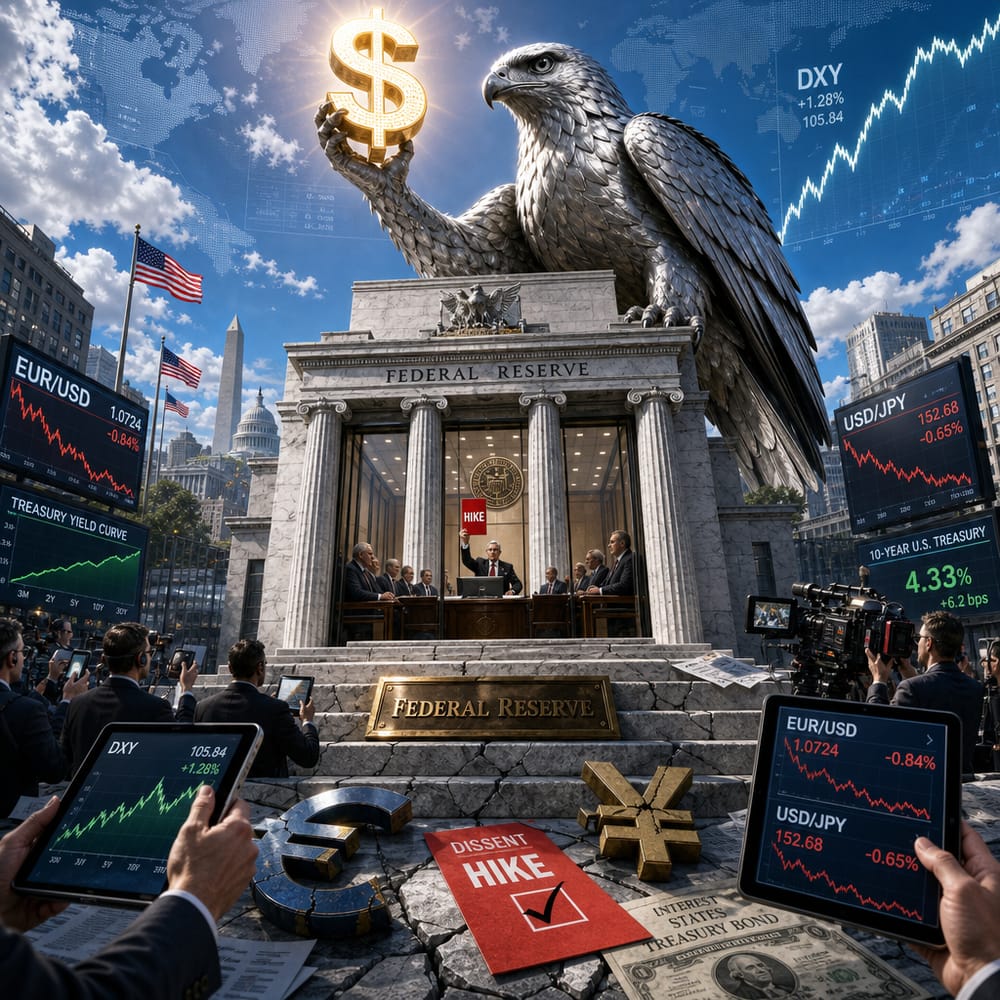
FED'S HAWKISH TONE AND HAWK-DISSENT VOTE KEEPS U.S. DOLLAR ELEVATED
If the U.S. dollar were a reality TV star, it would be sipping on an iced latte, cool under pressure, while the rest of the world flutters around like agitated extras. The reason? The Federal Reserve, in its latest plot twist, has decided to sit tight on interest rates. Yet, like any good drama, there’s more to this story than meets the eye.
The Fed's decision to keep rates steady, despite a significant push from hawkish members who wanted to crank them up, hints at a tricky balancing act. The hawks are those Fed officials who generally prefer higher rates to curb inflation — think of them as the economic equivalent of your strict high-school principal. Despite their hawkish cries, the Fed held back, maintaining the suspense in the ongoing saga of U.S. monetary policy.
WHY THE HAWKISH TONE MATTERS
So, what's the big deal with this hawkish tone? Well, even without an actual rate hike, just the suggestion of one — a half-raised eyebrow from the hawks — can keep the U.S. dollar buoyant. When the Fed hints it might raise rates, it’s like whispering sweet nothings in the dollar's ear. Higher interest rates make dollar-denominated assets more attractive, drawing investors like moths to a flame, and lifting the greenback’s value in the process.
With this hawkish hum in the background, traders and forex aficionados brace for a stronger USD. The U.S. Dollar Index (DXY), which measures the dollar against a basket of currencies, stands tall, much like a fashion model on a runway — slightly aloof, but commanding attention.
IMPLICATIONS FOR GLOBAL CURRENCY PAIRS
Now, if you’re on a virtual tour of the forex world, this U.S. dollar strength is anything but a fly on the wall. It shakes up currency pairs across the globe like it’s the DJ at an EDM festival. European currencies like the euro (EUR/USD) might find it hard to keep up their dance steps amid the dollar’s upbeat tempo. Conversely, the yen (USD/JPY), traditionally a safe haven, could see its prices climb higher as the dollar strength makes importing goods into Japan more expensive.
For countries heavily dependent on exports, a rock-hard dollar is like a party crasher. It can make their goods pricier and less competitive internationally. In layman’s terms, if you’re a European cheese maker, a stronger dollar might mean your Gouda isn’t flying off the shelves in New York quite as fast as it did before.
THE BIGGER PICTURE
The Fed’s subtle hawkishness isn’t just about playing cat-and-mouse with inflation — it’s about juggling multiple flaming torches. Global currency markets are interlinked with economic developments like rising Treasury yields. You see, when yields go up, it’s like an alarm clock for investors who then flock to the dollar, betting on safer, higher returns.
This isn’t happening in a vacuum. Factors like rising oil prices and geopolitical tensions add extra layers to the drama, influencing the Fed's decisions and the dollar’s trajectory. Think of it as a tangled web, where one false move could send the whole structure tumbling.
KEEPING UP WITH THE DOLLAR
For retail investors, understanding the Fed's hawkish tone and its impact on the dollar is crucial, not just for those dabbling in currencies, but also for anyone with a stake in the global economic theater. A rising dollar affects everything from multinational company earnings to the price of your morning coffee if it’s imported.
Whether you’re trading currencies or just curious about the global financial currents, keeping an eye on Fed announcements is as essential as checking the weather before a camping trip. The Fed’s stance offers clues not just about where the dollar might head next, but about broader economic trends that could impact your portfolio, your purchases, and maybe even your retirement plans.
So, next time the Fed drops a hint or casts a vote, remember: in the grand performance that is the global economy, the Fed’s hawkish whispers can turn into roars that echo across currency markets, keeping the U.S. dollar elevated — and everyone else on their toes.
This article is for informational purposes only and is not investment advice. Always do your own research or consult a licensed financial professional before making investment decisions.
© Copyright 2024. All Rights Reserved.
© Copyright 2024. All Rights Reserved.