

Fed's Hawkish Stance and Dollar's Vulnerability
Monday, September 28, 2026
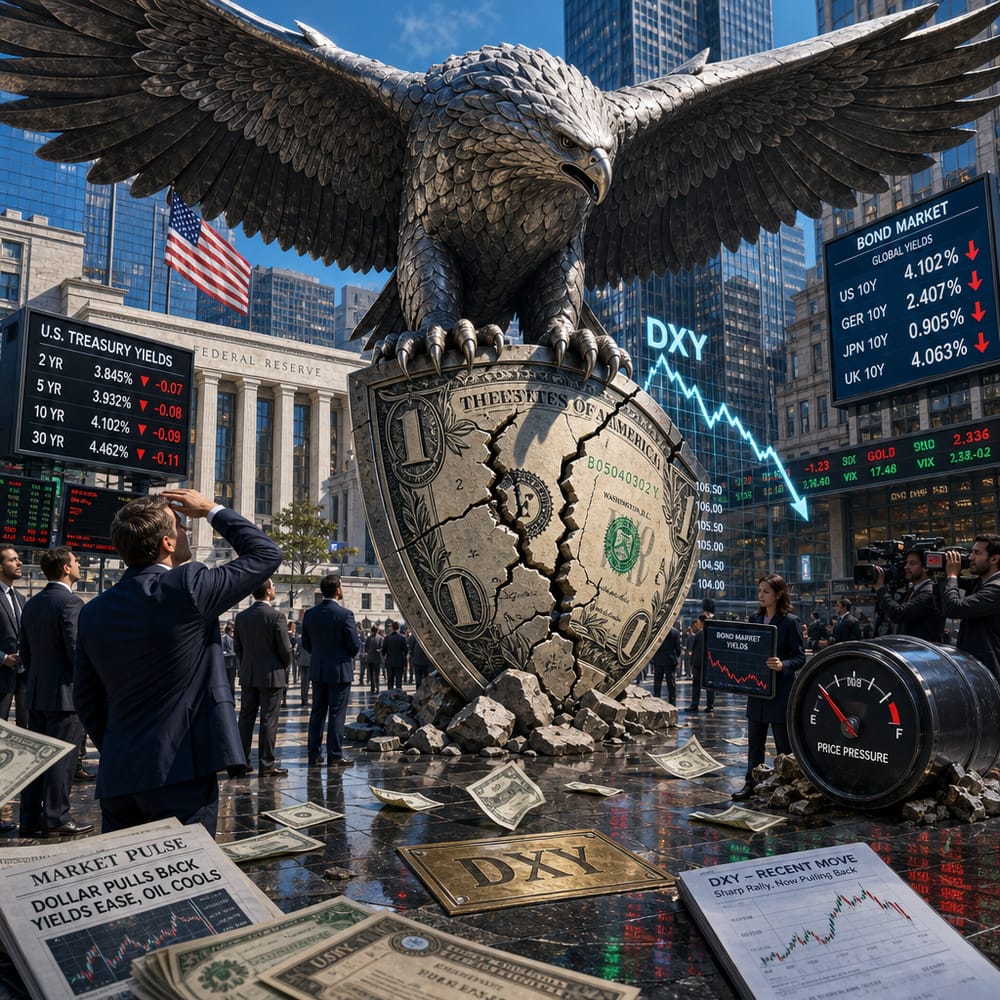
FED'S HAWKISH STANCE AND DOLLAR'S VULNERABILITY
If the U.S. dollar were a heavyweight boxer, it’d be dancing around the ring right now, feeling a little wobbly after taking a jab to the chin. The Federal Reserve has been flexing its hawkish tone, and the initially pumped-up dollar is now experiencing a slight recoil. But what’s really shaking things up in this bout is the unexpected dip in Treasury yields and oil prices, which might just be the one-two combo the dollar didn’t see coming.
The U.S. Dollar Index (DXY), which measures the dollar against a basket of its peers, had been climbing the way your heart rate does when you find out a surprise quarterly report’s about to drop. But just like that last-minute scramble to analyze those figures, the dollar’s surge has met a reality check. As Treasury yields and oil prices ease, the dollar is feeling a bit more vulnerable than it likely anticipated.
Now, let’s be real: The dollar’s moves are better than any soap opera cliffhanger, affecting everything from the money in your pocket to the price of that French wine you’ve been eyeing. Forex traders—the folks whose job it is to make sense of these wild swings—are watching keenly, as the dollar’s swagger is crucial for currency valuations worldwide and could make central banks think twice about their next move.
So, what could cause the dollar to take a longer-term dive? Well, picture this: If Treasury yields, those all-important interest rates that guide everything from mortgages to your savings account interest, continue to fall, a sustained dollar retreat might not be off the cards. Add to that a scenario where oil prices drop further, reducing inflationary pressures, and suddenly the dollar’s got an even tougher fight on its hands.
But surely, you ask, the Federal Reserve has the antidote—a wizard-like Fed Chair ready to cast a spell with just a few comments. And you’d be right. Fed communication is like the secret sauce in your favorite dish; it can make or break the whole affair. If the Fed starts singing a gentler tune, signaling a softer stance on interest rates, the dollar might just decide to kick back and relax, easing off its recent high.
On the other hand, should the Fed double down on its hawkishness—raising rates faster than a viral TikTok dance trend—the dollar could regain its mojo. The tricky part is that the Fed’s next steps aren’t just about numbers; they hinge on economic data that’s as unpredictable as your favorite binge-worthy drama.
Picture this: A robust jobs report could have the Fed reaching for higher rates faster than you reaching for popcorn during a tense movie scene. On the flip side, hints of a slowing economy might lead the Fed to keep things chill, allowing the dollar to continue its downward slide.
As we stand at this crossroads, the intrigue isn’t just in the numbers but in the narratives they tell. The world of finance might seem sterile from afar, but dig a little deeper, and it’s full of stories that affect real lives. From businesses deciding on international investments to families contemplating overseas vacations, the dollar’s trajectory ripples out far and wide.
In this unpredictable game of monetary chess, the Fed’s every move is under scrutiny, and the dollar isn’t just a symbol but a player with real power. As cool-headed as the Fed might seem, its path forward is fraught with decisions that will shape the living, breathing marketplace that impacts all our wallets.
So, stay tuned, keep your eyes on those headlines, and remember: In the world of forex and Fed speeches, it’s not about predicting the punches but understanding the dance of the market. The dollar’s journey isn’t just about numbers; it’s about narratives—and every market participant has a role in this unfolding saga. Whether it rebounds or retreats, the U.S. dollar is a story worth paying attention to.
This article is for informational purposes only and is not investment advice. Always do your own research or consult a licensed financial professional before making investment decisions.
© Copyright 2024. All Rights Reserved.
© Copyright 2024. All Rights Reserved.