

Fed’s H.15: Short‑Term Rates Steady, Long‑Term Yields Easing Slightly
Saturday, August 29, 2026
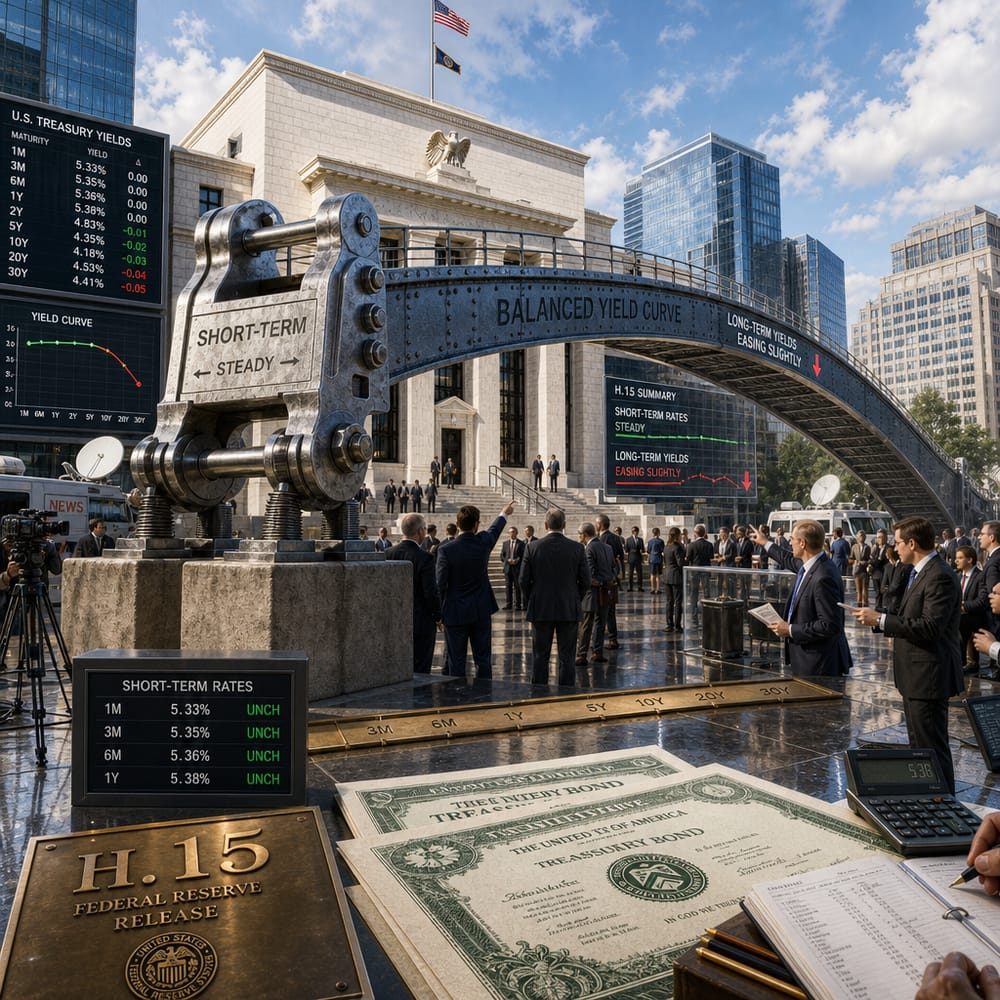
FED'S H.15: SHORT-TERM RATES STEADY, LONG-TERM YIELDS EASING SLIGHTLY
If you’ve ever wanted to know what the financial equivalent of a cliffhanger is, look no further than the Federal Reserve’s latest H.15 report. It’s like watching a suspense thriller where the villain (a.k.a. inflation) is still lurking in the shadows. In the latest twist, short-term interest rates are holding their ground while long-term yields are easing up a bit. For those who love a good drama with high stakes, don’t worry, the Fed’s keeping us guessing.
Let’s decode the plot: short-term rates are like that solid friend who’s always there for you, consistent and predictable. Meanwhile, long-term yields are showing signs of softening. Picture them as the mysterious newcomer in town who’s just revealed a surprising secret. This development has everyone asking, “What’s next for the Fed’s policy and how are the markets interpreting these shifts?”
In the grand scheme of things, these rate levels are more than just numbers. They are insights, breadcrumbs leading us to the Fed’s future moves. With the current levels, one might suspect the Fed is playing it cool. They’re letting the market take a breather, providing a moment of stability. But, as any good suspense thriller fan knows, the calm is often just the prelude to a storm.
So, what does this all mean for future Fed policy? Well, the stable short-term rates suggest the Fed isn’t rushing to change its course just yet. They’re likely keeping an eye on inflation, waiting for more concrete signs before making a move. It’s a bit like a poker game, and the Fed’s holding its cards close to the chest.
On the flip side, the easing of long-term yields might be a whisper that the market expects the Fed to eventually pivot its policy. Investors could be betting that inflation will cool and that the Fed might step back from aggressive rate hikes. Still, interpreting market moves is sometimes like reading tea leaves—everyone sees something different.
For U.S. Treasury bonds, these movements are significant. Treasury bonds are like the sturdy ships in the sea of investments. They ride the waves of interest rates, with short-term rates affecting the T-bills and long-term rates swaying the T-bonds. The easing long-term yields suggest investors are getting cozy with the idea of a lower inflation future. Or at least, they’re hopeful.
In the stock market, these rate trends add another layer to the investment puzzle. For sectors sensitive to interest rates, like housing and financials, these shifts could mean big moves. When rates are steady, borrowing costs don’t spike, potentially boosting sectors tied to consumer lending and mortgages.
However, keep those seat belts buckled. Fed Chairman Kevin Warsh recently called inflation “concerning,” which might as well be financial speak for “this isn’t over yet.” The Fed’s famous for its cryptic communication style, leaving traders with a mystery to solve.
Markets also have their own language, and right now, they’re chattering about future rate cuts. This chatter is fueled by long-term yield movements, hinting at a softening in policy down the line. Investors, ever the optimists, might be hoping for a cut that boosts growth without stoking inflation’s dreaded flames.
So, as we navigate these financial waters, remember that the Fed’s H.15 is more than a report—it’s a narrative of policy expectations and investor sentiment. And just like any good storyline, it keeps us on the edge of our seats, waiting for the next chapter.
The takeaway? Stay sharp and keep your investment strategies flexible. The Fed’s storyline is far from over, and the markets are eager for the next plot twist. Whether it’s the hero (the Fed) stepping in to slay the inflation dragon or the villain (rates) making a surprise comeback, you’ll want to be ready for whatever this financial thriller throws your way.
This article is for informational purposes only and is not investment advice. Always do your own research or consult a licensed financial professional before making investment decisions.
© Copyright 2024. All Rights Reserved.
© Copyright 2024. All Rights Reserved.