

Fed's AI Task Force and Market Implications
Friday, July 10, 2026
FED'S AI TASK FORCE AND MARKET IMPLICATIONS
Buckle up, folks. The Federal Reserve just dropped a new tool into its policy toolbox, and it's not what you'd expect from the gatekeepers of your financial destiny. Picture this: a task force that’s less about interest rates and more about algorithms. It's official—the Fed is jumping headfirst into the AI pool, and the ripples could send market waves that even the staunchest economist would find hard to predict.
Let's dive into the nitty-gritty. Fed Chairman Kevin Warsh has handpicked a squad of tech-savvy minds to guide this mission. With tech rockstars like venture capitalist Marc Andreessen and Xbox CEO Asha Sharma at the helm, this team might as well be the Avengers of the AI world. Their mandate? To scrutinize the impacts of AI and other groundbreaking technologies on the economy, hoping to make monetary policy as cutting-edge as a Tesla.
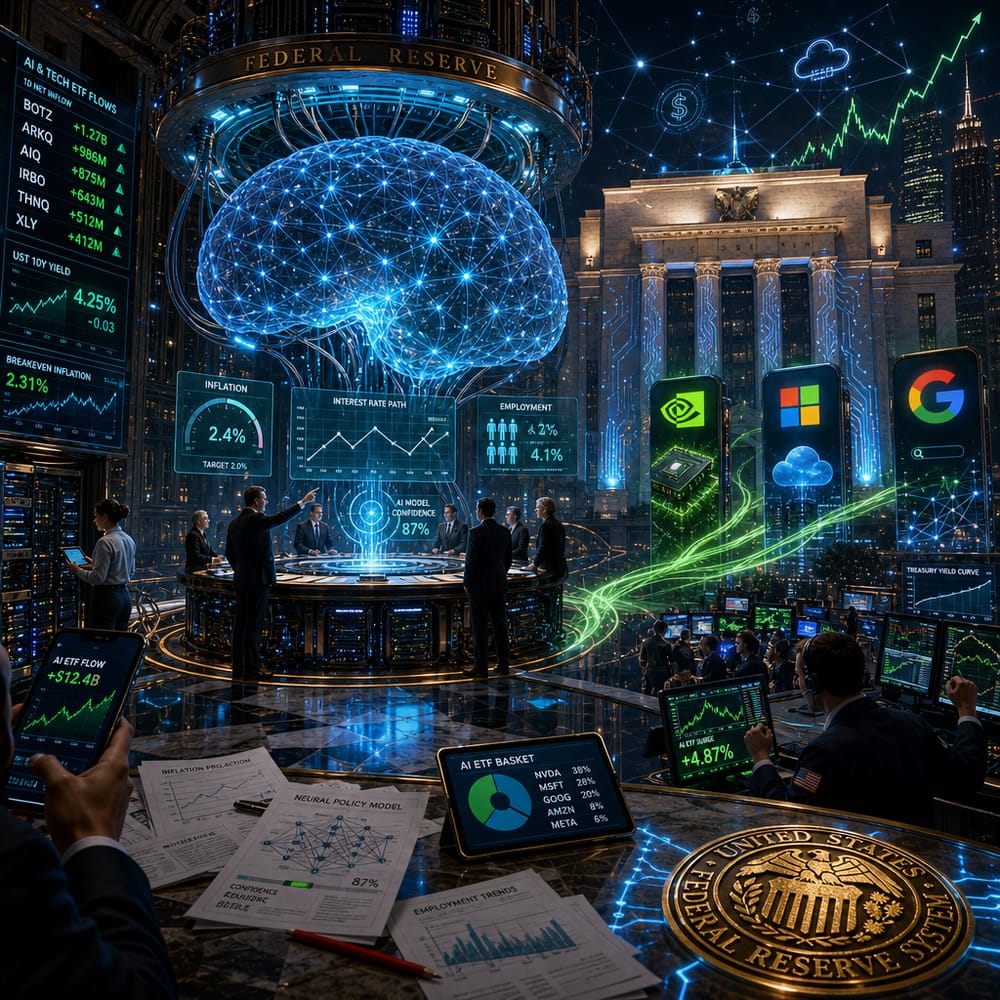
So, what does this digital brain trust mean for the Fed's decision-making? Imagine a world where policies are influenced not just by humans in suits flipping through thick reports, but by AI churning through data faster than a trader on Red Bull. AI could offer predictive insights, spotting trends and economic threats before they become glaring issues. This means policy shifts could become more proactive than reactive, a shift that might leave traditionalists clutching their pearls.
Now, let’s talk sectors. Where should you, the savvy investor, be pivoting your gaze? Well, with AI in the Fed's corner, technology stocks are poised for the limelight. Companies like Nvidia, Microsoft, and Alphabet are not exactly strangers to AI innovation—they're leading the charge. Think about those AI-focused ETFs, which could shine brighter as this tech integrates more deeply into policy frameworks. It's not just about AI creating smarter systems; it's about creating systems that could potentially run economies.
But before we pop the champagne on this AI-driven future, let's dial it back and talk risks. Because, spoiler alert, there are a few. The AI-infused policy approach could mean less room for human judgment, and more reliance on models that, let's face it, have their own set of biases and blind spots. What happens if the algorithm misses a financial blip that only human intuition could catch? There's also the worry that AI could exacerbate the speed of market dynamics, leading to rapid cycles of boom and bust. We’re talking a double-edged sword here, people.
So, is this AI revolution in monetary policy a cause for celebration or caution? The truth probably lies somewhere in the middle. It's an evolution that promises speed and accuracy, but also brings a host of challenges that need careful navigation.
In the end, whether you're an investor, a tech enthusiast, or just someone who enjoys a good financial thriller, the integration of AI into the Fed's policy-making is a storyline worth watching. It's a dance between man, machine, and market forces that could redefine the very fabric of economic governance. Stay tuned—because this is one show where the twists are guaranteed, and the stakes are sky-high.
This article is for informational purposes only and is not investment advice. Always do your own research or consult a licensed financial professional before making investment decisions.
© Copyright 2024. All Rights Reserved.
© Copyright 2024. All Rights Reserved.