

Fed Rate Outlook Dims: Goldman Sachs Pushes Next Hike to December
Thursday, October 01, 2026
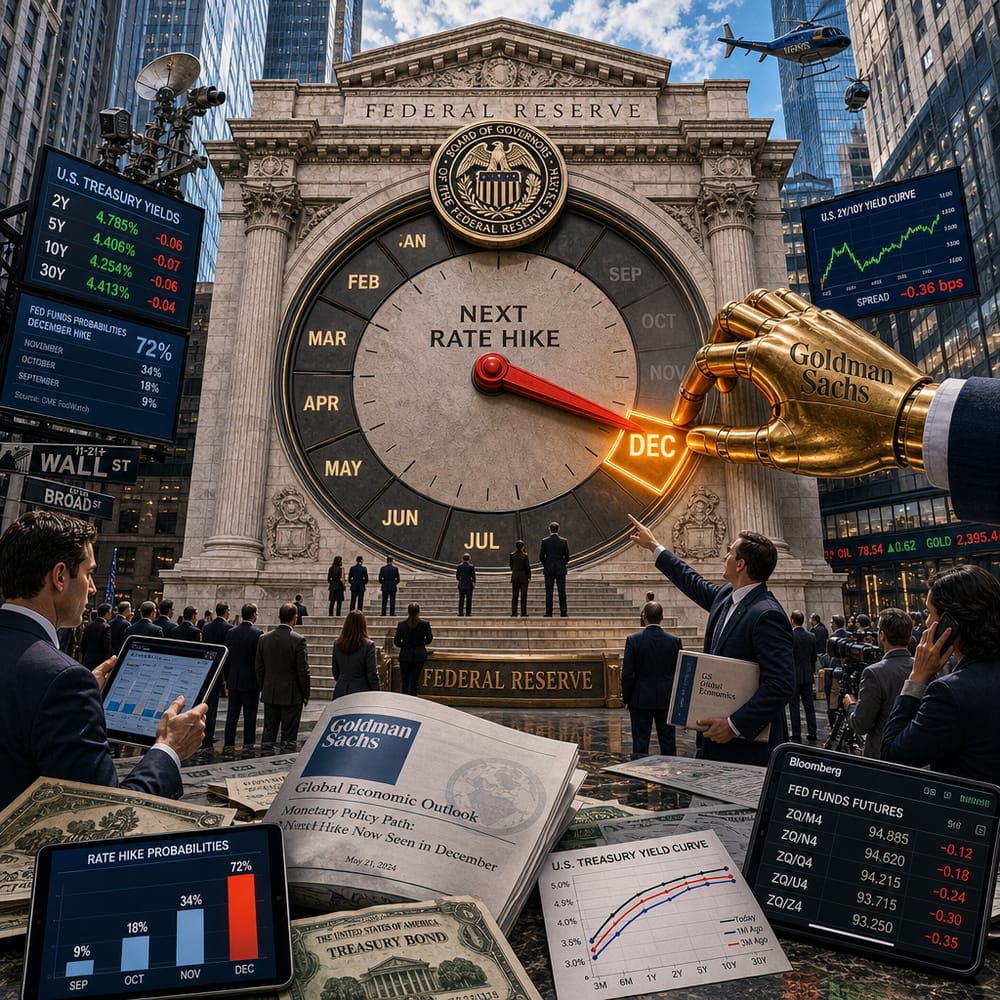
FED RATE OUTLOOK DIMS: GOLDMAN SACHS PUSHES NEXT HIKE TO DECEMBER
So, you thought the Fed was going to hit us with another interest rate hike soon? Not so fast! Goldman Sachs just dropped a plot twist that’s juicier than a soap opera cliffhanger. They've pushed the forecast for the Federal Reserve's next rate hike to December. What does this mean for your wallet, your investments, and, let’s be real, your sanity? Let’s break it down.
THE BOND MARKET: NO MORE NAIL-BITING (FOR NOW)
If you’re one of those people who consider the bond market as exciting as watching paint dry, think again. With the Fed playing coy on rate hikes, bonds just got more interesting. When the Fed raises rates, bond prices generally take a nosedive. Why? Because existing bonds with lower yields suddenly look like yesterday’s leftovers compared to new bonds offering higher returns. So, a pause in hikes? That’s a breather for bondholders and might keep bond prices steady for a while longer.
Consumer confidence often feels like a delicate soufflé. A stiff breeze—or an aggressive rate hike—can cause it to collapse. The delay in raising rates might give consumers a sigh of relief, encouraging them to keep the economy chugging along by spending rather than saving. And let’s face it, with holidays around the corner, that’s good news for retailers banking on holiday splurges.
SECTORS THAT CAN SIT BACK AND RELAX
What about the sectors that feast on low rates? Think real estate and its cousin, construction. Interest rates are like their secret sauce. Higher rates make mortgages more expensive, dampening housing demand. But with a temporary break in rate hikes, homebuyers might just get their second wind. And businesses with big loans? They’ll be breathing easier too, as the cost of borrowing remains manageable for a while longer.
STOCK MARKETS’ MOOD SWINGS
Now, onto the place where fortunes are made and lost over lunch breaks: the stock market. Stocks love low rates. Lower borrowing costs mean companies can invest and expand without worrying too much about debt, which looks attractive to investors. So, a delay in rates might just put some pep in the step of stock prices. But remember, the stock market is like that one unpredictable friend—always full of surprises.
THE BIGGER ECONOMIC PICTURE
While December may seem far off, markets don’t live in a vacuum. They’ll still be taking cues from other economic indicators, like the upcoming jobs report, which is expected to show a bit of a slowdown in job growth. If employment numbers disappoint, it could make the Fed even more hesitant to touch interest rates anytime soon. Meanwhile, global events—like that little oil price jump caused by tensions in the Middle East—could throw a wild card into the mix.
TO DANCE OR NOT TO DANCE?
So, what should you do with your investment dance card? For those who are risk-averse, keeping some bonds in your portfolio might not be a bad idea. For the bold, opportunities in the stock market might be ripe for picking if companies continue to benefit from relatively low borrowing costs. And if you’re eyeing real estate, this could be a moment to consider locking in relatively low mortgage rates before the December hike potentially comes knocking.
LET’S SUM IT UP IN A NUTSHELL
Goldman Sachs projecting a December rate hike is like getting an extension on that term paper you forgot about. It gives you more time to strategize and plan. Whether you’re a bond buff, a stock market shark, or a wannabe real estate mogul, the delay in rate hikes is a window of opportunity. But, as always, keep those eyes peeled and your ear to the ground. Because in the world of finance, change is the only constant.
So, are you ready to make your next move, or are you going to sit this one out? Whatever you choose, remember that the market is a game of patience, timing, and a little bit of luck. Happy investing!
This article is for informational purposes only and is not investment advice. Always do your own research or consult a licensed financial professional before making investment decisions.
© Copyright 2024. All Rights Reserved.
© Copyright 2024. All Rights Reserved.