

Fed Rate-Hike Split and BoJ’s Non-Voter Dampens Dollar Strength
Tuesday, August 25, 2026
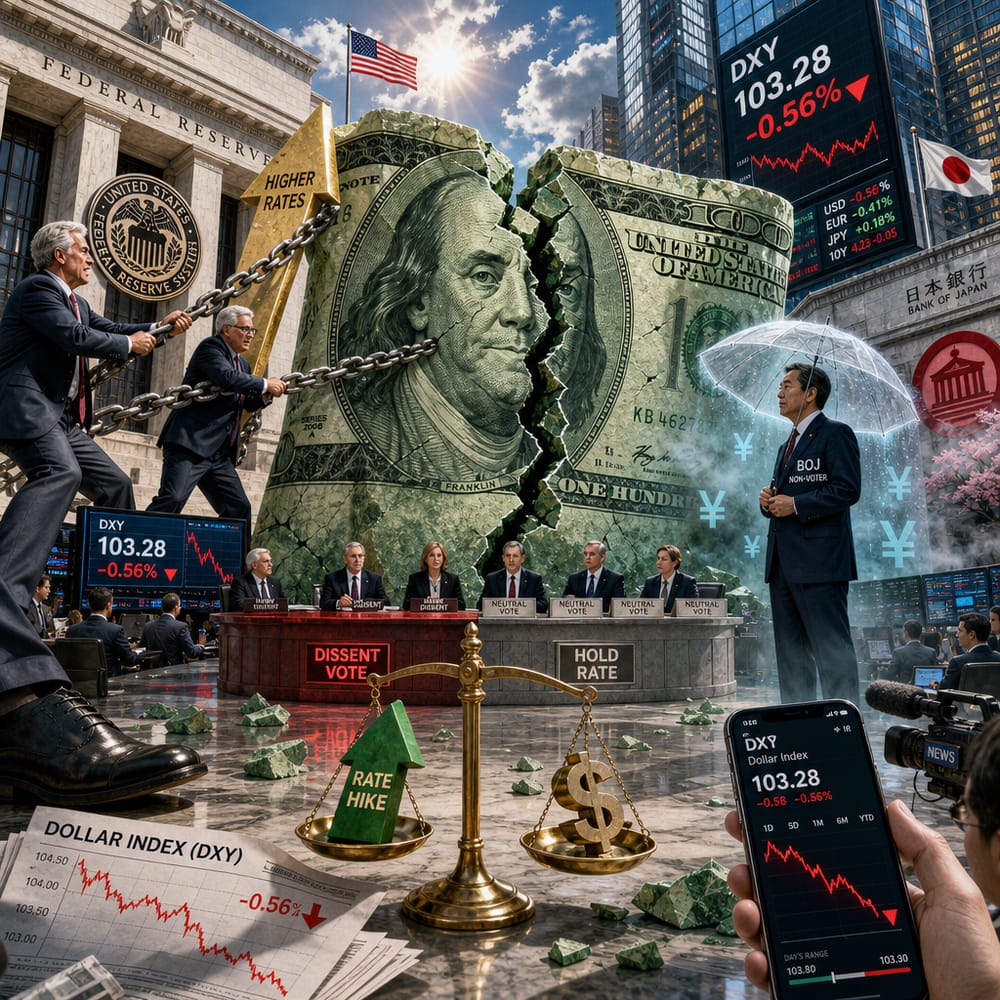
FED RATE-HIKE SPLIT AND BOJ’S NON-VOTER DAMPENS DOLLAR STRENGTH
When the Federal Reserve holds its cards, the market feels the tremors. Last week, the Federal Open Market Committee (FOMC) decided to keep interest rates steady, but not without a juicy twist: a split decision with a few hawks flapping for a rate hike. This drama sent the Dollar Index taking a little dip, proving once again that when it comes to central banks, it’s not just what they say—it’s what they don’t do that sparks the fireworks.
So, what's the scoop on that enigmatic FOMC vote? While the majority opted to sit tight, there was a faction ready to push the button on a rate increase. Such splits hint at internal debates about whether the economy has enough fuel to handle another rate rise without spinning out of control. It was a classic case of "to hike, or not to hike," leaving market pundits sipping their coffee a bit more nervously.
The dollar, naturally, decided to shake things up. As the Fed’s decision spilled into the market, the Dollar Index curled up like a cat in front of a sunny window, easing off those highs. The verdict was clear: the greenback was feeling the chill from the Fed's reluctance to hike rates. And when the dollar sneezes, you can bet other assets will catch a cold—or, in this case, get a boost. Gold, for instance, had a field day, lounging near three-month highs, looking glitzy and attractive to holders of foreign currencies who suddenly found themselves richer in dollar terms.
But wait, there's more! Just across the Pacific, the Bank of Japan (BoJ) was playing its own tune, which sounded more like a lullaby. In a move that surprised exactly no one, the BoJ did nothing. No changes, no rate hikes—just classic BoJ in its dovish glory. If central banks were attending a family dinner, the BoJ would be the quiet uncle nodding along politely but never stirring the pot.
Why does BoJ’s zen-like calm matter to our raucous dollar party? Well, the BoJ’s stance adds another layer to the currency conundrum. By keeping rates ultra-low, they’re practically rolling out a red carpet for yen weakness. This yen malaise inadvertently props up other currencies like the dollar, creating a complex dance that currency traders love to overanalyze.
Yet, ironically, while the BoJ’s pacifism would usually support dollar strength, the recent FOMC split and the dollar's tiny stumble have thrown a wrench into the works. It’s a delicate balancing act, and right now, the dollar is doing its best impression of a tightrope walker with sandals on.
So, what’s the takeaway for you, the everyday investor scrolling through your financial feed while waiting for your coffee to brew? Keep an eye on the currency markets. The dollar's strength (or lack thereof) can ripple through the broader financial system, influencing everything from import prices to the worth of overseas investments. It’s a reminder that while the U.S. economy might be the engine, global central banks are the pit crew—tweaking, tuning, and occasionally, throwing a spanner in the works.
As the dust settles, the big question remains: where does the dollar go from here? The answer lies in the ever-shifting strategies of central banks—each playing its own game of economic chess. The Fed’s cautious approach and the BoJ’s easy-going policy are shaping the playground, and investors everywhere are waiting to see who makes the next move.
Until then, remember to keep your eye on those central bank proclamations; they’re the whispers that can roar through the market, and your portfolio might just thank you for listening.
This article is for informational purposes only and is not investment advice. Always do your own research or consult a licensed financial professional before making investment decisions.
© Copyright 2024. All Rights Reserved.
© Copyright 2024. All Rights Reserved.