

Fed Rate-Hike Odds Slide to 40% as Market Pars Expectations—Implications for FX
Saturday, August 15, 2026
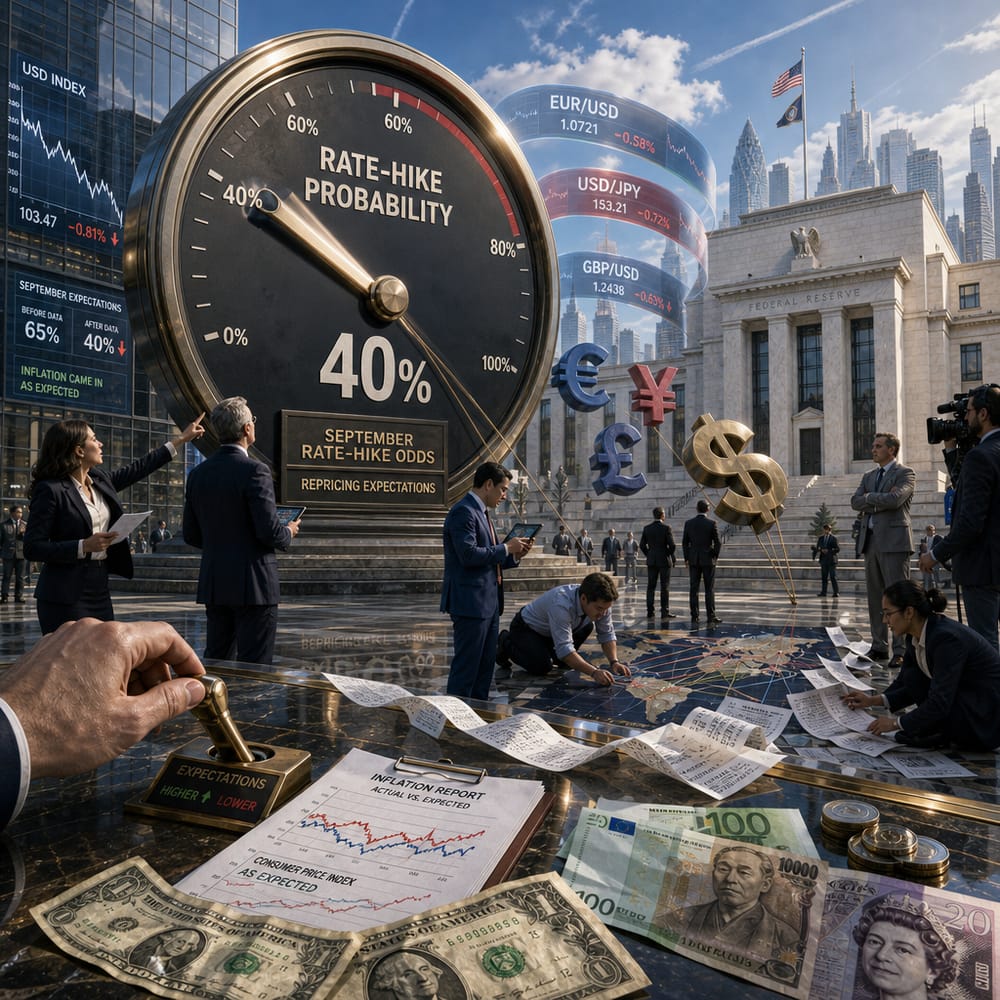
FED RATE-HIKE ODDS SLIDE TO 40% AS MARKET PARSES EXPECTATIONS—IMPLICATIONS FOR FX
Friend, if you've been keeping your ear to the ground—or rather, your eyes on your news feed—you might have caught wind of the Fed's latest policy tea leaves. The odds of a September rate hike have slipped to a mere 40%, and if you're scratching your head wondering why you should care, well, strap in. We're about to take a wild ride through the tangled web of the foreign exchange market and how Uncle Sam's interest rate decisions send ripples across it.
Let's kick things off with the basics: when the Fed fiddles with interest rates, it's not just a fun exercise in economic theory. It has real-world consequences that can make or break your dollars abroad. Higher interest rates tend to bolster the U.S. dollar (those greenbacks turn into hot commodities as investors flock to them for better returns), while lower rates can cause it to lose steam, making foreign currencies a little more alluring.
So, why are we seeing this dip in rate-hike odds? It all circles back to inflation—good old inflation. Recent data shows prices aren't running amok as much as we feared. The Producer Price Index (that's just a fancy way of saying how much it costs to make stuff) isn't climbing as fast. And while the Fed loves to keep inflation in check, they're also not trying to choke off the economy by jacking up rates willy-nilly.
Now, let's zoom out and take a look at the big picture—currency markets. When the Fed pulls back on rate hikes, the U.S. dollar can wobble, and that's where things get spicy. If you've got your money parked in USD pairs—think EUR/USD, GBP/USD, or even USD/JPY—it might be time to pay attention. A weaker dollar can make exports cheaper for other countries, heightening demand, but it also means less bang for your buck when you’re surfing the beaches of Bali.
For investors, a softening dollar presents a tricky dance. Currency traders start to eye other currencies, licking their chops at potentially higher returns. But it's not just the traders who are affected. Companies that do a lot of business overseas need to hedge their bets. Imagine a U.S. tech company selling gadgets to the Eurozone; a weaker dollar means they'll rake in more greenbacks for each euro, so they might cheer for a little dollar dip.
But here's the kicker: a declining dollar can also jack up prices for imports, putting a sneaky pinch on your wallet at the checkout line—if those imported goods have suddenly gotten pricier. It’s a bit of a double-edged sword, which makes Fed policy so darn crucial.
Still, it's not all doom and gloom. For those looking to invest, this could be a time to consider diversifying into foreign stocks or bonds. As the dollar flirts with weakness, non-U.S. markets can offer tantalizing returns that might not be on the menu stateside. But remember, while the exchange rates might look appealing, foreign markets come with their own sets of risks. Always do your homework before betting the farm.
And, of course, this whole thing is a moving target. The Fed might change its collective mind faster than you can say "quantitative easing." A sudden spike in prices or a galloping economy could trigger a swift about-face, sending rate-hike probabilities soaring once again—and the dollar with them.
In the end, the Fed's rate decisions are like the weather; everyone talks about it, but no one can control it. However, savvy retail investors can navigate these shifting winds with a keen eye and a little strategic dexterity. So, whether you're trading currencies, exploring international markets, or just planning your next vacation, keep your eyes peeled. Because in the world of finance, the only constant is change—and maybe a little caffeine-fueled market volatility.
This article is for informational purposes only and is not investment advice. Always do your own research or consult a licensed financial professional before making investment decisions.
© Copyright 2024. All Rights Reserved.
© Copyright 2024. All Rights Reserved.