

Fed Rate-Hike Bets Dent S&P 500, Nasdaq; Bond Yields Surge
Saturday, August 29, 2026
Fed Rate-Hike Bets Dent S&P 500, Nasdaq; Bond Yields Surge
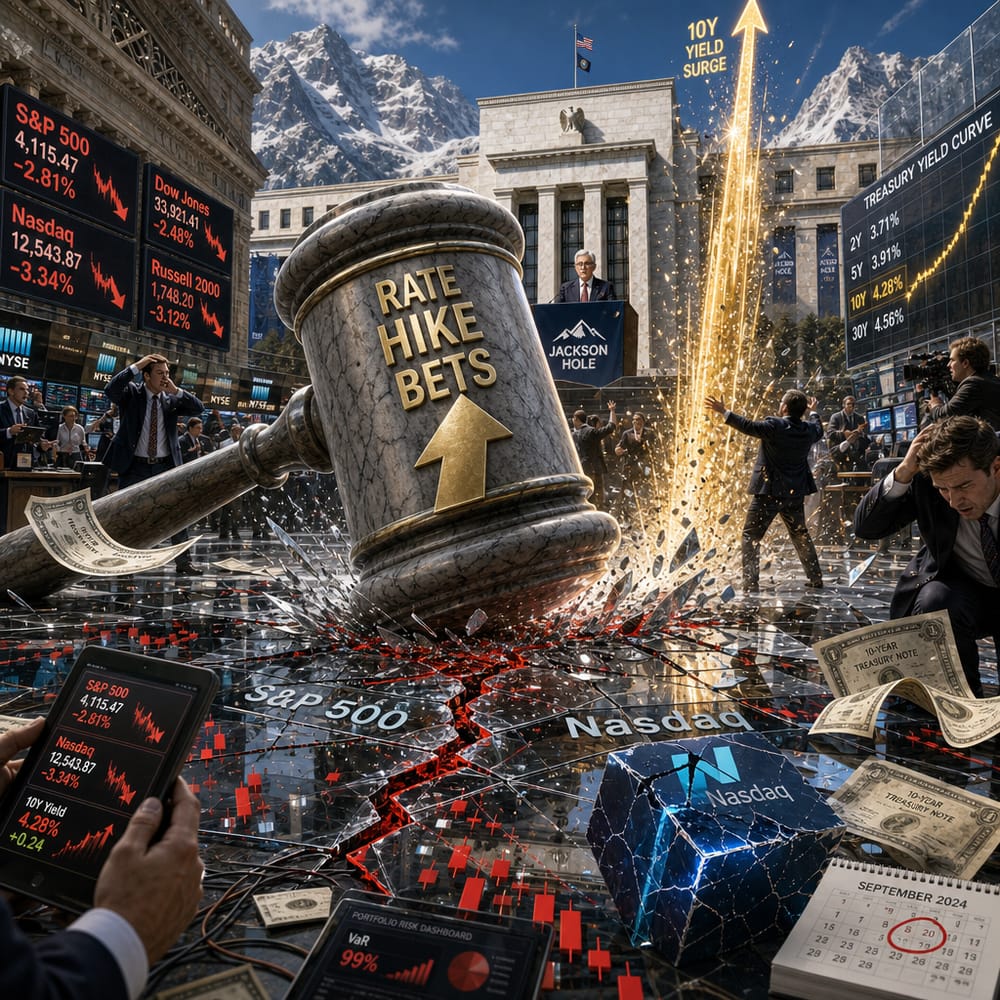
Hold onto your hats, folks—it's time for a whirlwind tour of the latest market gymnastics. Just when we thought it was safe to breathe a little easier, Fed Chair Kevin Warsh dropped a speech at the Jackson Hole symposium that had investors doing a double-take. Yes, the Federal Reserve just turned up the heat on rate hike expectations, and it's causing ripples—or rather, tidal waves—across the trading floor.
In the world of finance, Warsh's words are like a rock star’s farewell tour. Everyone listens, and they all have an opinion. While he didn't spell out rate increases in neon letters, his not-so-subtle hints about inflation being a persistent thorn in the economy's side have investors bracing for a September shake-up. And just like that, the markets reacted.
Let’s break it down: The S&P 500, Nasdaq, and Dow all took a nosedive as if auditioning for a synchronized diving team. The tech-heavy Nasdaq, always the sensitive one, felt the brunt of it. The sector has been whiplashed by fears of rising interest rates since they make borrowing more expensive, cramping growth ambitions for tech companies that thrive on cheap money. It's a bit like a caffeine addict being told coffee prices are doubling.
Meanwhile, bond yields have found themselves on an upward trajectory. Like that over-eager kid in class, the yields are raising their hand, saying, "Pick me, pick me!" with the 10-year Treasury yield hitting new highs. When these yields rise, it means investors expect the Fed to tighten the money taps, leading to higher interest rates.
But why should you care? Well, in plain speak, higher interest rates generally mean lower equity valuations. It’s a bit like adding extra weight on a see-saw: one side inevitably dips. For retail investors, this means it's time to reconsider portfolio strategies. Those high-flying tech stocks? They might just hit turbulence. Instead, some are eyeing sectors that are less sensitive to interest rate hikes—think healthcare or consumer staples, the market's equivalent of a cozy, reliable sweater.
Now, you might be wondering how other sectors are faring amidst the rate hike drama. Small caps, represented by the Russell 2000, are particularly vulnerable. These nimble companies often rely more heavily on borrowing than their large-cap counterparts, making them jittery when rates start to climb. It’s like watching a squirrel worry about its winter stash.
And let's not forget the bond market. Rising yields can lure investors away from equities, especially those who prefer the safety and predictability of fixed income. When bond yields go up, it’s like they're whispering sweet nothings to risk-averse investors who flock to them for stable returns.
So, what’s an investor to do in this rate hike tango? Many are recalibrating, keeping a close eye on financials, which tend to benefit from higher interest rates. Banks, for instance, can charge more on loans when rates rise—think of it as a silver lining in the clouded market sky.
In the backdrop of all this, whispers of an AI revolution loom large. The tech sector's existential angst over artificial intelligence and the backlash against tech giants only adds to the volatility. Companies like Nvidia, riding the AI wave, have seen fluctuating fortunes. But in a world where Fed policies can pivot faster than a professional dancer, tech stocks remain a high-risk, high-reward play.
Investors are left pondering the million-dollar question: Will the Fed pull the trigger in September? And how should they adjust their portfolios in anticipation? Some are advocating a move towards diversification—spreading bets across sectors to hedge against the unpredictable rate hike roulette.
In the end, the Fed's next steps are as mysterious as a locked vault. But one thing’s for sure: whether you're watching the stock markets rise and fall or eyeing the bond market’s next move, it’s an exciting, albeit nerve-wracking, time to be an investor. So, buckle up, keep your portfolio balanced, and stay tuned for the Fed's next twist in this financial thriller.
This article is for informational purposes only and is not investment advice. Always do your own research or consult a licensed financial professional before making investment decisions.
© Copyright 2024. All Rights Reserved.
© Copyright 2024. All Rights Reserved.