

Fed Policy and Mega-Cap AI Stocks Drive Volatility
Monday, August 24, 2026
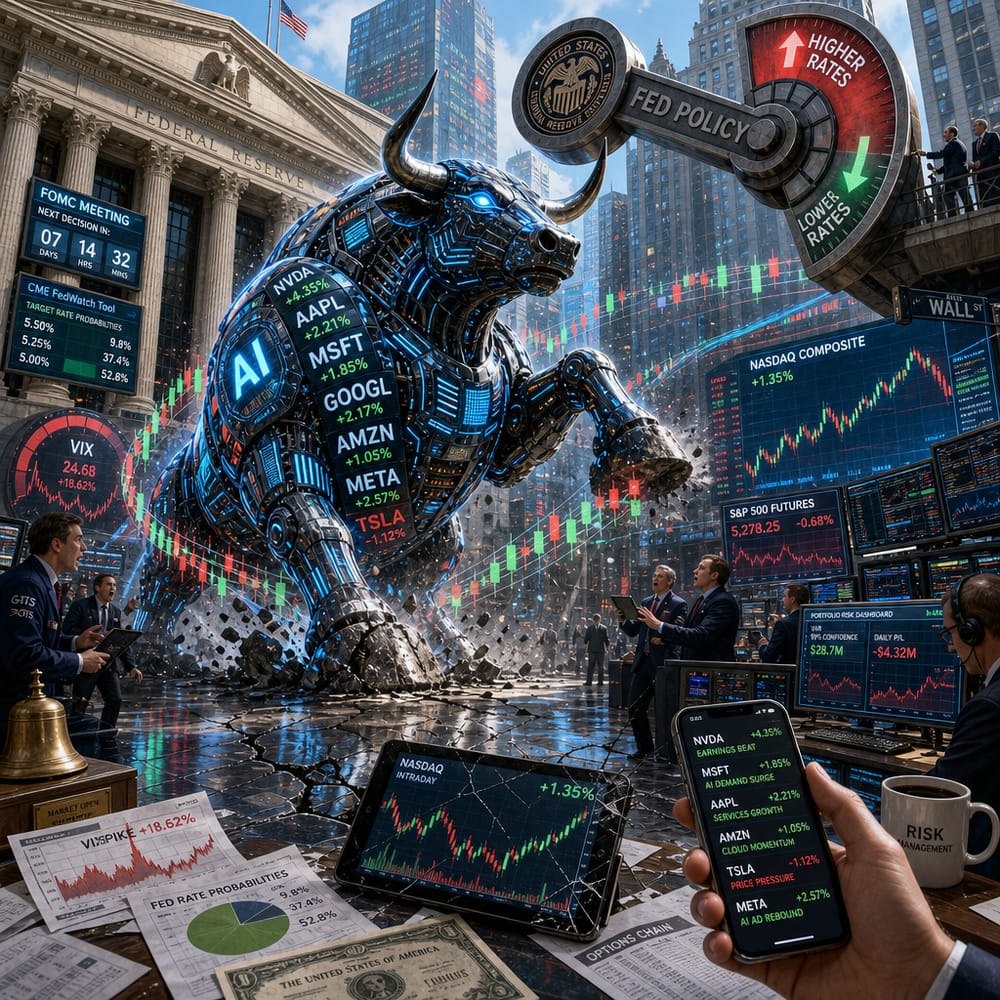
MEGA-CAP AI STOCKS AND THE FED: WHO'S REALLY DRIVING THIS VOLATILITY ROLLERCOASTER?
We’re in the midst of a full-blown market soap opera—and it’s not just about who’s beating whom on earnings calls. Nope, the plot twists are swirling around mega-cap AI stocks and the Federal Reserve's policy whims, setting the tempo for market volatility that's got portfolios hanging on for dear life. So, what gives?
Enter the mega-cap AI stocks. Think of them as the Olympians of the stock market—big, powerful, and commanding astonishing premiums. We’re talking the likes of Nvidia, Microsoft, and Alphabet, who are riding the artificial intelligence boom like it’s the Kentucky Derby. These tech titans have been galloping ahead, pulling the rest of the market along for the ride.
But here’s the catch: when they stumble—even if it's just a hiccup—it's as if the whole market trips over its own feet. This is because these giants carry a disproportionate weight in key indices like the S&P 500. A sneeze from Nvidia, and the rest of the market catches a cold.
Now, let’s add another layer to this complexity cake: the Federal Reserve. Picture them as the puppet masters of interest rates, holding the strings to market sentiment. With inflation hotter than a jalapeño, the Fed's been playing a high-stakes game of chicken with interest rates, trying not to slam the brakes too hard on economic growth while ensuring inflation doesn’t burn the house down.
The Fed's rate decisions have become the market's most anticipated show, second only to the final season of your favorite binge-worthy series. Investors are reading every hint, every wink from Fed Chair Jerome Powell for clues like they're decoding lost pirate maps.
So, how do these two juggernauts—mega-cap AI stocks and the Fed—combine to whip up the storm that is today’s market volatility? First, let’s break down the AI stock influence. Their sheer size means that as they go, so goes the market. If Nvidia reports stellar earnings and raises its outlook, investors get a sugar high, sending stocks soaring. But if it misses expectations, suddenly there's a hangover. The market’s addiction to these companies' performances fuels dramatic swings—think of it as the caffeine boost and crash cycle of the stock world.
On the flip side, we have the Fed's policies as the reigning umpire of economic stability. Rate hikes can cool off overheating sectors (ahem, AI) and pacify inflation, but they can also give investors the jitters. Higher rates mean borrowing costs rise, which can put a damper on corporate spending and expansion plans. Suddenly, those mega-cap stocks might find their runway a little shorter.
The intersection of these two forces creates a playground for volatility. On days when the Fed is set to announce its latest policy stance, even the slightest hint of tightening can send tech stocks on a rollercoaster ride. Investors scramble to reposition, and when the giants wobble, the ripples are felt far and wide.
But why should you, the everyday investor scrolling through this on your lunch break, care? Because understanding these dynamics is crucial for navigating today’s treacherous tech landscape. Knowing that AI stocks and Fed policy are the main triggers helps you anticipate and weather the market's mood swings.
In the end, it’s like a two-player chess game with your portfolio as the king on the board. Mega-cap AI stocks are the flashy queens making bold moves, while the Fed is the steady rook, shifting the landscape with every calculated step. Master the moves, and you might just turn this volatility rollercoaster into a profitable ride.
This article is for informational purposes only and is not investment advice. Always do your own research or consult a licensed financial professional before making investment decisions.
© Copyright 2024. All Rights Reserved.
© Copyright 2024. All Rights Reserved.