

Fed Officials Sound Alarm at Jackson Hole
Friday, August 28, 2026
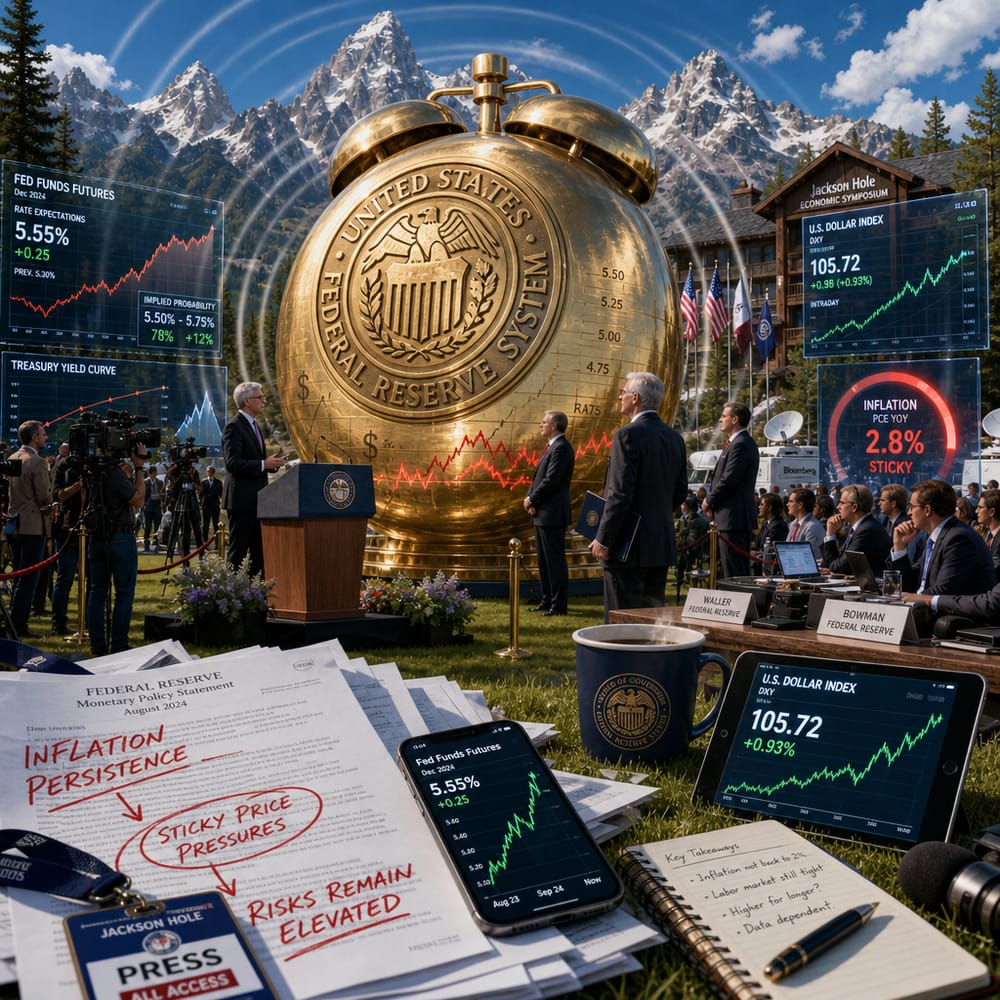
FED OFFICIALS SOUND ALARM AT JACKSON HOLE
Just when you thought it was safe to go back into the economic waters, the Federal Reserve has thrown another shark into the pool. If "Sharknado" were about interest rates, then the annual Jackson Hole symposium would be its premiere. This year, Fed officials have decided to raise the stakes by expressing anxiety over inflation staying higher than a college student's caffeine levels during finals.
Federal Reserve chair Kevin Warsh, in his inaugural spouting at the mecca of monetary musings, made it clear: inflation isn’t just idling at the speed limit. It's cruising in the carpool lane. His remarks left many speculating whether the Fed's current policy rate is restrictive enough to slow this vehicle down, or if it’s still a teenager with a new license — free-wheeling and dangerous.
So, why should you care about what a bunch of economists say between hikes in the Tetons? The Fed's stance on interest rates is like your grumpy neighbor deciding on the community pool hours: it directly impacts when, how much, and if you can dive in. Interest rates influence everything from your mortgage rate to the bill your favorite sandwich shop pays to finance their new espresso machine.
THE FED'S DILEMMA: TO HIKE OR NOT TO HIKE?
The key takeaway from the Jackson Hole chatter is that Fed officials are not exactly giving each other high-fives over the current economic landscape. Persistent inflation has become the houseguest who promised to leave months ago but is still hogging the remote. And the Fed isn't quite sure if their current strategy — keeping rates just high enough to discourage frivolous spending but low enough to avoid tanking the economy — is cutting it.
The question on everyone's mind: Is the Fed going to slam the brakes with more rate hikes? The market's crystal ball, aka Federal Reserve interest rate futures, seems to think so. These futures are like the stock market's way of betting on the Fed's next move. If they're pointing towards more hikes, then get ready — borrowing costs could climb higher than your uncle's stories about his high school football days.
IMPACT ON THE ECONOMY
Here's the crux: if the Fed decides to ratchet up rates, borrowing money becomes pricier. This isn't just a number-cruncher's nightmare; it means that businesses might hesitate to expand, and consumers might think twice before splurging on that designer handbag or new car. The ripple effect could slow economic growth, potentially putting a damper on the current market exuberance that has seen the S&P 500 ride waves like a pro surfer.
However, it's not all doom and gloom. Higher rates could be the bitter medicine needed to cure inflation. If the Fed gets this balancing act right, they might just be able to rein in inflation without sending the economy into a tailspin. Think of it as trying to remove a splinter with tweezers — precision is key, and you definitely don’t want to get it wrong.
WHAT'S IN IT FOR INVESTORS?
What does this mean for investors who've been nervously monitoring their portfolios like they're peeking at horror movie spoilers? If the Fed cracks down with more rate hikes, sectors sensitive to borrowing costs, like real estate and tech, could feel the pinch. But there's a silver lining — the U.S. dollar might strengthen, becoming as attractive as a blue-chip stock during a market downturn.
Investors might want to keep a close eye on Federal Reserve interest rate futures and the U.S. dollar. With the Fed potentially tightening the monetary screws, these could be the canaries in the coal mine, offering clues about the next economic chapter.
In conclusion, the Jackson Hole symposium this year was less of a symphony and more of a dramatic overture. The Fed's next steps could have significant implications, not just for the economy but for your investment portfolio too. So, stay sharp and stay tuned — the Fed's rate saga is far from over, and the next act promises to be a real thriller.
This article is for informational purposes only and is not investment advice. Always do your own research or consult a licensed financial professional before making investment decisions.
© Copyright 2024. All Rights Reserved.
© Copyright 2024. All Rights Reserved.