

Fed Officials Signal Potential Rate Pause After September Hike
Monday, October 12, 2026
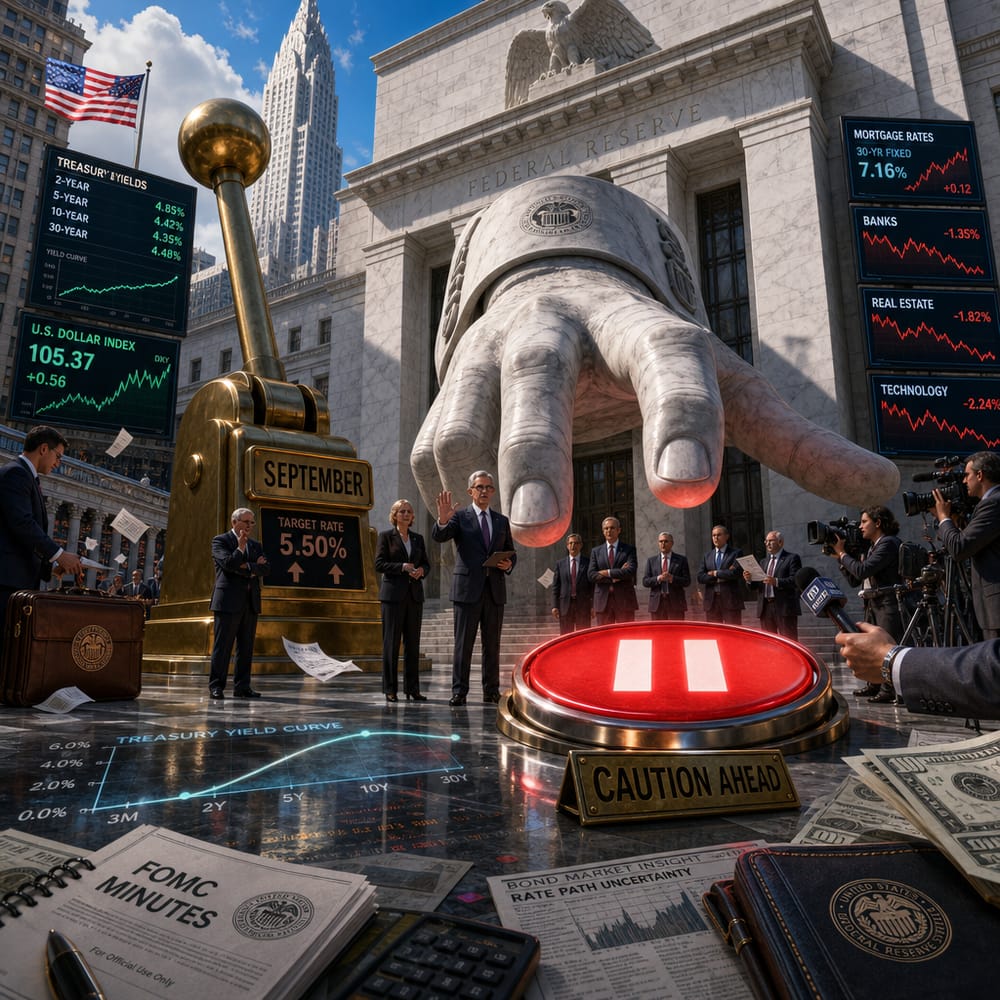
FED OFFICIALS SIGNAL POTENTIAL RATE PAUSE AFTER SEPTEMBER HIKE
Hold on to your hats, folks, because the Federal Reserve just introduced a plot twist worthy of a financial thriller. Just when everyone thought they’d cracked the Fed’s script with their September rate hike, Fed Governor Christopher Waller dropped a bit of a bombshell. If his recent comments are anything to go by, we might be heading toward a rate pause. Yes, you read that right. The Fed is hinting at a potential breather on rate hikes, and the market is buzzing.
Let’s rewind a bit. Recent minutes from the Federal Open Market Committee (FOMC) meeting revealed unanimous support for the September rate hike—a move that seemed like a no-brainer at the time. After all, inflation has been the uninvited guest that just won’t leave the party, and the Fed’s been trying to show it the door with one rate hike after another. But now, in a move that’s akin to whispering “plot twist” in a suspense movie, Governor Waller is suggesting a more cautious approach going forward.
Why does this matter to your portfolio, you ask? Well, the FOMC minutes and Waller’s comments create a tantalizing divergence. Markets thrive—or dive—on clarity, and this mixed messaging is like handing them a map with no compass. The result? Uncertainty in market expectations, which can send ripples—or tsunamis—through various sectors.
Let’s start with Treasury yields. When the Fed hikes rates, Treasury yields typically follow suit, making them as attractive as a new toy on sale. But the mere hint of a rate pause can send those yields tumbling. Why? Because if the Fed’s foot eases off the gas on rate hikes, bonds become less appealing, pushing down yields. Savvy investors are now scrambling to recalibrate their strategies, wondering if the Fed will indeed swap hiking boots for slippers come December.
And if Treasury yields aren't your cup of tea, consider the U.S. dollar. Normally, higher rates are like a protein shake for the buck, pumping it up against other currencies. But a possible pause? It’s like someone letting the air out of a balloon. The dollar could weaken, impacting everything from imports to international travel costs to how much your favorite overseas goods cost.
Then there are the rate-sensitive sectors. Think real estate and utilities, which are as rate-sensitive as a toddler with a sweet tooth. Lower rates (or a pause in hikes) could be a boon for these sectors, making financing cheaper and potentially boosting growth. But don't pull out your pom-poms just yet; this is as much about timing as it is about direction.
Now, as for the probability of a December hike, markets are currently playing the guessing game. Based on recent data and Waller’s cautious tone, some analysts think the Fed might decide to sit this one out, allowing the economy—and inflation—to catch its breath. The betting odds are shifting, and traders are watching every Fed official’s speech like hawks eyeing their prey, looking for any slip of the tongue that might give them an edge.
But here’s the thing: markets are creatures of habit, and they don’t like surprises. The Fed’s mixed signals have traders scratching their heads and strategists scrambling to adjust their models. While some see a pause as a chance to let economic indicators stabilize, others fear it could send a message of uncertainty, potentially spooking investors.
So, what should you, the savvy retail investor, make of all this? Keep an eye on the Fed’s every move and word—it's like following a soap opera, but with your money at stake. Watch how Treasury yields react, and consider how sectors like real estate and utilities might perform. And of course, keep an ear to the ground for any indication from the Fed on their December plans.
In the end, whether the Fed presses pause or charges ahead with more hikes, your strategy should remain as flexible as a yoga instructor. Stay informed, stay nimble, and remember: in the world of finance, the only constant is change.
This article is for informational purposes only and is not investment advice. Always do your own research or consult a licensed financial professional before making investment decisions.
© Copyright 2024. All Rights Reserved.
© Copyright 2024. All Rights Reserved.