

Fed Officials Signal Potential Rate Hikes Amid Inflation Concerns
Thursday, August 20, 2026
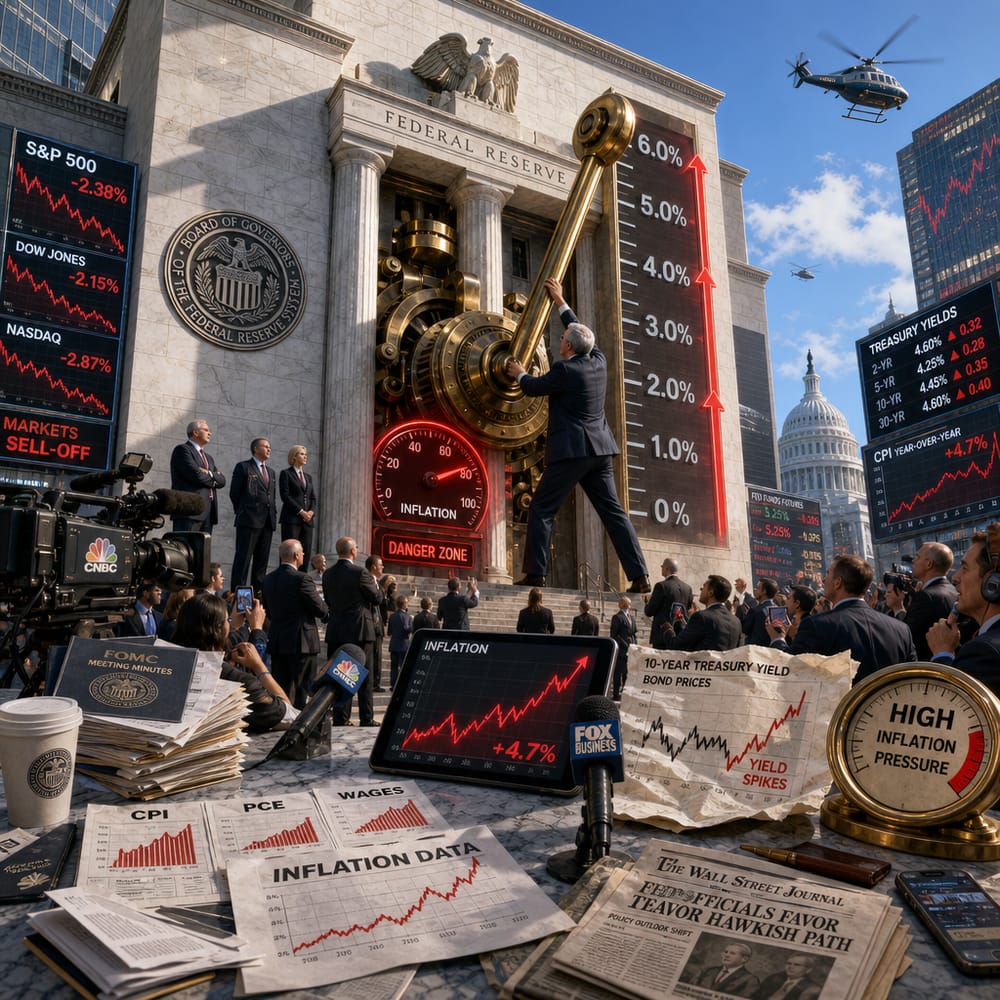
FED OFFICIALS SIGNAL POTENTIAL RATE HIKES AMID INFLATION CONCERNS
Pull up a chair, folks—it's time to decipher the tangled web of Federal Reserve tea leaves. Picture this: the Fed, huddled up in a room, quietly plotting the dance steps for the next financial waltz. The latest meeting minutes signal that our hawkish friends are perched on the edge, ready to swoop in with interest rate hikes if inflation refuses to play nice. Translation? If prices keep soaring like a rocket, those borrowing costs might soon follow suit.
But why should you, the everyday investor or armchair economist, care? Well, potential rate hikes are like that one extra shot of espresso—the repercussions ripple through everything. From your morning coffee costs to the broader economy, this isn’t just inside baseball. It’s a game that affects your wallet and your portfolio.
So, how does a potential rate hike shake the stock market tree? Historically, higher interest rates can give stocks a bit of a chill. When borrowing becomes pricier for companies, expansion plans tend to slow down, and investors might start tilting towards safer investments, like bonds. It’s like choosing the comfy old sweater instead of that flashy new jacket—you know it's a more stable bet.
What about those sectors that are particularly allergic to higher borrowing costs? Real estate and utilities, I’m looking at you. These sectors, often reliant on heavy capital for growth, might feel the pinch more acutely. Construction projects and utility expansions suddenly seem a lot less appealing when borrowing costs are sneaking up.
Contrast this with financials, which might flash a cheeky grin at the prospect of rate hikes. Why? Banks and financial institutions often benefit from higher interest rates, translating into more money from loans than they pay on deposits. It’s like their personal cash cow suddenly got a little fatter.
As we read the Fed like a cryptic novel, there’s a historical dance to consider. Remember the 1970s? Disco was all the rage, and inflation was having its own party. Back then, the Fed cranked up rates so high, they could’ve touched the stars, and eventually, inflation was tamed. Fast forward to recent years and while the stages are different, the playbook remains familiar. The Fed’s nifty toolbox involves taming inflation by discouraging spending and borrowing—classic carrot and stick strategy, with fewer carrots.
Now let’s zoom out a bit. What does all this mean for consumer behavior? Higher interest rates typically mean loans for big-ticket items, like houses and cars, become dearer. When your mortgage rate peeks over the fence at 7%, suddenly renting doesn’t look so bad. This can compress consumer spending, leading to a domino effect on economic growth.
In layman's terms, money becomes a tad more expensive to access, channeling consumer behavior in new directions. And when consumers tighten their belts, the economic ripple can span far and wide.
So, as the Fed teeters on its decision-making perch, investors are left juggling choices—whether to ride the stock market waves or seek the safe harbors of bonds. It’s like deciding whether to brave the rollercoaster or opt for the gentle carousel ride.
In this unfolding story, keep your eyes peeled on inflation data and Fed comments. It’s the bread to your investment sandwich. The Fed’s hawkish chatter isn’t just background noise; it’s the melody guiding our economic dance. Whether it leads to a rate hike conga line or not, staying informed and adaptable is key.
So, my fellow retail investors, hold onto your hats. We’re in for a potentially bumpy ride as the Fed navigates the treacherous waters of inflation and interest rates. May your investments be shrewd and your coffee always affordable, as we watch the Fed’s next move in this economic chess game.
This article is for informational purposes only and is not investment advice. Always do your own research or consult a licensed financial professional before making investment decisions.
© Copyright 2024. All Rights Reserved.
© Copyright 2024. All Rights Reserved.