

Fed Officials Signal Potential Rate Hike as Inflation Lingers
Monday, August 24, 2026
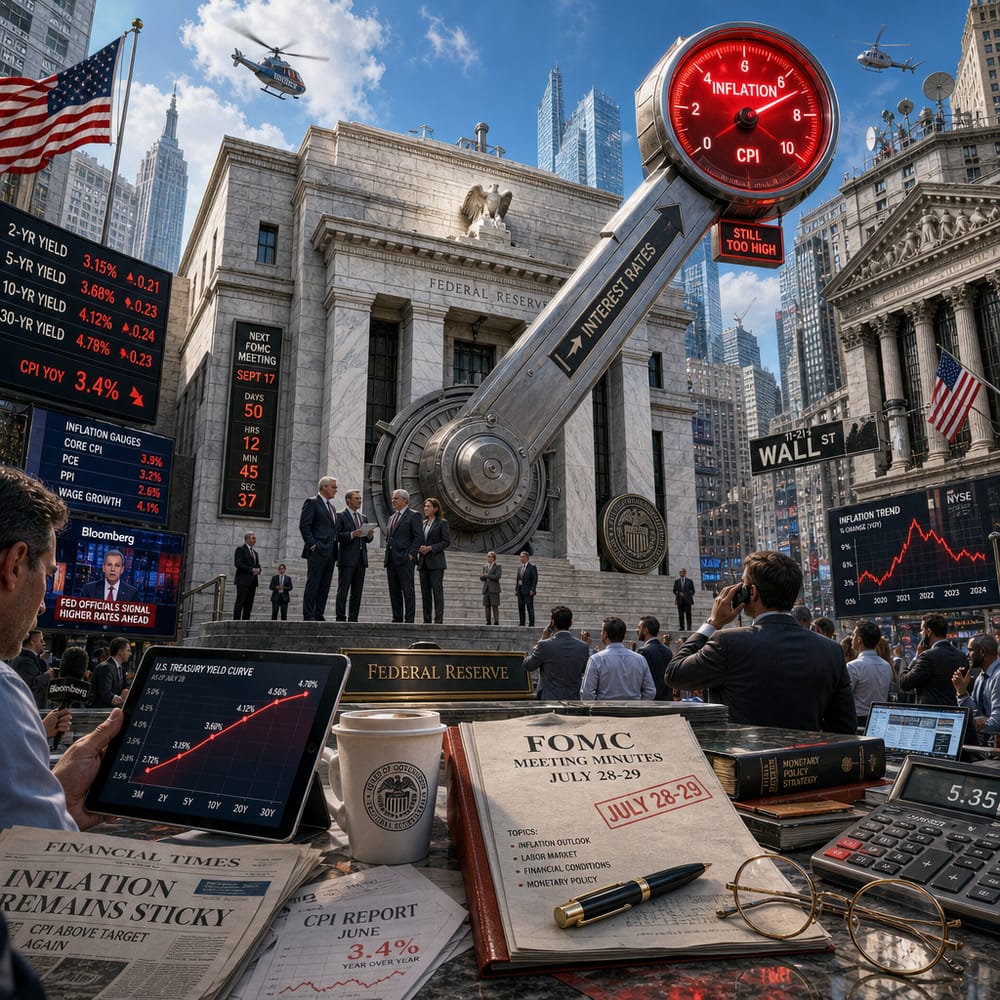
FED OFFICIALS SIGNAL POTENTIAL RATE HIKE AS INFLATION LINGERS
It seems the Federal Reserve is doing its best impression of a suspenseful Netflix series—just when you think the plot is wrapping up, a new twist emerges. Recent minutes from the Federal Open Market Committee's (FOMC) July meeting have sparked fresh chatter. The gist? A potential rate hike could be on the horizon. And no, this isn't just another episode of "The Boy Who Cried Rate Hike." This time, the Fed's hawkish tones are undeniably real.
So, what's got the Fed feeling antsy? It's that pesky inflation refusing to take a vacation. Prices are sticking to the ceiling like stubborn pasta, defying the Fed's best disinflationary intentions. The committee's frustration is palpable, and the words "interest rate hike" are no longer tiptoeing around the edges of their discussion. They're now leaping into the conversation, suggesting that the era of low interest rates might be drawing to a close.
Before you roll your eyes and swipe left on this potential drama, consider the implications of a rate hike. First up, consumer borrowing. With rates heading north, borrowing for houses, cars, or even that dream vacation might suddenly feel like a bigger financial commitment. Consumers might start clutching their wallets a little tighter. The cost of borrowing for everything from mortgages to credit cards could creep up, which means less cash flowing into retail therapy and more into, well, paying interest.
Now, let's talk about what this means for the average Joe's spending habits. If borrowing gets pricier, spending tends to cool off. It's like trying to enjoy a swanky dinner while quietly panicking about the tab—something's got to give. When consumers spend less, businesses feel the pinch in their sales figures, potentially leading to lower growth rates and even layoffs. It's the kind of chain reaction that has economists biting their nails.
The stock market isn't immune to these winds of change either. Investors tend to get jittery with talks of rate hikes. Higher rates often mean lower profitability for companies. Imagine a company as a runner—all of a sudden, they're asked to sprint with weights in their pockets. Yes, it's harder. Market confidence in prolonged disinflation gets shaky, and soon, the serene symphony of bullish cheers turns into a cacophony of bear growls.
But here's the kicker: what if the Fed doesn't pull the trigger on a rate hike? Keeping rates low might sound like an easy out, but it comes with its own set of risks. Ignoring inflation is like letting a small fire smolder in the corner—leave it unchecked, and it threatens to engulf the entire room. If inflation continues unchecked, the purchasing power of your dollars diminishes. That $5 latte could turn into a $10 extravagance faster than you'd like.
So where does this leave us? The Fed is walking a tightrope, balancing the risk of economic slowdown against the specter of runaway inflation. The potential rate hike looms as both a remedy and a risk, with ripple effects across everything from your car loan to your retirement portfolio.
As we await the Fed's next move, the markets will be on high alert, scanning for clues like a detective in a mystery novel. Will they raise rates and stem inflation, or play it cool and risk a flare-up? One thing's for sure: the financial world is holding its collective breath, waiting for the next plot twist in this economic saga.
In the meantime, retail investors might want to keep a close eye on how the broader economy reacts. Interest rate changes have a way of impacting not just the market, but our daily lives—like a financial butterfly effect. Whether you're looking to buy, borrow, or invest, these rate hikes are a crucial piece of the puzzle. So, make sure your financial strategy isn't just a set-it-and-forget-it affair. Keep it as dynamic as the market itself.
As the Fed ponders its next move, let this serve as a reminder: when it comes to money and markets, expect the unexpected. The next few months will be a telling chapter in the tale of interest rates and inflation. The only question is, are you ready for what's next?
This article is for informational purposes only and is not investment advice. Always do your own research or consult a licensed financial professional before making investment decisions.
© Copyright 2024. All Rights Reserved.
© Copyright 2024. All Rights Reserved.