

Fed Officials Signal Potential Future Hikes if Inflation Remains Sticky
Thursday, August 20, 2026
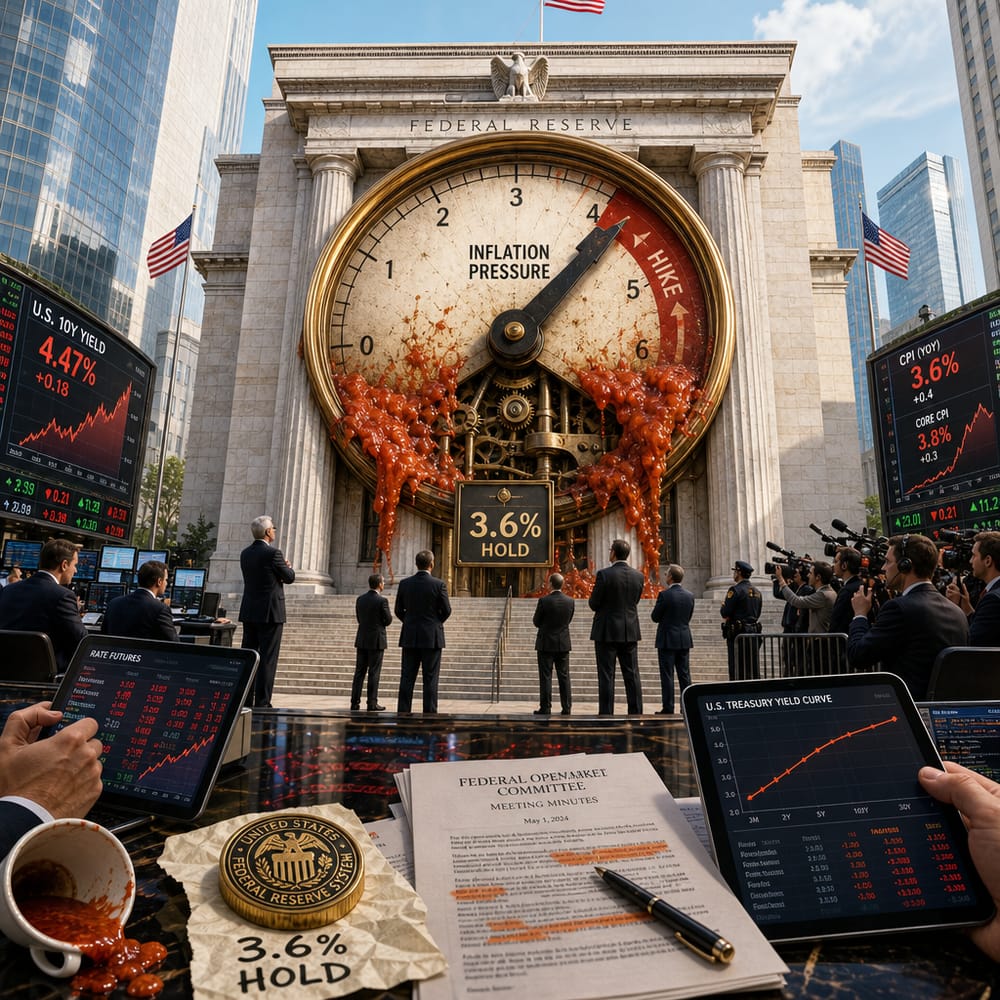
FED OFFICIALS SIGNAL POTENTIAL FUTURE HIKES IF INFLATION REMAINS STICKY
Hold on to your wallets, folks, because the Federal Reserve might just crank up the rates again if inflation keeps sticking around like glitter after a birthday bash. That's the word on the street from the latest Fed meeting minutes, where officials made it clear they're ready to hit the economic brakes harder. But what does this mean for you and your hard-earned cash? Let's break it down.
Imagine the economy as a car barreling down the highway. The Fed's job is to make sure that car doesn't go flying off the road when the inflation engine starts revving too high. They've been keeping the interest rate steady at 3.6% for now, but if inflation refuses to beat a hasty retreat, they might slam on the brakes with more rate hikes. And when interest rates rise, it's like cranking up the price of money itself.
So, what happens if the Fed hits us with more of these rate hikes? Let's start with the basics: borrowing costs. When rates go up, loans for things like homes, cars, or that tempting credit card debt get pricier. Yep, your dream house might suddenly feel a bit more like a pipe dream. Mortgage rates could climb, making monthly payments a bigger drain on your wallet. And if you're thinking of snagging a new set of wheels, brace yourself for heftier car loan payments.
But it's not just about borrowing. Higher rates can also put the brakes on consumer spending. When people start clutching their purses a little tighter, it's like a ripple effect through the economy. Consumer spending is a major engine driving economic growth, and if that's puttering, businesses might feel the pinch.
Now, let's talk about the sectors that could feel the most heat from rising rates. First up, the housing market. Homebuilders and real estate companies might face headwinds as prospective buyers grapple with steeper mortgage costs. The ripple effect? Fewer home purchases can lead to a slowdown in construction, impacting everyone from contractors to appliance makers.
Next in line, the tech industry. Why? Well, those innovative startups that thrive on venture capital might find the funding faucet tightening. As borrowing costs rise, investors might become more cautious, leading to a slowdown in tech investments. And let's not forget the financial sector. Banks could see a mixed bag; while higher rates mean they can charge more for loans, they might also face fewer borrowers willing to take the plunge.
But hey, it's not all doom and gloom. Savvy investors might find a silver lining. Higher rates can mean better returns on fixed-income investments like bonds. So, if you're the cautious type, this could be your time to shine.
Now, you might be wondering where inflation fits into all of this. It's like that unruly guest at the party who just won't leave. Inflation, the rate at which prices for goods and services rise, can erode purchasing power and make everyday items more expensive. If the Fed sees this guest hanging around too long, they might raise rates to try and usher it out the door.
So, should you be worried? Well, that depends. If inflation does indeed remain as sticky as the Fed fears, brace yourself for possible rate hikes that could change the economic landscape. Keep an eye on your spending, be cautious with new loans, and perhaps consider diversifying your investment portfolio to weather any potential economic storms.
In the end, the Fed's hawkish stance on inflation is a reminder that the economic dance floor can change rhythms quickly. So, keep your dancing shoes polished and your financial strategies flexible, because this party is far from over.
This article is for informational purposes only and is not investment advice. Always do your own research or consult a licensed financial professional before making investment decisions.
© Copyright 2024. All Rights Reserved.
© Copyright 2024. All Rights Reserved.