

Fed Officials Signal Possible Rate Hikes if Inflation Persists
Thursday, August 20, 2026
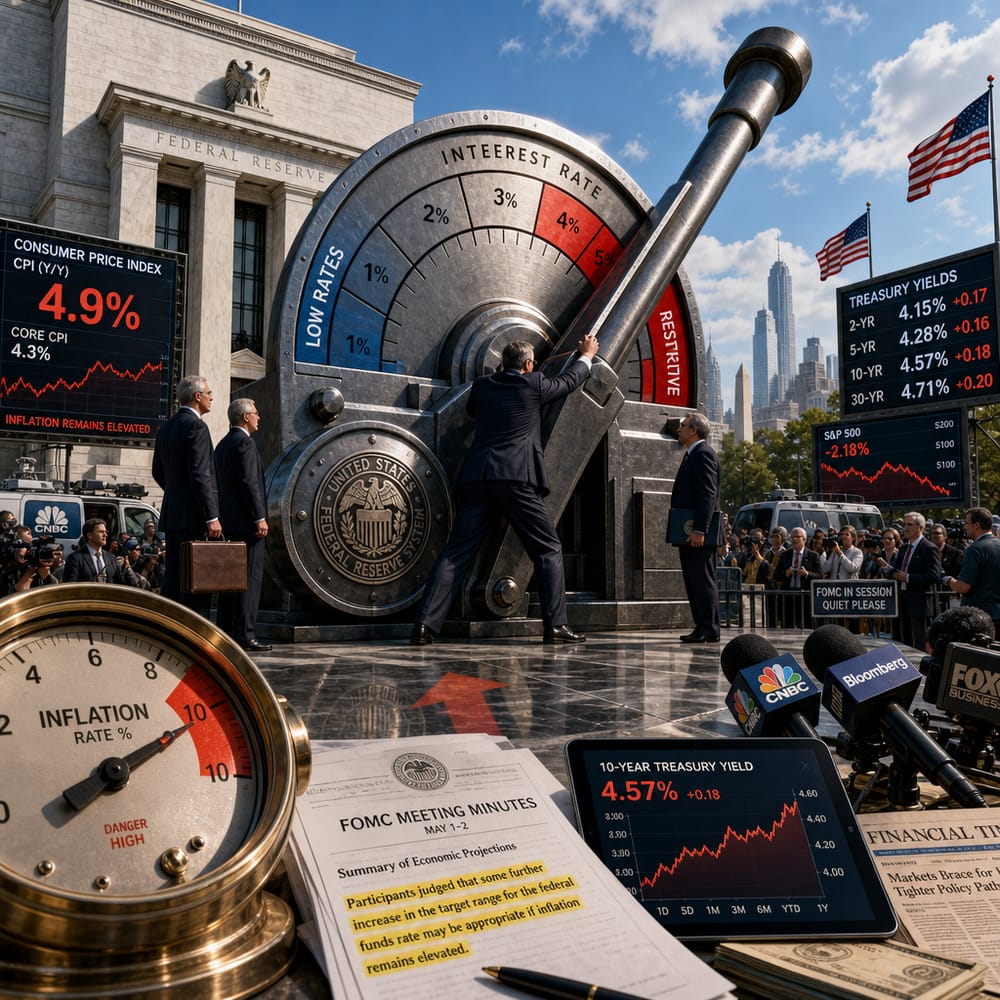
FED OFFICIALS SIGNAL POSSIBLE RATE HIKES IF INFLATION PERSISTS
Imagine you're cruising down the inflation highway with the Federal Reserve riding shotgun. They're peering at the dashboard with a stern look, warning that if inflation keeps zooming along, they might just have to slam on the interest rate brakes. At least, that's the vibe from the minutes of the Federal Reserve's latest get-together in July. So, what does this mean for you, your wallet, and your stock portfolio? Buckle up, because we’re about to break it down.
THE HIGHWAY OF INTEREST RATES
First, let's talk about the implications of a potential rate hike on the economy. Think of interest rates as the Fed's magic wand for controlling economic speed. When inflation—a.k.a. rising prices—starts feeling like it's on a sugar rush, the Fed considers raising rates. Higher interest rates are like speed bumps: they cool things down by making borrowing more expensive. This, in turn, can slow spending and investment, helping to keep inflation in check.
But, not everyone loves a speed bump. For businesses, higher borrowing costs can squeeze profits, which might mean less hiring, slower growth, or even pausing that big, shiny expansion plan. Meanwhile, for the everyday consumer, it means reconsidering that new car loan or mortgage. After all, who wants to pay more interest?
THE CONSUMER CONUNDRUM
Speaking of consumers, how might these potential rate hikes affect your borrowing and spending habits? If you've got credit card debt, it might be time to tighten your belt. Higher rates mean your monthly payments could go up, making that beach vacation seem a little less fun.
Mortgage rates might also nudge higher, so if you've been eyeing a new home, you might face steeper costs. The upside? Higher rates could cool off the red-hot housing market, potentially easing home prices. But any savings there could be offset by higher monthly payments, so keep that in mind.
THE RISK OF DOING NOTHING
Now, what if the Fed decides to keep rates where they are? While not raising rates might sound like a relief, there's a flip side. Letting inflation run wild unchecked could erode your purchasing power—meaning your dollar buys less and less over time. This affects everyone from retirees on fixed incomes to hourly workers trying to stretch their paychecks.
Moreover, persistent inflation can set the stage for an overheated economy, where things like housing bubbles and unsustainable growth become real risks. It’s this delicate balancing act the Fed is trying to manage—cue the tightrope-walking imagery.
MARKET MAYHEM?
So, what about the stock market? Historically, stocks have had a love-hate relationship with rate hikes. On one hand, they signal that the economy is strong enough to handle higher rates. On the other, they make borrowing more expensive for companies, as we've seen with recent market jitters.
Take recent market movements: the Dow, down 700 points, and Walmart's stock drop are cautionary tales of how sensitive markets can be to interest rate tinkering. But here's a silver lining—historically, markets tend to adjust and find new equilibrium post-hike.
COMMUNICATION STRATEGY
The Fed's communication strategy is another intriguing angle here. By hinting at potential hikes, they're giving the market a heads-up, which is vastly preferable to a surprise rate increase. It’s part of a broader trend of transparency, aiming to guide expectations and minimize shockwaves.
In the coming months, keep an eye on the Fed’s signals. Their careful dance with interest rates is all about navigating that fine line between taming inflation and keeping the economy humming.
THE BOTTOM LINE
As the Fed navigates these choppy economic waters, the key takeaway for you, the savvy investor or consumer, is to stay informed and adaptable. Watching the Fed’s moves gives you a head start on adjusting your financial strategies. So, whether you're planning a big purchase or fine-tuning your investment portfolio, think of these Fed signals as your financial GPS. Stay sharp, stay informed, and keep those financial goals in your sights.
This article is for informational purposes only and is not investment advice. Always do your own research or consult a licensed financial professional before making investment decisions.
© Copyright 2024. All Rights Reserved.
© Copyright 2024. All Rights Reserved.