

Fed Officials Signal Possible Additional Rate Hikes Amid Inflation and AI Boom
Monday, November 16, 2026
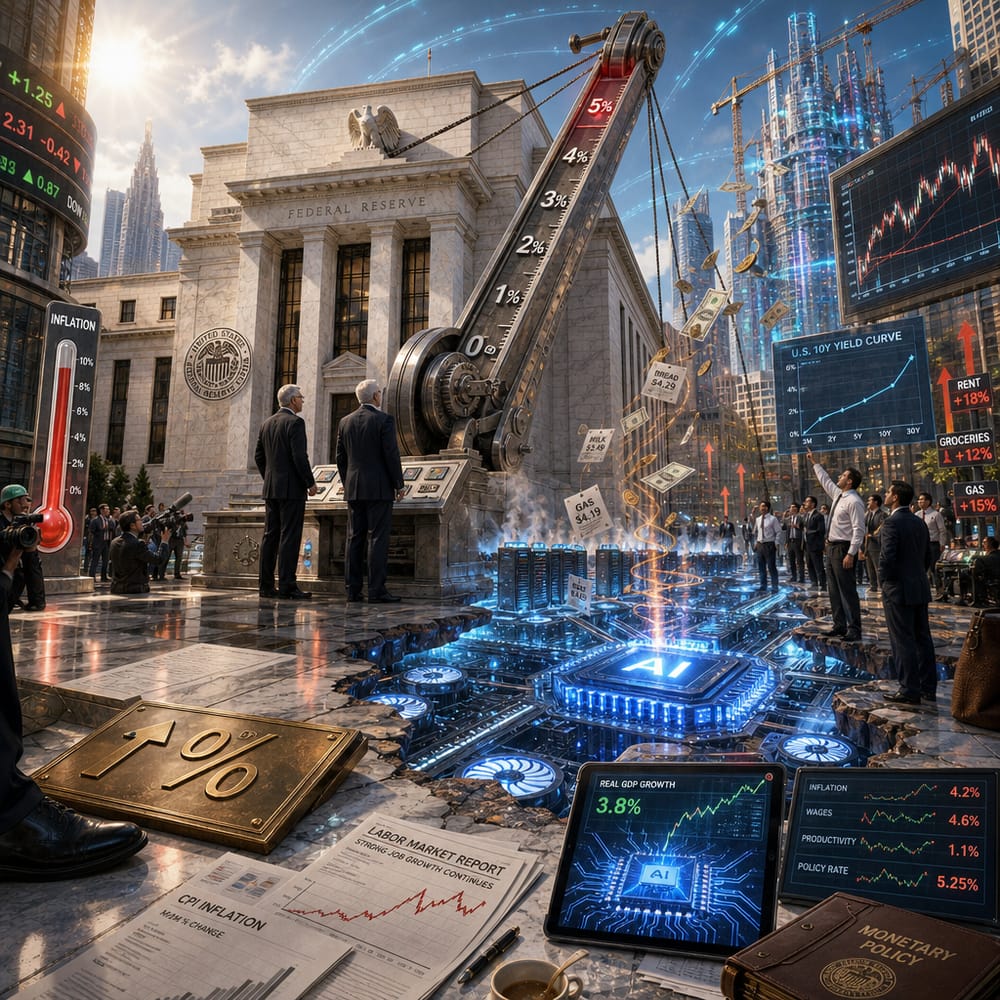
FED CONTEMPLATES MORE RATE HIKES AS AI INFLATION STIRRINGS RATTLE MARKETS
In case you thought the economy's dance was settling into a gentle waltz, the Federal Reserve just raised the tempo. Fed Chair Kevin Warsh and Vice Chair Philip Jefferson have dropped hints suggesting that more interest rate hikes might be on the horizon. And, no surprise, the culprit they’re eyeing? It's that dazzling disruptor: Artificial Intelligence.
But hold up, what’s AI got to do with interest rates, you ask? Well, AI isn’t just crunching your Netflix recommendations. It’s stirring the economic pot and, apparently, adding a dash of inflationary spice to the mix. So let's dive in and see how this techno-sorcery could twist the Fed's arm into cranking rates up a notch.
AI FUELED ECONOMY: BOOM OR BUST?
First things first, the AI sector has been growing like a techie’s dream on a caffeine binge. From self-driving cars to algorithmic trading, the innovations keep coming like a never-ending wave. But with all that growth, there's a catch. This boom could drive economic growth faster than you can say "ChatGPT," risking an overheating economy and, you guessed it, spiking inflation.
But it’s not all rainbows and robots. The fast-paced growth also comes with head-scratchers like job displacement and market volatility. As AI leads the economic charge, it adds layers of unpredictability that the Fed needs to consider — and they're eyeing the possibility of dialing up interest rates to keep inflation in check.
THE RISKS OF KEEPING RATES HIGH AND MIGHTY
So what happens if the Fed decides to keep interest rates on the high side for longer? Well, keeping rates elevated can put a stranglehold on economic expansion. Borrowing costs go up, squeezing businesses and consumers alike. Think of it as turning the economy’s treadmill incline up to Everest levels — it gets tough real fast.
Then there’s the risk of dampening investments in tech and innovation. Higher rates could slow down the money pouring into AI advancements, potentially stalling the very growth that's sparking all this inflation talk. It’s a delicate balance: preventing runaway inflation without dousing the flames of progress.
AI’S INFLATIONARY MUSCLE
Now, let's not give AI too much credit. Is it really musk-arming inflation higher, or is it just an innocent bystander in the economic melee? Well, the truth lies somewhere in between. AI can boost productivity, which often acts as an antidote to inflation. But when tech adoption outpaces the economy's ability to absorb it smoothly, prices can spiral.
This inflationary nudge from AI isn't about tech itself getting pricier but rather the ripple effects of its deployment. Companies investing in AI are pushing productivity gains, potentially leading to a demand-pull inflation — where demand outpaces supply, driving prices to follow suit.
A DOUBLE-EDGED SWORD
For investors, the AI saga is both a thrilling frontier and a cautionary tale. On one hand, it's a gold rush — an opportunity to ride the wave of innovation and capture unprecedented gains. On the other, it's a volatile storm, capable of reshaping industries and unsettling traditional market dynamics.
Look at Nvidia, the chip-making titan that's become a linchpin in the AI boom. Investors, including high-profile ones like President Trump, have piled into Nvidia, betting big on its future in powering AI's ambitions. But as Nvidia's shares weave through highs and lows, it mirrors the broader market reality — excitement tempered by uncertainty.
BOTTOM LINE
As the Federal Reserve contemplates the economic future, AI is no longer just background noise. It’s a symphony, and sometimes, a cacophony of disruptive potential that could very well dictate the next chapter of interest rate policy. The intersection of tech and economics is not for the faint-hearted, but for those with a penchant for risk and a nose for innovation, it’s a wild, exhilarating ride. Just don’t forget to keep one eye on the Fed's rate dance, because in this concert, they're still the ones setting the beat.
This article is for informational purposes only and is not investment advice. Always do your own research or consult a licensed financial professional before making investment decisions.
© Copyright 2024. All Rights Reserved.
© Copyright 2024. All Rights Reserved.