

Fed Officials Signal Growing Support for Further Rate Hikes if Inflation Persists
Monday, August 24, 2026
FED OFFICIALS SIGNAL GROWING SUPPORT FOR FURTHER RATE HIKES IF INFLATION PERSISTS
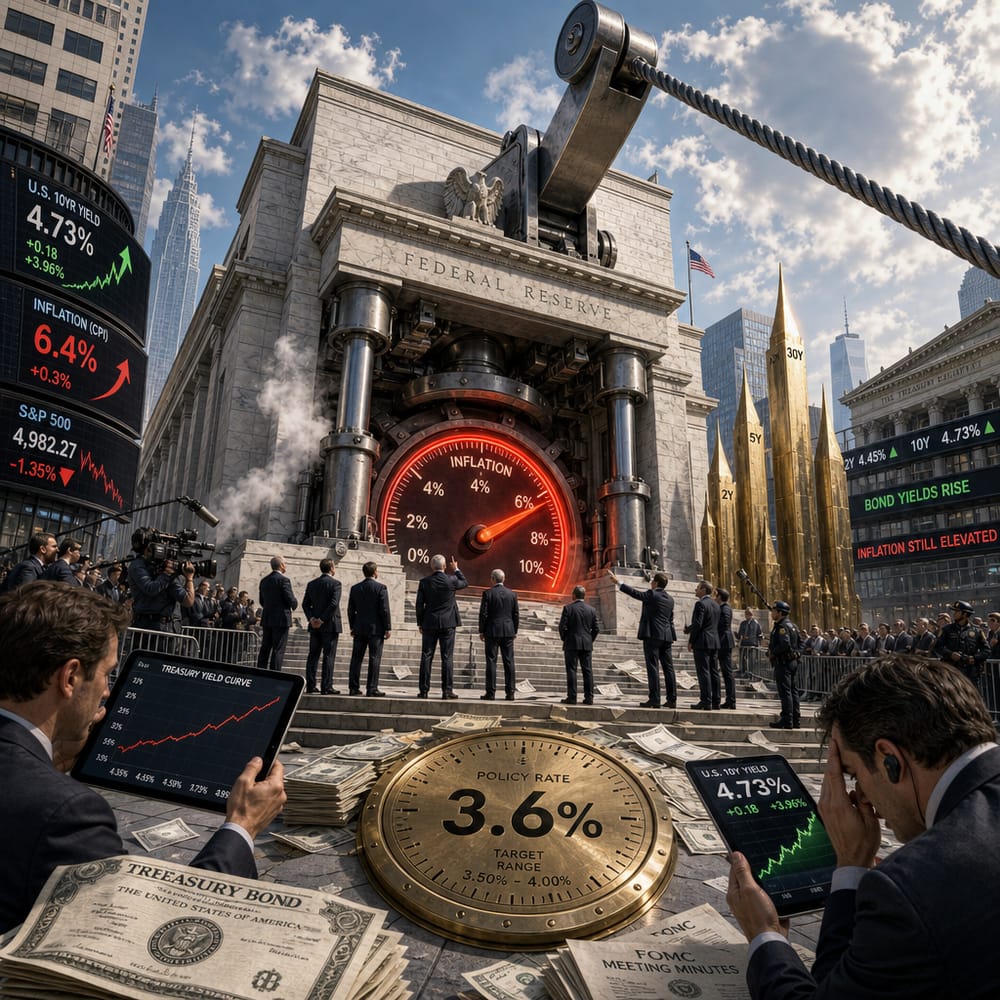
Welcome to the latest episode of America’s ongoing economic soap opera: "The Rate Games." Just when you thought it was safe to take out that loan for a backyard pool, the Federal Reserve is here to remind us all that inflation is like a bad penny—it keeps turning up. Recent minutes from the Fed's latest meeting were released, revealing that a growing number of officials are considering the dreaded "R" word: rate hikes. If inflation doesn’t cool its jets, borrowing costs could be going up, up, and away.
Now, why should you care about this monetary melodrama? Because when the Fed talks about rate hikes, they essentially mean making it more expensive for you to borrow money. That affects everything from your mortgage rates to the interest on your credit card. The current policy rate is hovering around 3.6%, but if inflation keeps strutting around like it owns the place, the Fed might decide to bring out the big guns.
But what exactly is fueling this inflation fire? It's a combination of factors, including supply chain bottlenecks and increased consumer demand post-pandemic. Despite the Fed's current efforts to control it, inflation remains stubbornly high, and it’s making those rate hike discussions sound more and more like a done deal.
Let's break down what these possible interest rate hikes could mean for all of us.
THE CONSUMER BORROWING BLUES
If you’ve been eyeing that shiny new car or contemplating a small mortgage to expand your home, brace yourself. Higher interest rates mean higher borrowing costs, translating to pricier loans. Imagine paying more every month for the same house or car than your neighbor who locked in a lower rate six months ago. The difference can be startling—enough to make you reconsider that impulse buy.
This inclination towards increasing rates isn't just about pinching consumers. It's a serious balancing act. The Fed uses rate hikes as a tool to slow down spending and, in turn, tame inflation. The logic? If borrowing costs more, people and businesses might think twice before taking out loans to spend. It’s like putting the economy on a budget.
SECTORS ON THE EDGE
Certain sectors will feel the pinch more than others. Real estate, for one, is particularly sensitive to interest rate changes. If rates rise, expect potential homebuyers to hit the brakes, cooling down the red-hot housing market. Think of it as the real estate version of a cold shower.
Industries that rely on heavy borrowing, like construction and some parts of manufacturing, also might find themselves in a tight spot. If borrowing costs rise, so do their operational costs, which could slow down growth in those areas.
Then there’s the tech sector, which often relies on cheap borrowing to fund innovation and expansion. It's akin to a tech company suddenly needing to think twice before splurging on the latest AI technology. This could lead to a slowdown in tech innovations that many of us have come to take for granted.
BONDS AND YIELDS
Now, let's talk about the bond market, which tends to react at the slightest hint of rate changes. When interest rates rise, bond prices generally fall, leading to higher yields. This might sound like good news for your grandma’s savings account, but higher yields can attract investors away from stocks and towards more stable government bonds, causing stock markets to potentially wobble.
The Treasury yields, being closely watched by investors, are like the canary in the coal mine for economic health. A spike in yields could indicate that investors are expecting more rate hikes or are nervous about inflation. Either way, it’s something that can impact everything from stock prices to pension funds.
FED’S DILEMMA: INFLATION VERSUS GROWTH
The Fed's ultimate challenge is a tightrope walk. They need to curb inflation without cooling economic growth to the point where it slips into a recession. It's like trying to cook the perfect steak—not too rare, not too well-done. And with every rate hike, there’s a risk of overcooking the economy, steering it towards slower growth or even a downturn.
The next few months will be crucial as we wait to see how inflation trends evolve and how aggressive the Fed decides to be in response. For now, it might be wise for both consumers and businesses to batten down the hatches and prepare for potentially choppy economic waters ahead.
So, grab some popcorn, sit back, and watch as this economic drama unfolds. Just remember that in the world of finance, the only constant is change—so stay sharp and keep an eye on those rates.
This article is for informational purposes only and is not investment advice. Always do your own research or consult a licensed financial professional before making investment decisions.
© Copyright 2024. All Rights Reserved.
© Copyright 2024. All Rights Reserved.