

Fed Officials Signal Further Rate Hikes Amid Inflation Spillover Risks
Thursday, October 08, 2026
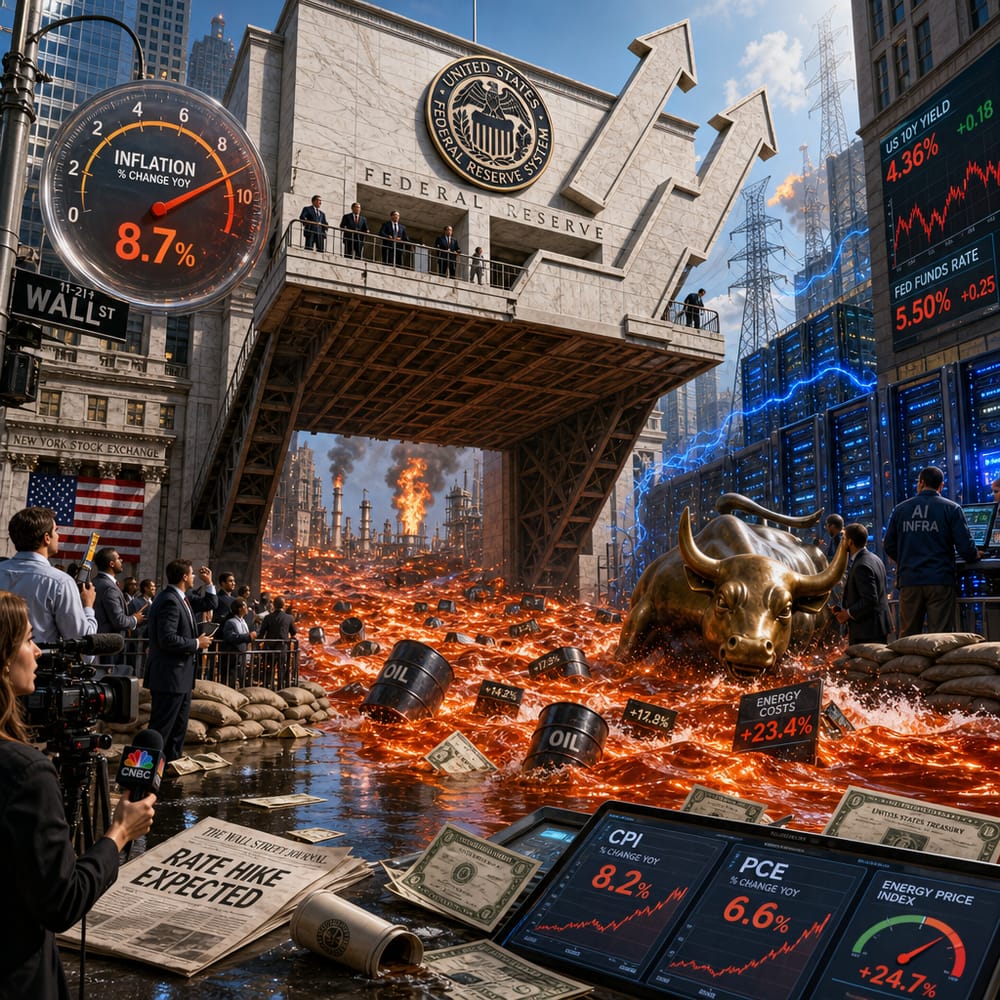
FED OFFICIALS SIGNAL FURTHER RATE HIKES AMID INFLATION SPILLOVER RISKS
Brace yourselves, folks. The Federal Reserve is at it again, throwing around those dreaded words: "rate hikes." That's right, just when you thought it was safe to refinance your mortgage or treat yourself to a new set of wheels, Fed officials are hinting at the possibility of further interest rate increases. Why? Because inflation, that sneaky economic gremlin, is once again creeping up on us, driven by energy shocks and, believe it or not, our insatiable demand for AI innovations.
Now, before you start panicking and stuffing your cash under the mattress, let's break it down and see what this really means for the economy and our wallets.
RISK ON THE RISE
First, let's talk about why the Fed is considering more rate hikes. The usual suspect, inflation, is getting a boost from unforeseen quarters. Energy prices are doing their best impression of a roller coaster, and a looming hurricane threatening to hit U.S. refineries isn't exactly helping matters. Mix in the demand for AI tech—yes, all those nifty gadgets and the AI you just asked to help write your resume—and you have the recipe for inflationary pressure.
When inflation heats up, the Fed uses rate hikes as their trusty fire extinguisher. The idea is that by making borrowing more expensive, they dampen spending and investment, which helps cool down inflation. But, as with all things economic, this comes with its own set of potential consequences.
THE COST OF BORROWING: UP, UP, AND AWAY?
So, what happens when rates go up? First, borrowing costs climb. Everything from mortgages to auto loans to those enticing "buy now, pay later" deals suddenly become more expensive. For the average Jane or Joe, this means thinking twice before splurging on a new car or taking out that home equity loan to install a dream pool.
For businesses, it means tighter belts. Companies facing higher financing costs might delay expansions or hold off on hiring. This could slow down economic growth, and if enough businesses hit the brakes, it could even nudge us toward a recession.
SECTORAL IMPACT: WHO FEELS THE PINCH?
Let's break it down by sector. Real estate is particularly sensitive to interest rate changes. Higher mortgage rates can dampen the housing market, as buyers balk at costly home loans. Construction could slow, and real estate stocks might shiver in response.
In the tech sector, particularly for companies involved with AI, the ripple effects might be twofold. Sure, demand for AI products is contributing to inflation, but rising rates can make it harder for these high-growth companies to borrow. This could curb their spending on research and development, potentially slowing innovation.
And don't forget about consumer goods. As everyday costs rise, discretionary spending might take a hit. Say goodbye to splurging on those high-end sneakers or the latest smartphone if people start pinching pennies.
THE BROADER ECONOMY: TIGHTROPE WALKING
So, what's the Fed's game plan? They’re essentially walking a tightrope. On one side, they need to rein in inflation, but on the other, they don't want to choke off economic growth. It's a balancing act that can be as thrilling—or nerve-racking—as watching a trapeze artist perform without a net.
Should they tip too far one way, we could see runaway inflation. Lean too far the other, and it might stall economic growth. That's the tightrope the Fed is on, and it’s no small feat.
THE WAITING GAME
For retail investors, now's the time to stay alert and perhaps a tad nimble. Keep an eye on inflation indicators and Fed statements. Diversifying your portfolio could help cushion against sector-specific shocks. Bonds, for instance, might seem dull, but with rising yields, they’re slowly moving from snoozefest to potential safe haven.
In the end, whether it's a rate hike or the next big AI breakthrough, the economy keeps us all on our toes and makes the financial markets a thrilling—if sometimes nerve-wracking—place to be. So, stay tuned, stay informed, and maybe keep that piggy bank in arm’s reach. You never know when the next curveball might come your way.
This article is for informational purposes only and is not investment advice. Always do your own research or consult a licensed financial professional before making investment decisions.
© Copyright 2024. All Rights Reserved.
© Copyright 2024. All Rights Reserved.