

Fed Officials Cautious Amid Moderating Inflation: Ready to Act If Needed
Monday, August 17, 2026
FED OFFICIALS CAUTIOUS AMID MODERATING INFLATION: READY TO ACT IF NEEDED
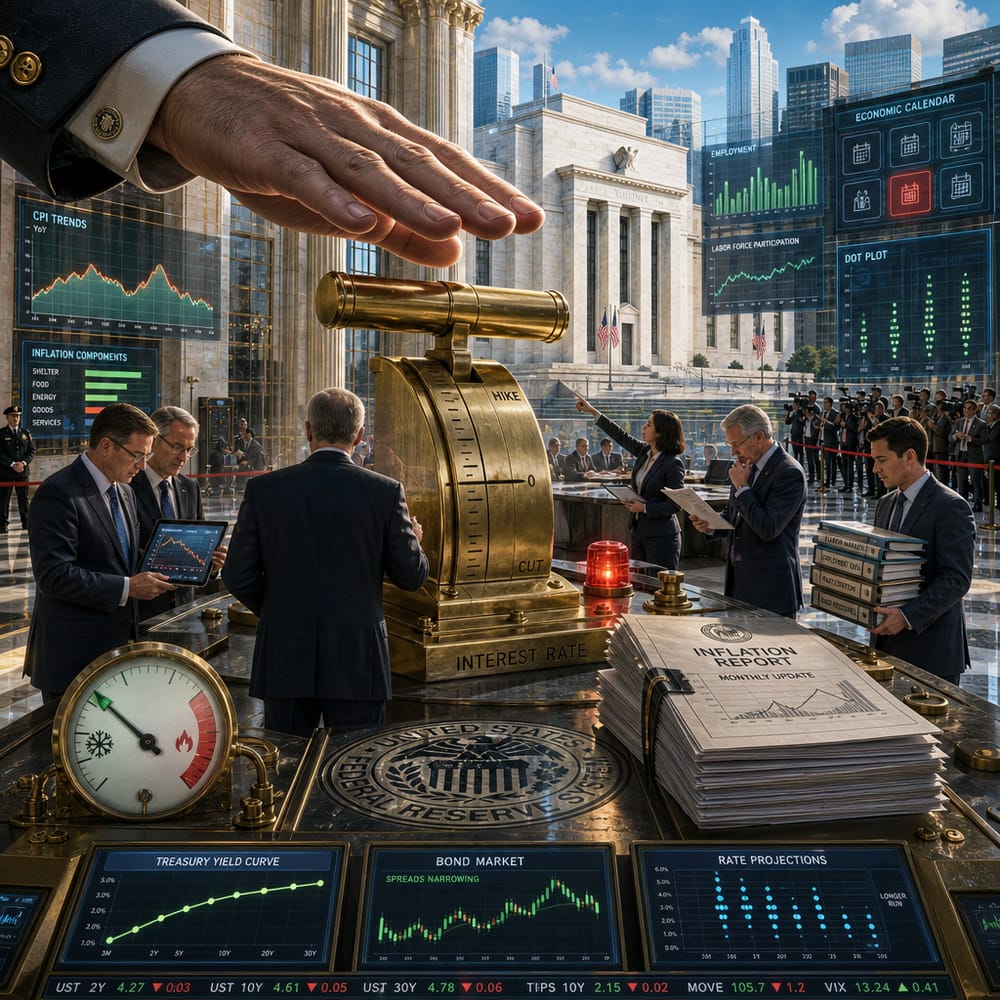
Hold onto your hats, folks, because the Federal Reserve is sending out some mixed signals that have the market playing a game of "Will they or won't they?" The Fed recently decided to leave interest rates unchanged, which sounds pretty chill at first. But lurking beneath that zen-like exterior is a hint of caution, like a cat poised to pounce. Several Fed officials have made it clear that they're ready to jack up those rates if inflation starts getting unruly again. Think of it as a sort of financial babysitting—everything’s fine until it isn’t.
But why all the fuss? What's got the Fed twitching like a barista on a triple espresso? It's all about the data, baby. The Fed is watching everything from inflation rates to job numbers like a hawk with a caffeine addiction. They're particularly laser-focused on indicators like the Consumer Price Index (CPI), which measures changes in the price of a basket of goods and services. If that gauge starts climbing, the Fed might decide it's time to hit the brakes on the economy. So, if you see Fed Chair Jerome Powell with a magnifying glass, he’s probably not hunting ants but keeping tabs on those pesky inflation numbers.
So, what happens if the Fed decides to hike those rates? Picture tossing a stone into a pond. Sure, you get the initial splash, but it's the ripples that affect everything else. Higher interest rates generally mean higher borrowing costs. Mortgage rates, car loans, and credit card interest could all see a bump. And just like that, consumers tighten their belts, spending less, and the market starts to twitch nervously.
Volatility could become the market's new best frenemy. Investors love stability like kids love candy, and unpredictability makes them queasy. If the Fed hints at a rate hike, expect the stock market to react like it’s just heard the word “recession.” Suddenly, we’re in the middle of a financial soap opera, with stocks swinging faster than a pendulum at a grandfather clock convention.
And then there are the implications for future rate hikes. The Fed's cautious yet flexible stance means they're taking the 'wait and see' approach, like they're watching for the dragon in a high-stakes game of Dungeons and Dragons. It’s not just about hitting inflation over the head; it’s about knowing when to strike. Their strategy seems to be, "act when necessary, and only then". This keeps the markets on their toes, with investors constantly recalibrating their expectations and strategies.
For those who love to daydream about potential scenarios, consider this: if inflation stays in its box and doesn’t cause too much trouble, the Fed might decide there's no need to meddle with the rates, which could lead to a more stable market in the short term. Investors could breathe a sigh of relief, and the stock market could continue its merry dance northwards—at least until the next piece of economic data begs to differ.
However, if inflation pulls a Houdini act and starts rising again, brace yourself for a different story. The Fed could be forced to step in with rate hikes, making borrowing more expensive and potentially throwing cold water on spending and investment. This could result in a slowdown in economic growth, something no one really wants to cheer for unless you're betting on a bear market.
In the end, the Fed's stance boils down to a cautious game of chess, where every move is calculated and every decision scrutinized. For the average retail investor, the key takeaway is to stay informed and nimble. Keep an eye on those economic indicators because, in this dance of rates and inflation, knowing the rhythm can help you navigate the financial floor without stepping on any toes—or portfolios.
So while the Fed might be ready to act if needed, the best thing you can do is stay tuned, stay savvy, and maybe keep a stress ball handy. After all, in the world of finance, things can change faster than you can say "interest rate."
This article is for informational purposes only and is not investment advice. Always do your own research or consult a licensed financial professional before making investment decisions.
© Copyright 2024. All Rights Reserved.
© Copyright 2024. All Rights Reserved.