

Fed Minutes Signal Readiness for Rate Hikes if Inflation Persists
Monday, August 24, 2026
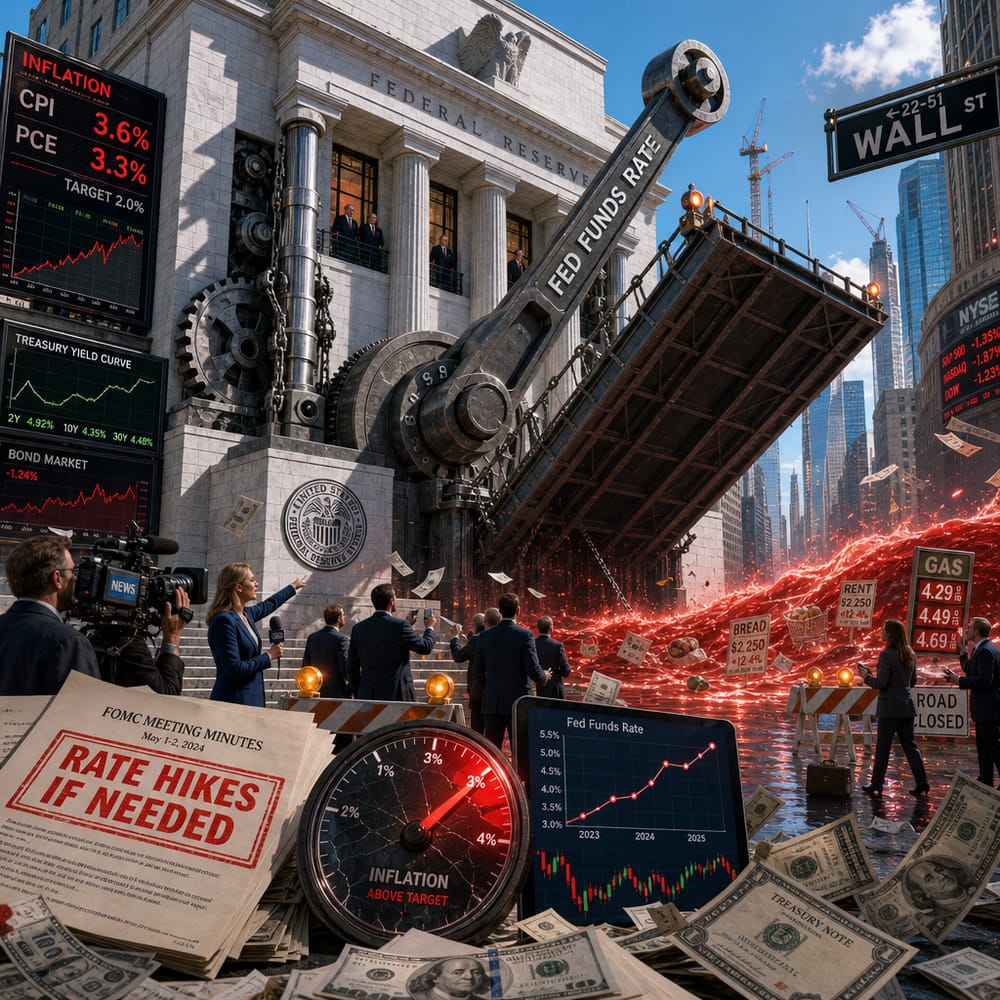
FED MINUTES SIGNAL READINESS FOR RATE HIKES IF INFLATION PERSISTS
Is it just me, or does the Federal Reserve have a bit of a split personality these days? One minute, it seems content with chilling on the sidelines, and the next, it's ready to storm back in like a superstar DJ cranking up the volume. But according to the latest Federal Open Market Committee (FOMC) minutes, if inflation decides to stick around like that one guest who won't leave the party, the Fed's ready to hit play on interest rate hikes faster than you can say "economic turbulence."
So, what’s the deal with these minutes? Think of them like the Fed’s diary – with a few pages torn out for secrecy, of course. They reveal all the juicy bits about what the bigwigs at the Fed are thinking, minus the doodles of dollar signs and question marks. Spoiler: Many of them are raising an eyebrow at inflation and checking the thermostat on the economy.
WHAT HAPPENS IF THE FED UPS THE RATES?
Let’s break it down. When the Fed raises interest rates, it’s basically turning the dial to tighten the economic belt. It makes borrowing more expensive. Mortgages? Pricier. Car loans? Yikes. Even those seemingly innocent credit card rates could start looking a lot less friendly.
But the goal isn’t to rain on your loan parade. It’s to keep inflation from running wild, turning your grocery runs into high-stakes games of financial survival. Inflation, in simple terms, is the rising cost of stuff. And if it gets too high, everyone’s dollars start feeling about as valuable as Monopoly money.
WHAT’S THE MARKET GONNA DO?
Tickle interest rates, and markets might start having a minor meltdown. Imagine a toddler denied candy – that’s the stock market when rates rise. Case in point, the S&P 500’s recent dip, dragged down by tech stocks and news of yield fluctuations. Chips are down – literally, in this case, with chip stocks like Micron and AMD taking a dive.
Higher rates often make stocks less attractive because investors start eyeing those newly beefed-up bond yields instead. It’s like choosing between a safe savings account and a risky bet on cryptocurrency. Spoiler alert: bonds are the safe choice here.
But here's the kicker: crypto doesn’t really play by the same rules. Despite its turbulent past, Bitcoin and its digital buddies have been rallying, as if to say, "Interest rates? Never heard of them." Investors, ever the curious creatures, are watching to see if this rally marks a new chapter for crypto, or just another flash in the pan.
THE BIGGER PICTURE
Now, while the Fed fiddles with its rate levers, it’s also keeping a wary eye on the global stage. There’s a lot going on – sanctions here, tariffs there, and let's not forget the Middle East’s ever-complex chessboard. Geopolitical jitters add another layer of mystery to market movements and economic forecasts.
The Fed's decisions ripple out beyond Wall Street, affecting Main Street and even the darkest corners of the global economy. Think of it as a giant economic game of dominoes, where a single tip can set off far-reaching consequences.
SO, WHAT SHOULD YOU DO?
If you’re an investor, it’s time to get strategic. Diversification is your friend – think of it like culinary exploration, only with stocks, bonds, and maybe a sprinkle of crypto if you're feeling adventurous. Keep an eye on how these Fed maneuvers play out, because the market waters could be choppy.
If you’re simply managing household budgets, stay alert. Rate hikes might mean revisiting your spending plans. Consider locking in rates on loans if you're planning big purchases. And remember, not all inflation is bad – a little keeps things growing, but too much? Well, that’s a different story.
In the end, whether you're a market mogul or just a curious onlooker, keeping tabs on these Fed signals is crucial. Like a seasoned weather forecaster, understanding the Fed’s mood can help you decide whether to pack an umbrella or bust out the sunglasses. And remember, in the financial world, as in life, the only constant is change.
This article is for informational purposes only and is not investment advice. Always do your own research or consult a licensed financial professional before making investment decisions.
© Copyright 2024. All Rights Reserved.
© Copyright 2024. All Rights Reserved.