

Fed Minutes Signal Potential Rate Hike
Wednesday, October 14, 2026
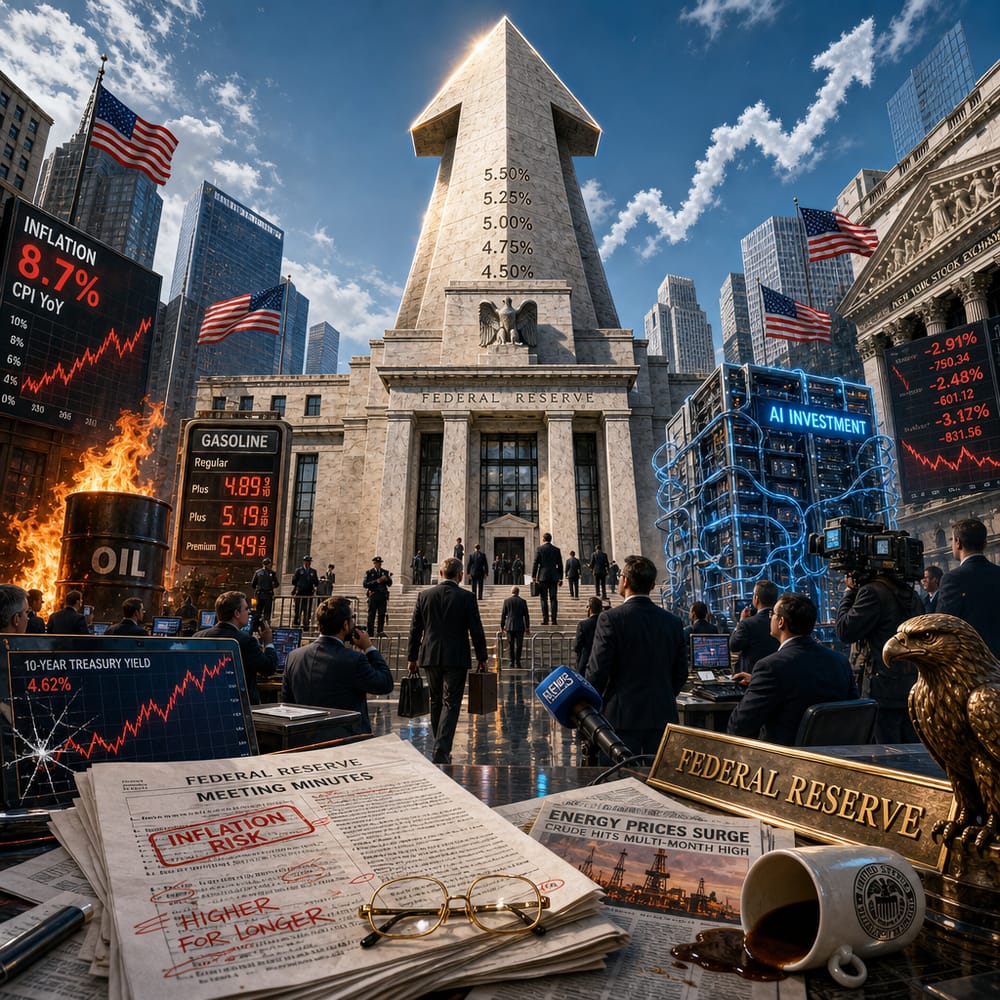
THE FEDERAL RESERVE'S RATE HIKE RUMBLE: WHAT IT MEANS FOR YOUR WALLET
Inflation is like that one party guest who never leaves. Just when you think it’s finally time to relax, they’re back with a vengeance, and the Federal Reserve is once again preparing to take action. Fresh from the Fed’s latest minutes, the bigwig financial minds are signaling a potential interest rate hike later this year. But why should you, the everyday retail investor, care about these cryptic economic incantations? Let’s unpack the juicy details.
First up, the why. Why would the Fed even consider raising rates? Well, there are a couple of culprits here. Persistent inflation is a major one, raising the cost of just about everything from brunch mimosas to your mortgage. Then there’s the issue of energy prices, which seem to be having a field day, fueled by global tensions and supply chain shenanigans. Let’s not forget the AI sector, where investments are booming and possibly inflating a bubble big enough to rival the Hindenburg. The Fed aims to hit the brakes before that bubble pops spectacularly, leaving investors with a bad case of financial whiplash.
So, what does a rate hike mean for you, the consumer with a keen eye on your budget? In short, borrowing could become more of a pain. Mortgages, car loans, and credit card rates might edge higher, squeezing the little extra you had for that new gadget or vacation. With less disposable income, consumer spending could slow down, which in turn might cool off the economy. It’s a delicate balance—a financial Jenga if you will—where one wrong move could bring the tower crashing down.
Now, let's talk sectors. Who’s getting hit hardest by these rate hike rumblings? It’s a mixed bag. On one hand, banks might breathe a sigh of relief as higher rates typically mean better profit margins. On the other hand, sectors like real estate might start to sweat under the collar. With borrowing costs climbing, potential homebuyers could hit pause on their dreams of white picket fences and sprawling backyards. It’s not great news for homebuilders or the housing market at large.
Then there’s the tech sector, particularly those dabbling in AI. High-interest rates could mean less access to easy money, which spells doom for any company planning to ride the AI wave without a solid financial surfboard. Investors might get skittish, driving stock prices down just as fast as they were pumped up.
So, what's the play here for savvy retail investors? Diversification remains your best friend. Don’t put all your eggs in one tech-filled basket. Consider sectors that tend to fare well in high-interest environments, like financials or consumer staples. Keep an eye on international markets too, as they might offer opportunities if domestic sectors falter.
In conclusion, while the Fed’s potential rate hike might send your heart racing faster than your Peloton, it’s not necessarily a cause for panic. Instead, it’s a nudge to revisit your portfolio, cut back on non-essential spending, and maybe hold off on taking out that big loan for now. Remember, just like the Fed, you’ve got to play the long game. Keep a level head, and you might just come out on top when the dust settles. So, sit tight, keep your eyes on those economic indicators, and maybe, just maybe, save the party for another day.
This article is for informational purposes only and is not investment advice. Always do your own research or consult a licensed financial professional before making investment decisions.
© Copyright 2024. All Rights Reserved.
© Copyright 2024. All Rights Reserved.