

Fed Minutes Signal Potential New Rate Hike If Inflation Doesn’t Ease
Wednesday, August 19, 2026
FED MINUTES SIGNAL POTENTIAL NEW RATE HIKE IF INFLATION DOESN’T EASE
The Federal Reserve just dropped a not-so-subtle hint about your financial future, and it comes with a big "but." If inflation doesn’t start behaving and sliding down the charts soon, the Fed says it might have to ring the bell on another rate hike. And just like that, we might have to get ready for a new round of financial musical chairs where the interest rate sets the pace.
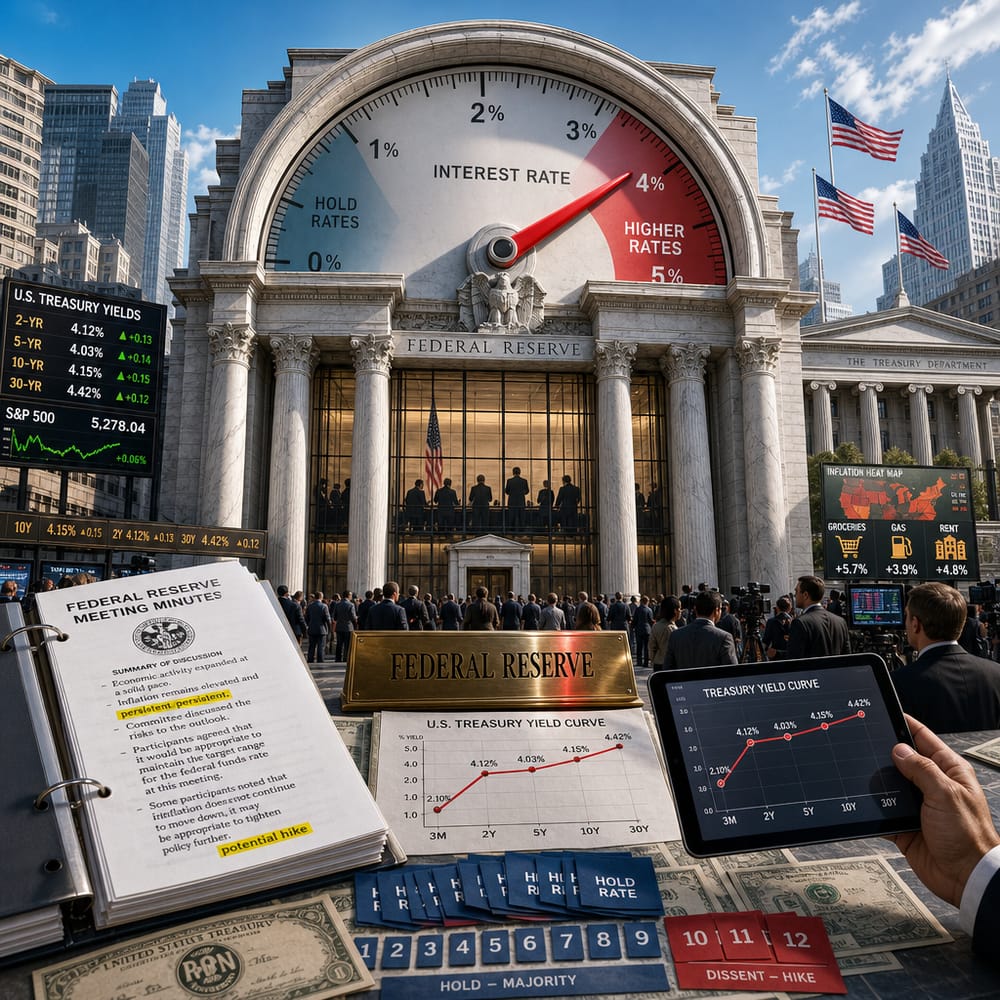
At first blush, you might think the Fed’s latest move is like reaching for an umbrella when the forecast only hints of rain. But with sticky inflation clinging like a bad smell, Fed officials think another rate hike might be the shampoo America needs. The recent minutes from their meeting reveal a 9-3 vote to hold rates steady at roughly 3.6%, but those three dissenting voices are a little like canaries in the economic coal mine. They’re chirping a tune that says we might have to bump those numbers up soon if price pressures don’t ease.
But why does this matter beyond the Beltway? Let’s break it down.
IMPLICATIONS FOR THE ECONOMY
First, an interest rate hike could send ripples through the economic pond, starting with bond yields. When the Fed raises rates, yields on government bonds usually rise because new bonds have to offer better returns to compete. That might sound like good news if you've got bonds tucked away in your portfolio. Higher yields mean bigger payouts, right? But here’s the rub: if you're already holding bonds, their value could drop since shiny new bonds offer more attractive rates.
Now, let’s talk mortgages. Remember those dreamy low rates from a year or so ago? They’re like your favorite discontinued ice cream flavor—probably not coming back anytime soon if the Fed hikes rates. Higher interest rates mean more expensive home loans, and that extra cost might make some folks think twice about upgrading to a bigger place or even entering the market at all. So if you’re house hunting, it might be time to lock in that rate before it climbs out of reach.
CUSTOMER BORROWING COSTS
The plot thickens when it comes to borrowing costs. Think of interest rates as the price tag for borrowing money—when they rise, so does your expense of financing a car, a home, or even the next big gadget you’ve got your eyes on. Credit card rates could climb too, which is like adding insult to injury if you’re already carrying a balance. Your plastic might get a little heavier, and we're not talking about the weight of your spending habits.
If you’re a business owner, a rate hike means you’ll likely pay more to borrow for expansion plans or inventory restocking. That could slow down business growth and hiring, which isn’t exactly music to anyone’s ears when we're all rooting for a robust economy.
SENTIMENT AND STRATEGIES
Investor sentiment could also catch a cold if rates rise. A rate hike might signal that we’ve got a tough inflation fight ahead, and that kind of uncertainty can make stock markets jittery. Stocks have enjoyed a nice run lately, but higher rates could lead to a recalibration of stock valuations. Translation: What was once a sure bet might start looking a bit riskier.
But hold your horses; it’s not all gloom and doom. Some sectors stand to benefit, like banks. Higher rates typically fatten up their profit margins since they can charge more on loans while interest costs on deposits lag behind. So, if you’re holding bank stocks, a rate hike might juice up your portfolio a bit.
On a broader scale, how the Fed moves will also depend on how inflation behaves. Right now, it’s like waiting for a celebrity to show up at a party; we know it’s coming down, but not quite when and how fast. The Fed's looking to pin inflation back to a 2% target, but if it keeps acting like a stubborn teenager, well, they might just have to play tough love with another rate hike.
So, what’s next for us in this economic drama? Keep your eyes peeled on inflation numbers and Fed meetings. It's like watching a thriller—never dull, tons of twists, and every move counts. In the meantime, it might be wise to review your financial plan and maybe talk to your financial advisor about how to play this next Fed hand. Because when it comes to interest rates, the Fed is the dealer, but you’re the one holding the cards.
This article is for informational purposes only and is not investment advice. Always do your own research or consult a licensed financial professional before making investment decisions.
© Copyright 2024. All Rights Reserved.
© Copyright 2024. All Rights Reserved.