

Fed Minutes Signal Likely Additional Rate Hike Late in 2026 Despite Softer Inflation Signals
Friday, October 09, 2026
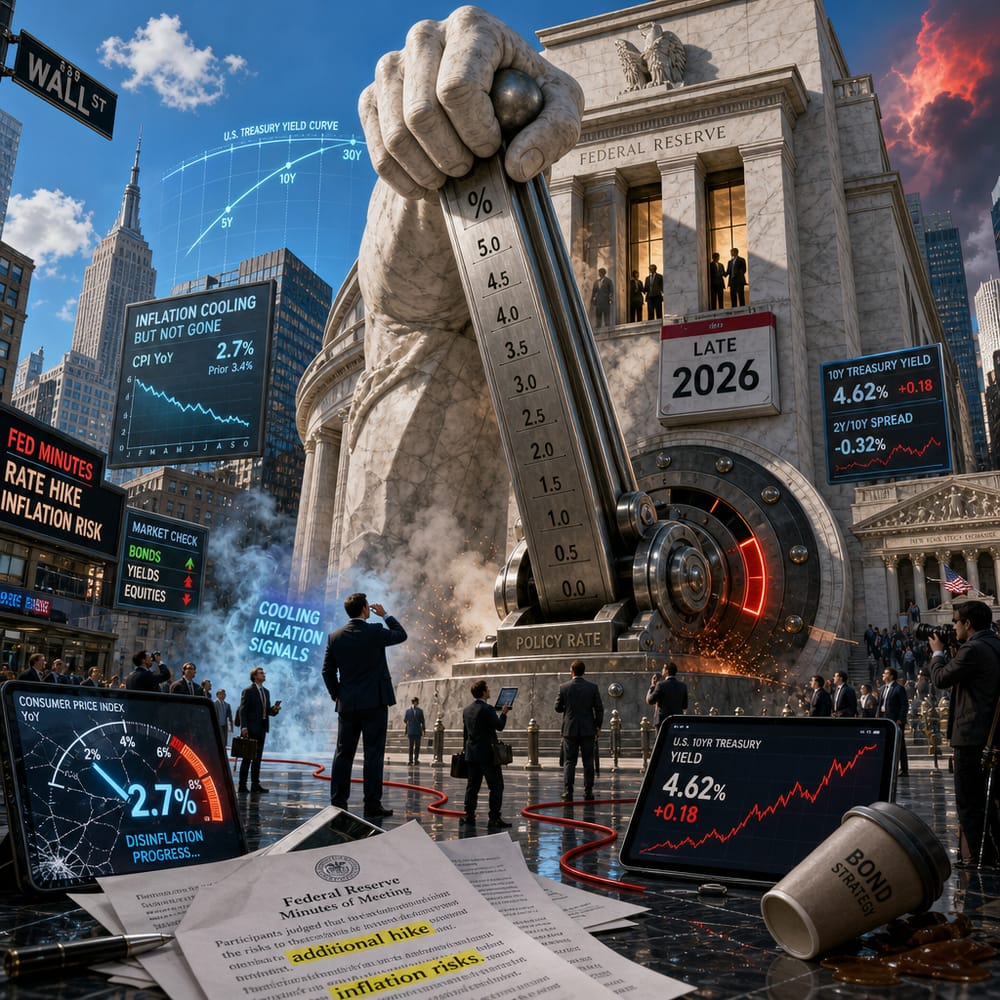
FED MINUTES SIGNAL LIKELY ADDITIONAL RATE HIKE LATE IN 2026 DESPITE SOFTER INFLATION SIGNALS
The Fed's latest minutes just dropped like a bombshell on your newsfeed – another rate hike is looming on the horizon, and it's causing more buzz than your aunt's infamous casserole at Thanksgiving. You might be asking yourself, "Wait, isn't inflation cooling down?" Excellent question, dear reader. Let's dive into the Fed's mind-boggling logic and see why they’re still seeing red when everyone else is seeing mellow yellows.
First things first, let’s talk inflation. The latest data hinted at a softening in inflation, which should be a good thing, right? After all, we've spent months dodging the rising cost of everything from avocados to iPhones. But the Fed, like that one friend who’s eternally skeptical of good news, isn’t quite buying it. They fear that beneath those softer numbers lies a beast just waiting to roar back to life. Their plan? Another rate hike before the year is out, just in case inflation decides to make an unwelcome encore.
Now, you might be thinking, "Why are they doing this when inflation is cooling?" The Fed’s reasoning is that they need to ensure inflation doesn’t just take a nap but is put to bed for good. It’s like they're the strict parent who’s taking away the car keys because you were five minutes late past curfew last month. They’re playing it safe, even if it means dealing with some grumpy teenagers – or in this case, irate investors.
So, how are markets reacting to this latest twist in the Fed’s plot? Let's just say it’s been a bit like watching a cat try to catch a laser pointer. The mere hint of another rate hike has sent shockwaves through Wall Street. Stocks took a nosedive faster than you can say "rate hike." The Russell 2000, which is the home for small-cap stocks, ended another week in the red, marking five weeks of continuous losses. Investors who were banking on a rebound have been left scratching their heads, wondering if it's time to rethink their portfolios.
But what does another rate hike mean for the rest of us who aren't glued to the stock ticker 24/7? A rate hike typically means borrowing costs are going up. So, if you’ve got plans to buy a house or are eyeing that fancy new car, brace yourself for steep financing. On the flip side, savers might do a little happy dance since interest on savings accounts could inch up. But let's be real, those benefits don’t usually outweigh the broader economic pinches.
The bigger worry here is the potential for this move to spook an already jittery economy into a slowdown. When borrowing gets too pricey, businesses may hit the brakes on expansion plans, and consumers might tighten their purse strings. It’s like throwing a wet blanket on a campfire – not exactly the vibe we’re going for in an economy trying to find its groove post-pandemic.
Now, don’t get it twisted and think the Fed is acting alone here. With the dollar finishing its fourth straight week of gains, there’s a sense in the market that the Fed's hawkish stance might be contagious. Investors are betting that Uncle Sam will keep tightening the monetary noose, making it more expensive to borrow and invest. It’s a tricky dance of trying to keep the economy from overheating while not sending it into a deep freeze.
To sum it all up, while the Fed’s intentions might seem like locking the barn after the horse has bolted, they're sticking to their guns, wary of inflation making a sneaky comeback. For savvy investors and everyday folks alike, understanding these moves is crucial in navigating the turbulent waters of our economic future. Whether you're holding stocks, eyeing new investments, or simply planning that dream vacation, staying one step ahead of the Fed’s game plan might just be your best bet.
So, keep your eyes peeled, your ears open, and your financial plans flexible. Because in the wild world of interest rates and inflation, well, you never know what twist awaits just around the corner.
This article is for informational purposes only and is not investment advice. Always do your own research or consult a licensed financial professional before making investment decisions.
© Copyright 2024. All Rights Reserved.
© Copyright 2024. All Rights Reserved.