

Fed Minutes Signal Hawkish Turn
Saturday, August 22, 2026
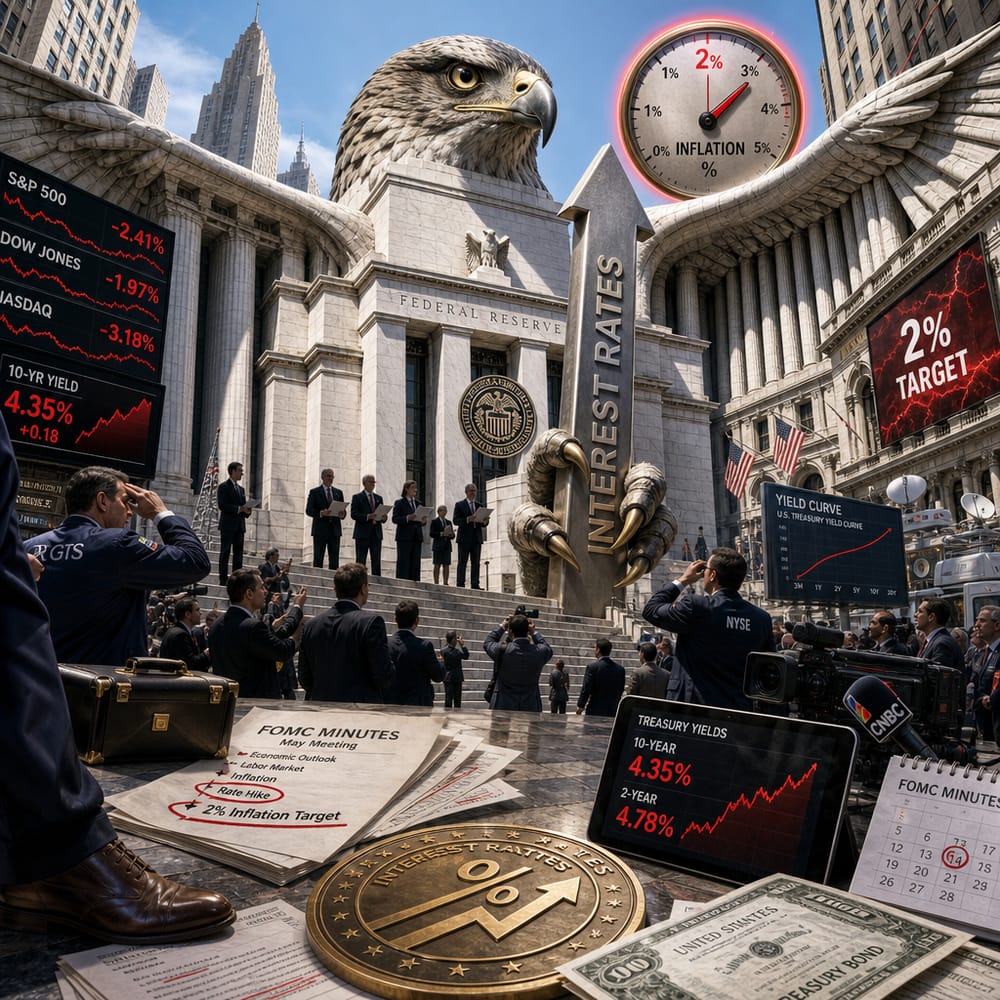
THE FEDERAL RESERVE'S HAWKISH HINT: RATE HIKES AHEAD?
Hold onto your wallets, folks, because the Federal Reserve just dropped its latest meeting minutes like a bomb on Wall Street. It seems the Fed is feeling feisty, with a hawkish lean suggesting that interest rates might not stay put if inflation doesn’t find its chill and settle back down to 2%. For those of you not fluent in Fed-speak, "hawkish" basically means they're ready to tighten the monetary screws, potentially putting a chokehold on borrowing costs and sending ripples through the markets.
So, what's the big deal if the Fed decides to crank up rates? Let’s break it down. A rate hike means more than just a few extra bucks on your credit card bill—it can shift gears on the entire economy. Higher interest rates generally mean loans get pricier. Whether you’re eyeing a new home, a car, or even just considering refinancing that student loan debt that's haunting you, you might find yourself shelling out more in interest costs. This can dampen consumer spending, which is a big engine of economic growth in the U.S.
But wait, there's more! Businesses that borrow to expand operations or invest in new projects might hit the brakes as well, which could slow down job creation. And let's not forget the impact on the stock market. Rising rates can make the stock market skittish since higher yields on bonds often make them more attractive to investors compared to riskier stocks.
Now, let’s talk about those market reactions. Investors have been doing a delicate dance, trying to anticipate the Fed’s next move. Typically, the mere whisper of a rate hike can send shivers through the stock market. Imagine the Fed as the DJ at a party; if they speed up the music (hike rates), some party-goers (investors) might decide to sit this one out (sell off stocks and retreat to safer investments like bonds).
But it's not just the stock market feeling uneasy—the bond market is already experiencing some turbulence. With yields recently hitting a 20-year high amid a global selloff, debt is making headlines. The U.S. national debt has ballooned to a staggering $40 trillion, casting a long shadow over the economy. Higher interest rates could exacerbate this by increasing the cost of servicing that debt, potentially squeezing government budgets even tighter.
So, what’s the Fed's grand plan here? Their mission—should they choose to accept it—is to get inflation under control without sending the economy into a tailspin. It’s a tightrope walk: raise rates enough to cool off inflation, but not so much that it puts the brakes on growth entirely.
For investors, this hawkish hint could mean it's time to reassess your portfolio. If you're heavy on stocks, it might be wise to consider diversifying into sectors that traditionally fare better in rising rate environments, such as financials and consumer staples. Or maybe it’s time to look at high-yield dividend stocks, which can offer a buffer against volatility.
And let's not forget the upcoming Jackson Hole Symposium, where Fed Chairman Kevin Marsh will take the stage, potentially adding more fuel to the speculation fire. This annual gathering is like the Olympics for finance nerds, where central bankers, economists, and academics convene to discuss economic policy. All eyes will be on Marsh’s address to see if he drops any further clues about the Fed’s plans.
So, dear reader, whether you’re an armchair economist or just trying to make sense of your 401(k), keep an eye on the Fed's next moves. Their decisions in the coming months could have a seismic impact on everything from your savings account interest to the health of the economy at large. In the meantime, stay tuned and buckle up—it’s bound to be a bumpy ride.
This article is for informational purposes only and is not investment advice. Always do your own research or consult a licensed financial professional before making investment decisions.
© Copyright 2024. All Rights Reserved.
© Copyright 2024. All Rights Reserved.