

Fed Minutes Signal Hawkish Bias If Inflation Remains Elevated
Sunday, August 23, 2026
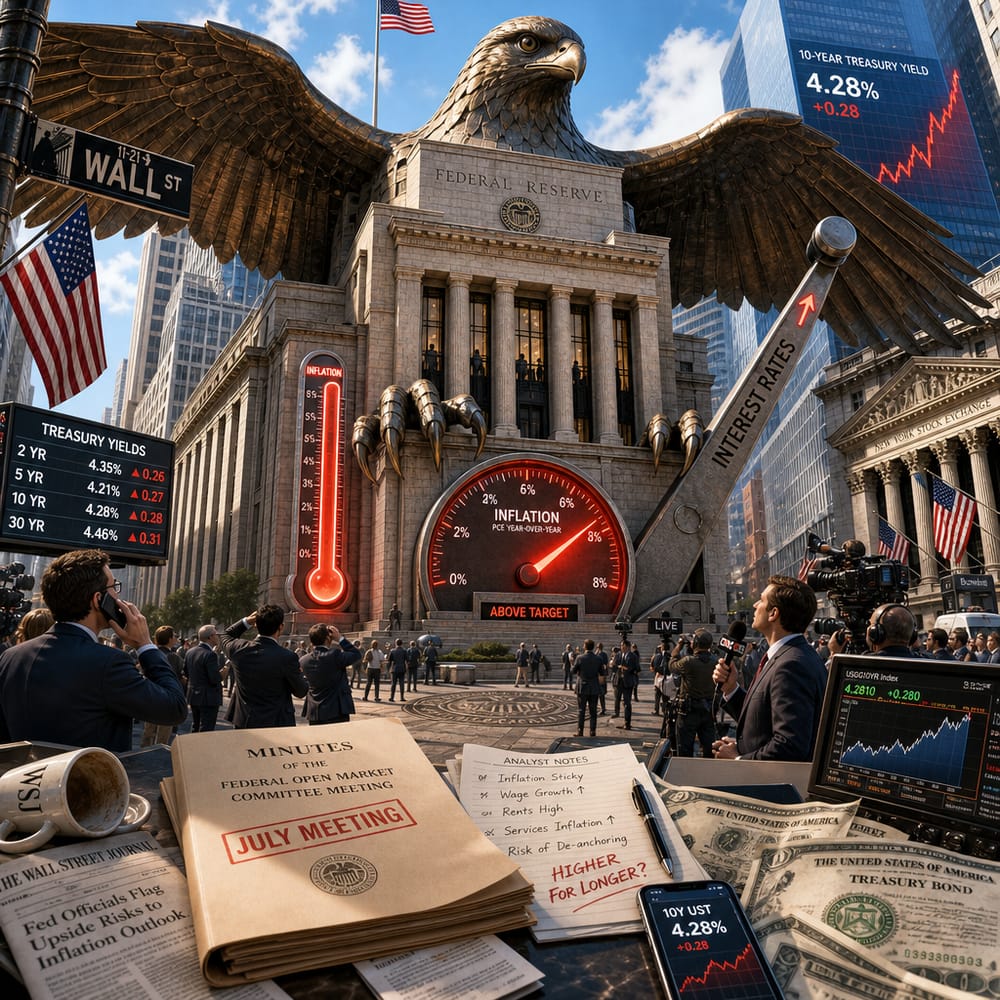
THE FED ISN'T DONE YET: MORE RATE HIKES IN THE PIPELINE?
Ah, the Federal Reserve meetings—where financial wizards gather to decide our economic fate while the rest of us squint at our balance sheets. If you thought chairman Jerome Powell and his crew were ready to fold their rate hiking tent, think again. According to the minutes from their July soiree, many Fed officials are leaning toward more interest rate hikes if inflation doesn’t cool its jets. But why should this bureaucratic chinwag matter to you? Buckle up; we’re diving into what this means for your portfolio, your wallet, and maybe even your blood pressure.
SEPTEMBER SURPRISE?
Let's cut to the chase: How likely is a rate hike in September? Well, this isn't a Vegas roulette table where you can just place your bets and hope for the best. The Fed has made it clear that they’re not afraid to hike rates if inflation doesn’t slow down. The Consumer Price Index (CPI), which tracks inflation by measuring changes in the cost of a basket of goods, is the Fed's canary in the coal mine. If it keeps chirping high numbers, expect another increase in borrowing costs.
Bond yields are already doing their jittery dance, with long-term yields inching higher at the mere hint of more rate hikes. Higher interest rates would mean that new bonds offer better returns, which could make the current bonds in your portfolio look about as appealing as last night's leftovers. So, what should you do if you’re an investor trying to navigate these choppy waters?
BOND YIELDS AND YOUR STRATEGY TOOLBOX
First off, let’s talk about bond yields, the finance world’s eternal see-saw. When interest rates rise, bond yields follow, but bond prices tend to sink. If you’re holding onto long-term bonds, you might be in for a rough ride if the Fed keeps its hawkish tone.
For those freshly minted to the investment world, hawkish means they're more likely to favor raising interest rates to keep inflation in check. According to the July minutes, the Fed seems to be wearing its hawkish feathers quite proudly. It’s a bit like they’re telling inflation, “Calm down, or we’ll bring out the big guns.”
So, how should investors pivot? Consider shorter-duration bonds that offer more stability if the Fed keeps hiking rates. These are like the speedboats in the ocean of investing—quick to maneuver and less likely to get caught in the tide of rising rates. On the stock market front, sectors like utilities and real estate, which tend to see profits crimped by rising rates, might need to be kept on a short leash.
THE BIGGER PICTURE: THE DEBT CONUNDRUM
While we're talking rates and yields, there’s an elephant in the room that’s demanding attention—U.S. national debt, now a mind-boggling $40 trillion. Higher interest rates mean the government’s interest payments on its debt also balloon, siphoning public funds away from other critical areas like infrastructure and healthcare.
For the average Joe or Jane, this could mean tightening government budgets down the road, leading to less public spending and, potentially, slower economic growth. Austerity might become the buzzword of the day, and not in a fun, retro kind of way.
SO, WHAT'S THE FINAL WORD?
In financial terms, uncertainty is like kryptonite, and right now, there’s a lot of it swirling around. The Fed has made it clear that they’re ready to adjust rates as needed, which means staying agile as an investor is more crucial than ever.
The upcoming months will reveal if inflation continues to defy the Fed’s efforts like a cat that just won’t come down from a tree. If it does, prepare for more rate hikes and the rippling impact on bond yields and broader markets. In the meantime, keep your eyes peeled on CPI data, because that's where the Fed's gaze is firmly fixed.
Until the next Fed meeting (mark your calendars for September), stay nimble, stay informed, and remember: in this economy, even the wisest owls sometimes have to wing it.
This article is for informational purposes only and is not investment advice. Always do your own research or consult a licensed financial professional before making investment decisions.
© Copyright 2024. All Rights Reserved.
© Copyright 2024. All Rights Reserved.