

Fed Minutes Signal December Rate Hike Amid Inflation Concerns
Friday, November 27, 2026
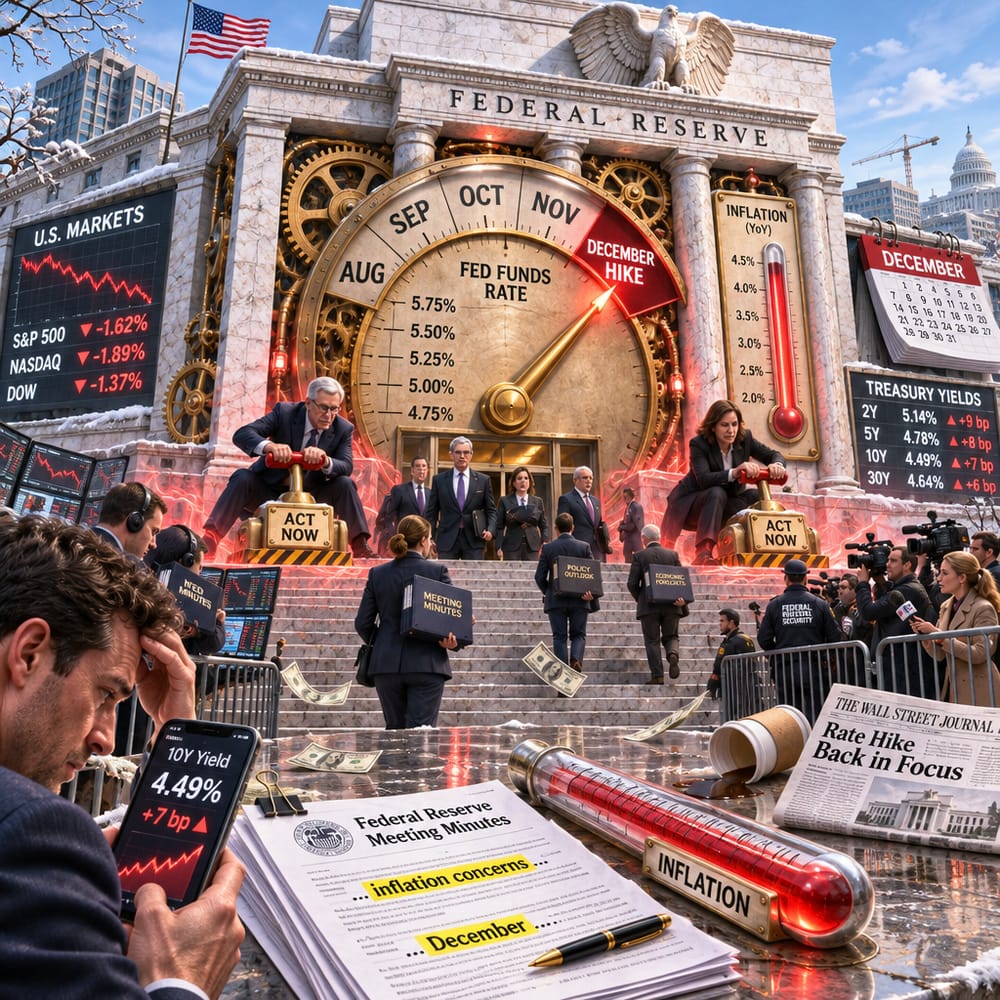
FED MINUTES SIGNAL DECEMBER RATE HIKE AMID INFLATION CONCERNS
When it comes to the Federal Reserve, they’re more like your least favorite aunt at Thanksgiving—buzzing with opinions and always ready to shake things up. The latest chatter from their minutes? A likely December rate hike that’s got everyone clutching their wallets a little tighter. As inflation refuses to take a breather, the Fed seems poised to hit the rate hike button, but not without a little drama behind closed doors. Let’s dig into what this means for you, me, and the American economy.
THE FED’S CRYSTAL BALL
First off, let’s talk about why the Fed’s in such a tizzy. Inflation is the bad penny that just won’t go away. October’s consumer price index nudged up by 0.4%, catching everyone off guard, while the personal consumption expenditure index clocked a 3.8% hike from last year. Translation: everything from your morning coffee to your Netflix subscription is costing more. Consumers are starting to pinch pennies, and big-box kings like Walmart and Lowe’s are feeling the pinch with slower sales growth.
Now, the Fed isn’t exactly the type to sit idly by. Their latest minutes reveal a hawkish vibe—think eagle-eyed and ready to pounce—with December looking like the month for a rate hike showdown. Two officials, however, were so eager to wrestle inflation to the ground that they voted for an immediate hike. Shot down, but points for enthusiasm.
THE ECONOMIC RIPPLE EFFECT
But what does a rate hike actually mean? In simple terms, it’s like adding extra resistance to your financial workout. Interest rates go up, borrowing becomes pricier, and suddenly that new car or house feels a tad more luxurious. Mortgage rates could creep up, making housing even more elusive for first-time buyers or those looking to trade up.
The consumer goods sector might also feel the pinch. As borrowing costs climb, consumers could think twice before splurging on non-essentials. Retailers banking on a robust holiday season could find consumers more interested in bargain bin deals than high-ticket gadgets.
For investors, this is where the plot thickens. Higher rates often strengthen the dollar, which is a mixed bag for stocks. While a strong dollar can make U.S. exports more expensive (not great for international sales), it also means foreign goods are cheaper at home. Stocks in industries reliant on international revenue might twitch nervously, while those focused domestically might breathe a sigh of relief.
THE RISKS OF PLAYING THE WAITING GAME
Now, why not just raise rates now and get it over with? Well, like any good reality show, there’s drama in the delay. Waiting too long to raise rates could let inflation continue its joyride. And while some might enjoy the thrill, too much inflation can lead to an overheated economy—think skyrocketing prices and wages that can’t keep up. If the Fed waits too long, they might have to slam on the brakes much harder later, risking an economic fender bender.
But here’s the catch: move too soon or too aggressively, and you could slow economic growth. With the specter of recession never too far from financial conversations, the Fed’s got to walk a tightrope. It’s about finding that Goldilocks zone—not too hot, not too cold, but just right.
SECTORS TO WATCH
Housing and consumer goods are on the front lines, but they aren’t the only ones. Tech companies, often fueled by cheap borrowing, could face a speed bump. Start-ups and high-growth firms that thrive on investment and leverage might find the going tough with pricier loans.
Meanwhile, financial institutions like banks might see a silver lining. Higher interest rates typically mean they can charge more for loans, potentially boosting their bottom lines. However, they also have to contend with the risk of default as consumers and businesses struggle with higher repayment costs.
THE BOTTOM LINE
As we await December’s decision, one thing’s clear: the Fed’s potential rate hike is more than just a numbers game; it’s a chess match, with each move impacting sectors in different ways. For everyday investors, understanding the Fed's strategy is akin to having a cheat sheet for what's next in the economy’s wild ride. So, buckle up, keep an eye on those rates, and maybe hold off on that big purchase until the dust settles—or until Aunt Janet from the Fed gives the all-clear.
This article is for informational purposes only and is not investment advice. Always do your own research or consult a licensed financial professional before making investment decisions.
© Copyright 2024. All Rights Reserved.
© Copyright 2024. All Rights Reserved.