

Fed Minutes Signal Another Rate Hike This Year
Thursday, October 08, 2026
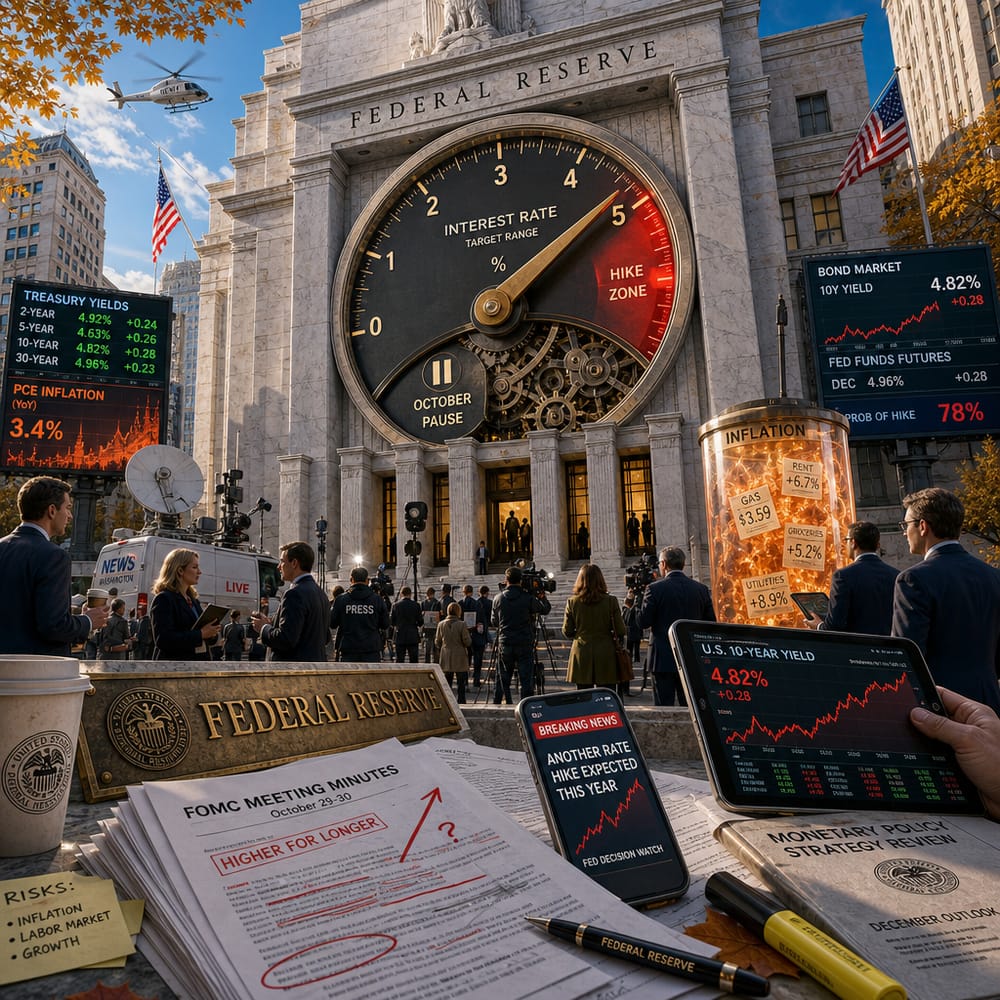
FED MINUTES SIGNAL ANOTHER RATE HIKE THIS YEAR
Hold onto your wallets, folks. The Federal Reserve just signaled it might not be done playing with interest rates this year. Despite hitting pause in October, the Fed minutes suggest another rate hike is coming down the pike. It's like they're the DJ at the party, and just when you thought the music was slowing down, BAM! Another beat drop.
Why should you care? Because this DJ's track list could impact your investment portfolio, the economy, and even the cost of that morning latte. As the Fed waltzes to its own tune, it’s creating a cacophony for markets so used to dancing to their own rhythm.
A RATE HIKE SAGA: THE IMPACT
Another rate hike could ripple through the economy like caffeine through your veins. Higher interest rates typically mean more expensive borrowing. So if you're dreaming of that new house or car, brace yourself for steeper loan costs. Businesses might also feel the pinch, facing higher expenses on loans, which could slow down their expansion plans.
But what about inflation, the villain in our economic story? Despite the Fed's valiant efforts, inflation remains stubborn. The minutes reveal that the Fed is still determined to tame this beast. They believe another rate hike could be the silver bullet to rein in prices before they gallop out of control. But as with any financial fairytale, there's a twist—these measures might just slow down economic growth, making it a delicate balancing act.
MARKET REACTION: BRACING FOR IMPACT
Now, let’s pivot to how the markets are reacting. Spoiler alert: they're not thrilled. Dow futures slid over 300 points, a clear sign that investors are jittery. Rising Treasury yields are adding to the pressure, as they climb to heights not seen since early 2000s. It's like a financial rollercoaster without the thrill of a safe landing.
Certain sectors, like banking and real estate, are more sensitive to these rate hikes. Banks might benefit from higher interest income, but if borrowing decreases, it could offset those gains. Meanwhile, real estate could slow as potential homebuyers reel from higher mortgage rates. It's a see-saw of financial fortune, and investors are trying to keep their balance.
THE FED’S DECISION-MAKING DILEMMA
So, what's driving the Fed's decision? It's a cocktail of macroeconomic data, inflationary pressures, and global uncertainties. Fed officials are currently eyeing strong employment numbers and persistent inflation, which seem to indicate a still-hot economy. Yet, they're also keeping a wary eye on geopolitical tensions and their potential economic fallout, like your nosy neighbor peeking over the fence.
The complexity of these factors makes the Fed's decision-making process feel like solving a Rubik's cube blindfolded. Can they fix inflation without tanking growth? It's a question that keeps economists awake at night.
WHAT IT MEANS FOR YOU
For the everyday investor, this signals a time for strategy. The era of easy money is fading, and it might be time to reassess portfolios. Consider sectors that historically perform well in high-rate environments, like consumer staples and utilities. They might not have the flash of tech stocks, but they can weather the storm.
Consumer behavior could also shift. With higher rates, saving becomes more attractive. However, if inflation continues its upward march, the purchasing power of those saved dollars might erode quicker than you can say "compounded interest."
BOTTOM LINE
As we prepare for what’s next, remember that the Fed's decisions are a mixed bag of impacts—some good, some challenging, all significant. It's a financial chess game, and the Fed is moving the bishop. Whether their next move puts the economy in check or checkmate remains to be seen. But one thing's for sure: as retail investors, staying informed and agile will help us navigate whatever comes our way. So keep your eyes on the Fed, your hand on your wallet, and your portfolio diversified. The only constant in markets is change, after all.
This article is for informational purposes only and is not investment advice. Always do your own research or consult a licensed financial professional before making investment decisions.
© Copyright 2024. All Rights Reserved.
© Copyright 2024. All Rights Reserved.