

Fed Minutes Reveal Rising Hawkish Sentiment Amid Inflation Concerns
Sunday, August 23, 2026
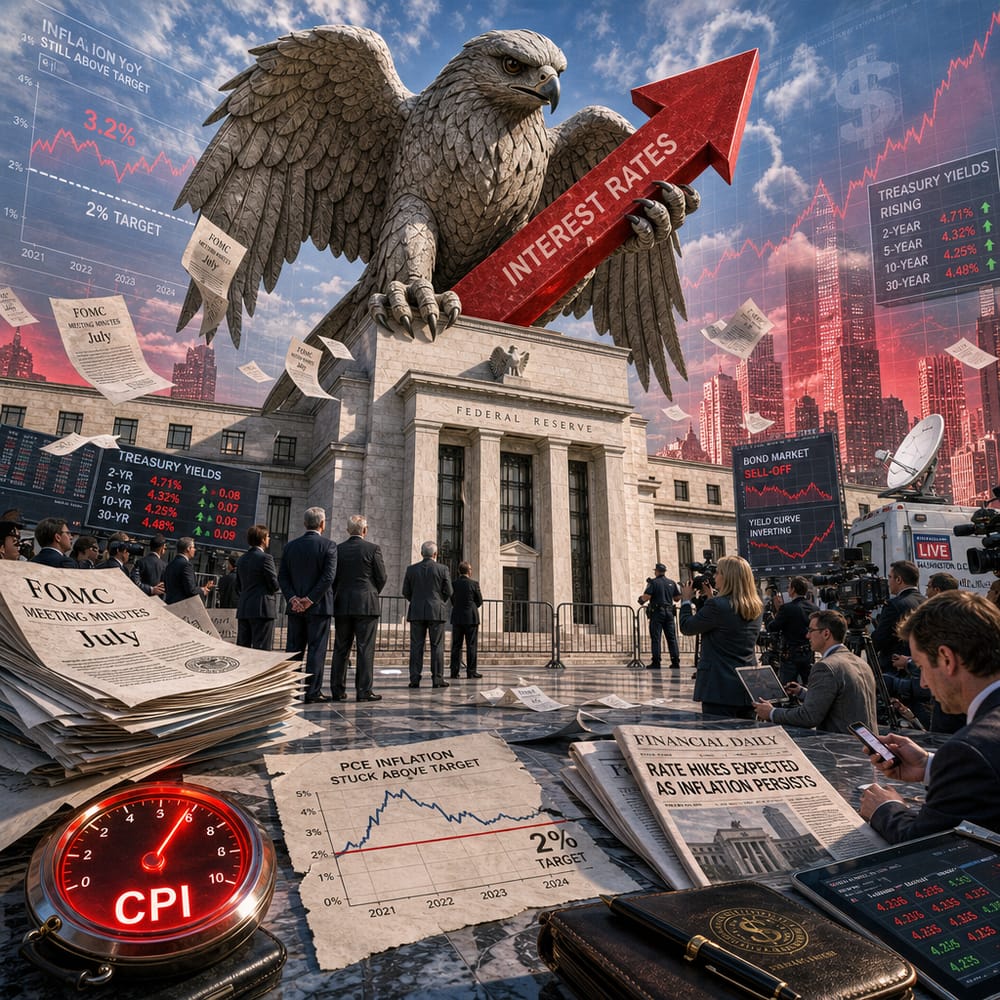
THE FED'S HAWKS ARE CIRCLING: WHAT IT MEANS FOR YOUR WALLET
Hold onto your hats, because the Federal Reserve just dropped a bombshell in its recent meeting minutes. It seems like the central bank might be ready to swoop in with another interest rate hike if inflation doesn’t play nice and ease back to the coveted 2% target. Now, I know what you're thinking: "Why should I care about a bunch of bankers in suits talking rates?" Well, my friend, because their decision could resonate all the way from Wall Street to your wallet.
INFLATION WOES AND THE HAWKISH CHORUS
The Federal Reserve, the folks who keep the economy from going off the rails, are getting serious about inflation. Inflation, in simple terms, is the rate at which prices for goods and services rise, reducing purchasing power. And when inflation gets out of hand, our dollars don’t stretch as far as they used to, leaving us feeling like we’re running on a financial treadmill.
The Fed’s July meeting minutes reveal a rising hawkish sentiment among policymakers. “Hawkish?” you say. No, they’re not birdwatchers. In financial lingo, a "hawk" is someone who prefers higher interest rates to keep inflation in check. So, when the Fed gets hawkish, it means they’re ready to raise rates to cool down the economy if needed.
WHY YOU SHOULD CARE ABOUT INTEREST RATES
Why should you care if the Fed decides to crank up interest rates? Because it affects borrowing costs for everything from mortgages to credit cards. When rates rise, loans get pricier, making it more expensive for consumers and businesses to borrow money. This can slow down spending, investment, and in turn, economic growth.
If you're house hunting, a rate hike could make your dream home just a tad less affordable. For investors, higher rates can mean different things for stocks, bonds, and other assets. Stocks tend to take a hit as borrowing costs rise, while bonds might start to look more attractive as their yields increase.
INVESTORS REACT WITH CAUTION
The mere whisper of a rate hike can send shivers through the stock market. Investors, ever the sensitive lot, are already reacting to the Fed's hawkish tone with a mix of caution and apprehension. Some sectors might get hit harder than others. Tech stocks, for instance, often feel the chill first since they're heavily reliant on borrowing for growth.
On the flip side, financial stocks like banks could enjoy a little sunshine. Higher interest rates generally mean bigger profits for banks as they can charge more for loans.
THE ECONOMIC JUGGLING ACT
The Fed is trying to balance two plates at once: controlling inflation without stalling economic growth. It’s like trying to stop a speeding car without slamming on the brakes too hard. Too much braking and the economy could skid into a recession. Too little, and inflation keeps running wild.
But don't let this potential for hawkish action keep you up at night. The Fed has been pretty transparent about its willingness to adjust the throttle based on how the economic winds blow. In other words, they won’t just hike rates for the fun of it.
YOUR NEXT MOVE
So, what should you do with this information? For starters, keep a keen eye on the Fed’s next moves and how inflation is trending. If you’re thinking about making big purchases or investments, factor in the possibility of higher borrowing costs.
If you're an investor, consider how different rate scenarios might affect your portfolio. Diversification remains your best friend during uncertain times. Cover your bases by spreading investments across various sectors, just like you wouldn't bet it all on one horse at the racetrack.
In conclusion, while the Fed’s hawkish tilt may seem like financial gobbledygook, it’s crucial for understanding where the economy might be headed next. Keep your ears to the ground and your eyes on the market, because as the Fed goes, so goes the economy—and your financial future.
This article is for informational purposes only and is not investment advice. Always do your own research or consult a licensed financial professional before making investment decisions.
© Copyright 2024. All Rights Reserved.
© Copyright 2024. All Rights Reserved.