

Fed Minutes Reveal Potential Rate Hike Amid Inflation Concerns
Monday, August 24, 2026
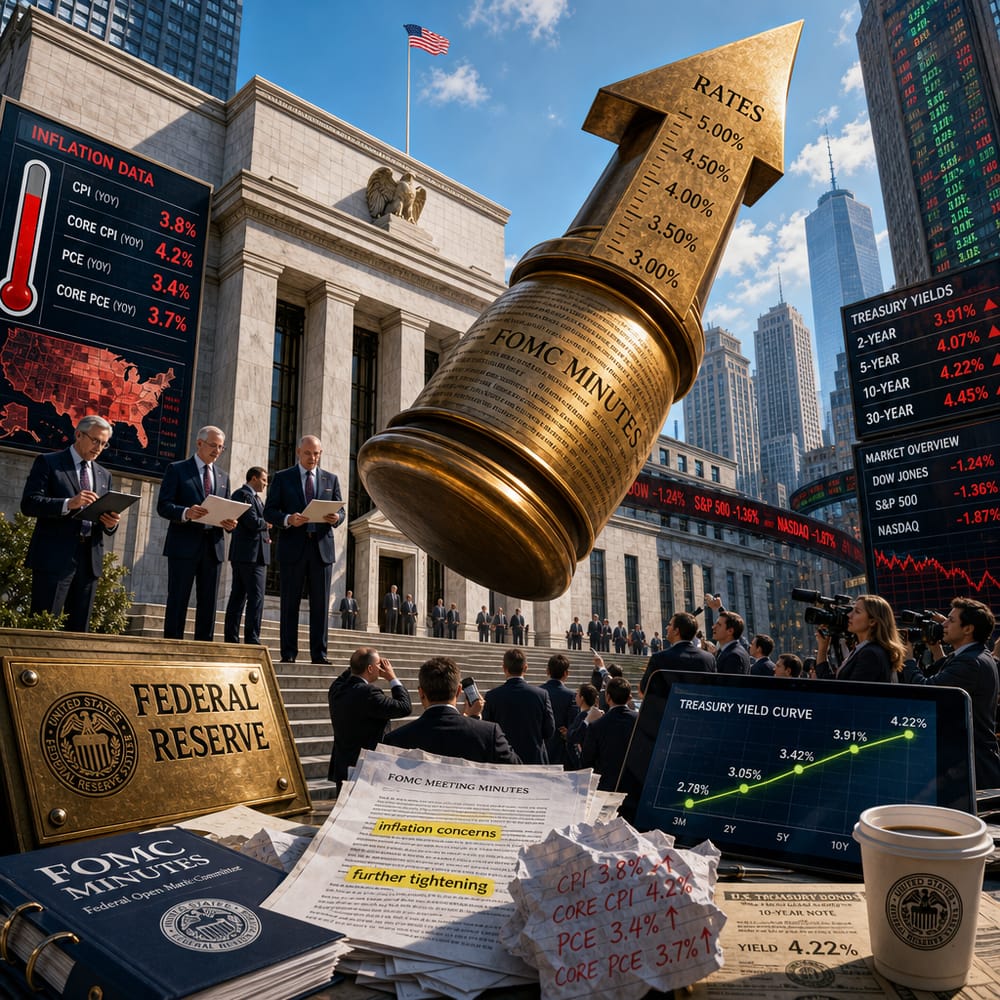
FED MINUTES REVEAL POTENTIAL RATE HIKE AMID INFLATION CONCERNS
Alright, folks, buckle up, because the Federal Reserve is back in the spotlight and things might get a little bumpy. According to the recently released FOMC meeting minutes, some of our favorite central bankers are toying with the idea of hiking interest rates. Why? Because inflation is sticking around like that one guest who doesn’t get the hint that the party is over.
Let’s break it down. Inflation is the economic version of trying to lose that last five pounds before vacation—it just won't budge. Now, the Fed has been keeping interest rates lower than your uncle's expectations for his fantasy football team, hoping it’ll encourage spending. It’s been their go-to move to keep the economy rolling like a well-oiled machine. But, with inflation refusing to take a back seat, the Fed’s starting to rethink their strategy. If they decide to pump the breaks with a rate hike, it could mean a whole lot of changes for the economy and your wallet. Let’s dive in.
WHAT DOES A RATE HIKE EVEN MEAN?
When the Fed whispers about raising rates, they’re talking about the interest rate that banks use to borrow from each other. A hike would make borrowing more expensive, trickling down to everything from credit cards to mortgages. For the average Joe, this could mean kissing those low-interest loans goodbye.
Now, higher rates typically slow down the economy. They make borrowing more expensive, which can cool down spending and, in turn, inflation. It’s the Fed’s way of telling inflation to take a chill pill. But here’s the kicker—while the Fed wants to ensure prices don’t spiral out of control, they also don’t want to suffocate economic growth. It’s like walking a tightrope with an itchy nose.
SO, WHAT’S THE BIG DEAL?
A potential rate hike could hit consumers where it hurts most—their wallets. Higher interest rates mean that if you’re looking to buy a house or a car, you might have to tighten those purse strings. Mortgages, car loans, and credit card rates could all increase, making it more expensive to finance big purchases. This could cause consumers to reconsider breaking open the piggy bank for that new couch or gadget. Less spending can lead to slower economic growth, and that's not the only twist in this drama.
Stock markets, which have been enjoying a nice run, might react negatively to rate hikes. Investors typically don’t enjoy uncertainty, and a rate increase introduces just that. Higher interest rates can also make bonds more attractive compared to stocks, potentially leading to a shift in investment strategies.
THE RISKS OF NOT RAISING RATES
On the flip side, if the Fed decides to hold off on raising rates, we face another set of challenges. Keeping rates too low for too long can fuel inflation even further. It's a bit like ignoring a small leak in your boat—it only gets worse with time. Prices could continue to climb faster than wages, squeezing consumers’ purchasing power. It’s a classic catch-22 situation: raise rates to curb inflation but risk slowing the economy, or keep rates low and watch prices keep rising.
WHAT CAN WE EXPECT?
So, what does this all mean for you? Well, it might be time to reassess those spending and saving strategies. If a rate hike is in the cards, securing loans sooner rather than later might save you some cash. And keeping an eye on inflation indices could offer some clues about future rate decisions. In the meantime, we’ll be watching to see if the Fed decides to play the hero, the villain, or somewhere in between.
In conclusion, whether you’re living for the thrill of market swings or just trying to keep your grocery bill manageable, the Fed's next move is something to watch closely. They’re playing a high-stakes game of economic chess, and everyone’s waiting to see what their next move will be.
The bottom line is this: like it or not, we’re all along for the ride. Keep your eyes on the Fed, your hands on your wallet, and your wits about you. Inflation might be stubborn, but so are we. Stay tuned.
This article is for informational purposes only and is not investment advice. Always do your own research or consult a licensed financial professional before making investment decisions.
© Copyright 2024. All Rights Reserved.
© Copyright 2024. All Rights Reserved.