

Fed Minutes Reveal Internal Split on Inflation Risks and Rate Path
Saturday, August 15, 2026
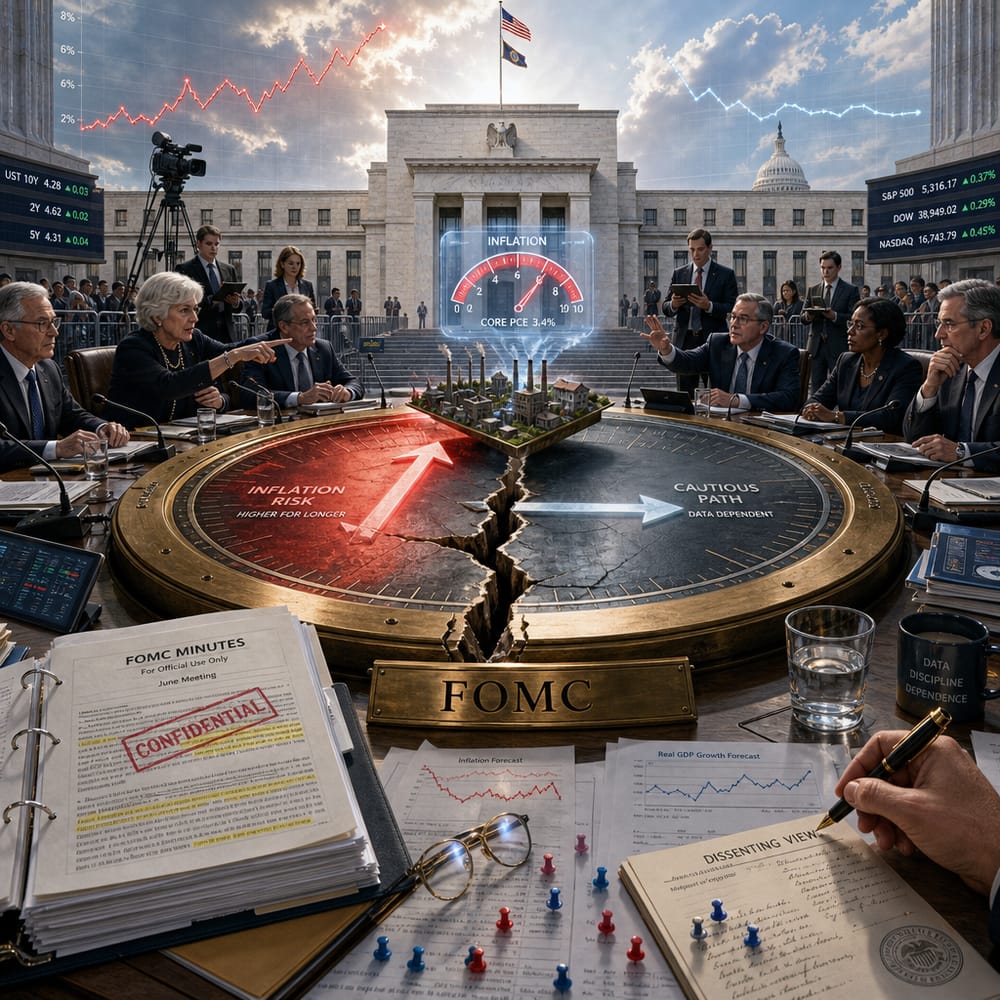
FED MINUTES REVEAL INTERNAL SPLIT ON INFLATION RISKS AND RATE PATH
If you thought the Federal Reserve was a monolithic tank marching in unison, think again. Recent Fed minutes reveal it's more like a troop of jazz dancers, each with a different opinion on whether to tap dance, pirouette, or just sit this one out. The Federal Open Market Committee (FOMC) is divided on inflation's trajectory and future rate hikes, leaving investors and economists with nothing but a crystal ball and a prayer.
THE GREAT DIVIDE
The Fed's corridors are echoing with division. Some officials are channeling their inner hawk, worried inflation will soar like a hot air balloon, necessitating further interest rate hikes. Others are the doves of the group, cooing about the potential for inflation to settle down on its own, thus advocating for a pause on further rate tinkering. It's a classic case of glass-half-full vs. glass-half-empty, and the stakes couldn't be higher.
This split isn't just a friendly debate over coffee; it holds the power to shape U.S. monetary policy. If the hawks win, we could see more rate hikes in the future—a move that tends to cool down economic activity and, unfortunately, your stock portfolio. If the doves prevail, expect a steadier hand and potentially more favorable conditions for borrowing and economic growth.
UNCERTAINTY LOOMING LARGE
With these divisions, uncertainty is the name of the game. As investors, we're left speculating which side will take the reins next. This unpredictability could lead to market volatility, as investors scramble to adjust their portfolios based on the Fed's every hint or whisper. In the world of finance, uncertainty is that uninvited guest who refuses to leave the party, and the markets don't take kindly to it.
For the average retail investor, this means strap in and brace for potentially choppier waters ahead. The markets thrive on predictability, and without it, we may see swings reminiscent of a roller coaster—and not the fun kind.
THE MARKET'S CRYSTAL BALL
How are the financial wizards, aka economists and market analysts, interpreting this internal Fed clash? Most agree that this division hints at a more cautious approach from the Fed. They don't want to stifle the economic recovery by raising rates too quickly, but they also don't want inflation to spiral out of control. Picture a tightrope walker: one wrong step could mean a tumble into recession or runaway inflation.
As such, the broader financial markets are likely to keep an eagle eye on economic indicators like unemployment rates, consumer spending, and—most importantly—upcoming Fed meetings. Each data release is another puzzle piece, helping to predict the Fed's next move.
IMPLICATIONS FOR INVESTORS
So, what does this mean for you, the everyday investor who just wants to see some green in your portfolio at the end of the day? Short answer: vigilance is key. Keep a close watch on sector performance, particularly interest-sensitive areas like real estate and banking, which could be more volatile with rate changes. If more rate hikes are on the horizon, the cost of borrowing could rise, affecting companies reliant on debt, and by extension, their stock prices.
Moreover, stay informed. The Fed's decisions are not made in a vacuum, and broader economic trends will influence their path. As an investor, being proactive rather than reactive could make all the difference in navigating these uncertain monetary waters.
BOTTOM LINE
The Fed's internal split is like a tightly wound spring; as it unravels, it's going to have significant repercussions across the financial landscape. From interest rates to economic growth, and market stability, everything's on the line. For now, investors, economists, and market analysts will keep refreshing their feeds for any sign of consensus among the Fed's jazz dancers. Until then, keep your investment strategies as flexible as those nimble Fed officials and be prepared to act when the music changes.
This article is for informational purposes only and is not investment advice. Always do your own research or consult a licensed financial professional before making investment decisions.
© Copyright 2024. All Rights Reserved.
© Copyright 2024. All Rights Reserved.