

Fed Minutes Reveal Hawkish Undercurrent
Wednesday, August 19, 2026
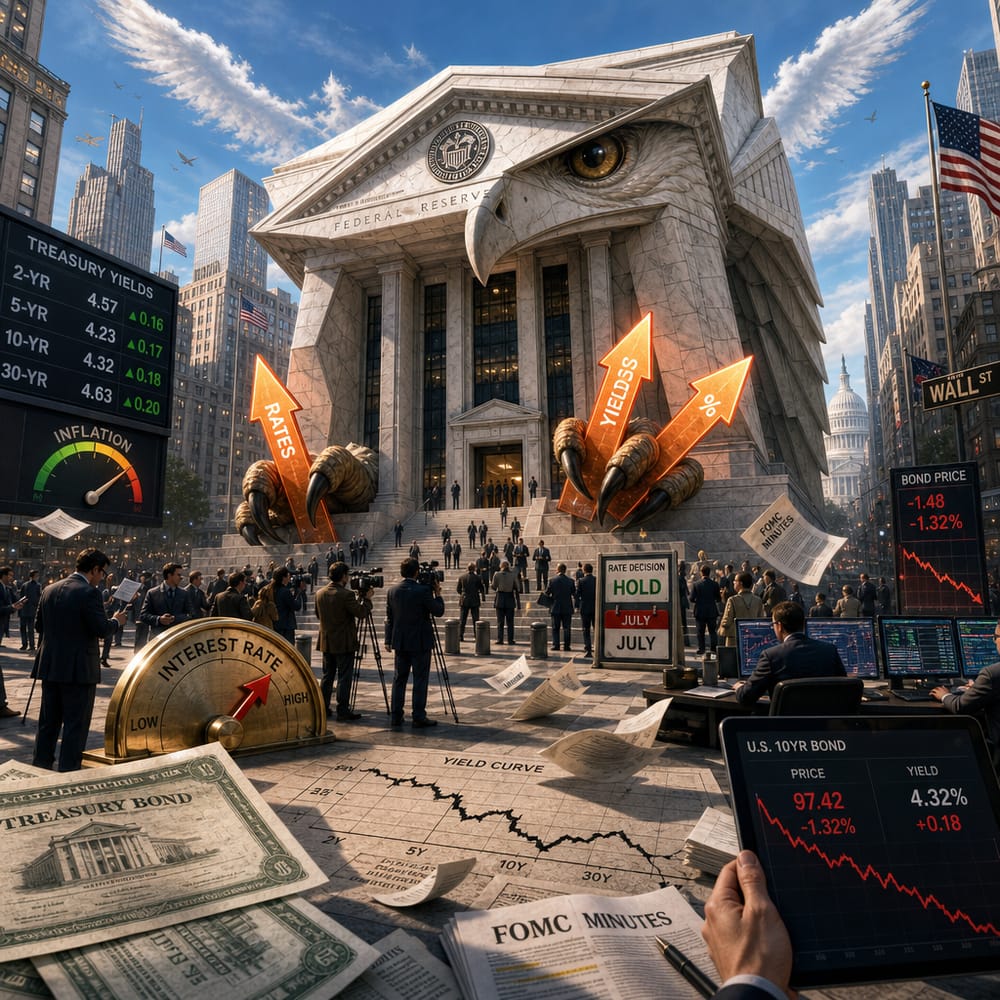
FED MINUTES REVEAL HAWKISH UNDERCURRENT
When the Federal Reserve talks, investors listen. So, what did the latest Fed minutes say? Buckle up, because it seems the Fed has a poker face, but a hawkish undercurrent that might make the market sweat. Even though the Fed decided to keep interest rates steady in July, a closer look at the minutes reveals that several officials are itching to hike rates again if inflation doesn't cool its jets.
Why does this matter to you, dear investor scrolling through your phone while sipping a coffee? Because the Fed’s decision influences those interest rates that affect everything from your mortgage payments to the yield on those bonds you've been eyeing. The market's pulse quickens every time the Fed hints at rate hikes because it can change the scenery across the financial landscape.
To better understand the Fed's poker hand, let’s talk about the chance of a rate hike at the next few meetings. Picture this: inflation is like that stubborn jam stain on your kitchen counter — it just won't go away. If it continues to linger, the Fed could very well send rates northward. It’s not a done deal, but with several officials showing an itchy trigger finger, the possibility is real.
Now, let’s switch gears and look at how potential rate hikes could ripple through different sectors. For starters, the bond market usually feels the heat first. Rising rates make existing bonds, which carry lower yields, less attractive. This can lead to a sell-off as investors chase after newer issues with higher returns. And for anyone holding bonds, that’s about as welcome as a surprise rainstorm during a picnic.
Next up, we have the ever-fickle stock market. Higher rates can be like kryptonite for stocks, particularly the high-flying tech darlings that thrive in a low-rate environment. These companies often depend on cheap borrowing to fuel their growth and innovation. Take that away, and the shine might dull. Keep an eye on your tech portfolio if the rate hikes come rolling in.
Meanwhile, sectors like financials might just be popping the champagne. Banks, for instance, generally perform better when rates rise because they can charge more for loans while the interest they pay on deposits lags behind. So, if you’re banking on banks, potential rate hikes might be a silver lining.
Real estate, however, might find itself in a bit of a pickle. Higher interest rates can cool off housing demand faster than you can say “mortgage refinancing.” If you’re in the market for a new home, this could mean fewer bidding wars. For real estate investors, though, the party might quiet down as borrowing costs climb.
Let's not forget about the broader economy. With the U.S. government debt now past the $40 trillion mark, the fiscal situation is already a tightrope walk — add higher rates to the mix, and balancing the budget becomes a circus act. The government's borrowing costs could soar, adding fuel to the already blazing deficit fire.
So, what's a savvy investor like yourself to do in this milieu of monetary machinations? Keeping an eye on the Fed’s future moves is wise because they can make or break your next financial play. Diversification remains your best friend. Yes, it’s that age-old advice, but it holds true in both bullish and bearish times.
Stay nimble, keep your ear to the ground, and remember that in the world of finance, change is the only constant. The Fed may be dropping hints like Easter eggs, but with a sharp eye and a steady hand, you can decode their game plan and make it work for you.
After all, understanding the Fed's stance is like having a secret map to navigate the turbulent seas of markets — one that could help safeguard your investments against unexpected rate hikes and the ensuing ripple effects. Happy trading!
This article is for informational purposes only and is not investment advice. Always do your own research or consult a licensed financial professional before making investment decisions.
© Copyright 2024. All Rights Reserved.
© Copyright 2024. All Rights Reserved.