

Fed Minutes Reveal Growing Hawkish Bias
Thursday, October 08, 2026
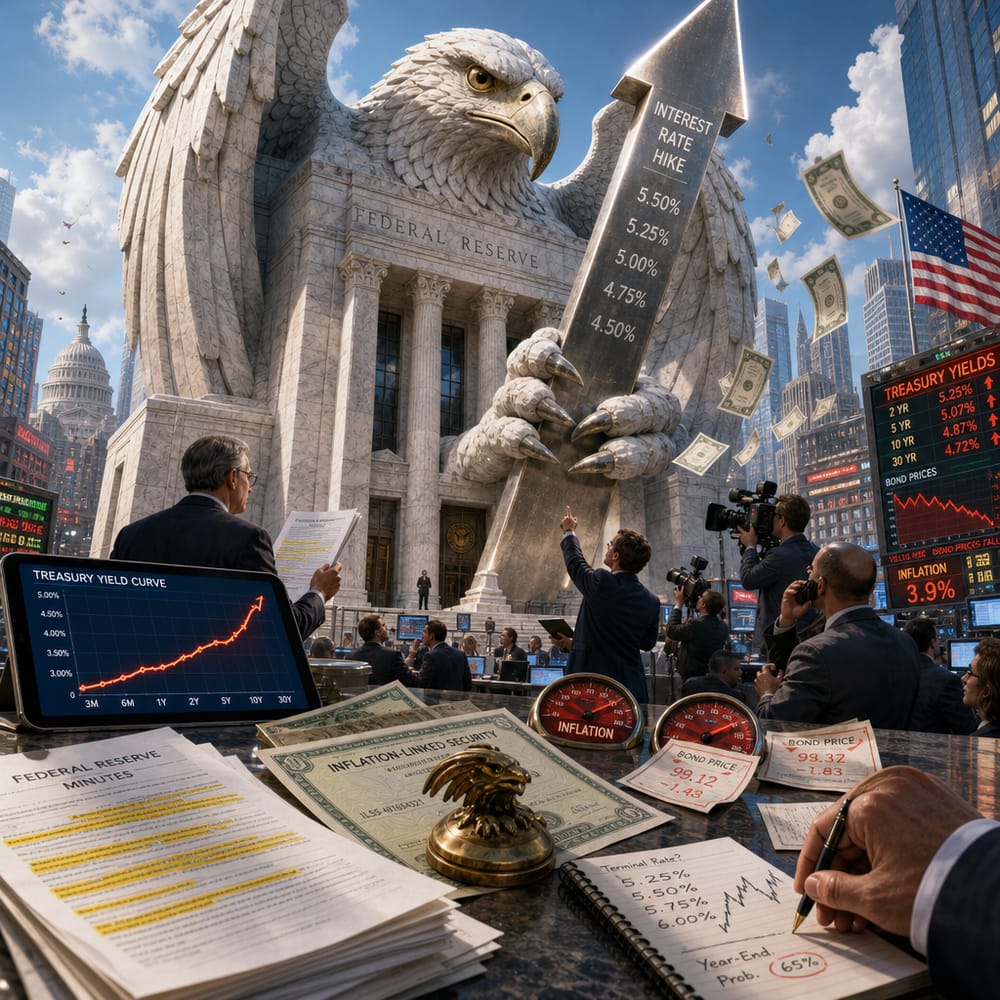
WHEN THE FED GETS HAWKISH: WHAT IT MEANS FOR YOUR WALLET AND YOUR PORTFOLIO
Picture this: you're at the helm of a ship in the middle of stormy seas. The ship is your wallet, and the storm? That’s the Federal Reserve, hinting at more rate hikes before the year’s out. Yes, the Fed just dropped their latest meeting minutes like a mic, and it’s making waves that could rock your financial boat.
The latest report from the Fed is reading like a suspense novel. It’s filled with clues about how they’re growing more inclined to slap another rate hike on the economy. Why? Because inflation is proving to be as clingy as a toddler at bedtime. With prices refusing to simmer down, the Fed’s hawkish stance (which basically means they’re ready to tighten the economy’s belt with higher rates) is grabbing attention. So, what does this mean for us mere mortals scrolling through our investment apps?
THE IMPACT ON BORROWING COSTS
First things first, let’s talk about borrowing. Rising interest rates are like that friend who always insists on splitting the bill perfectly even when you only had a salad. They make borrowing more expensive. Whether you’re eyeing a new house, a car, or just looking to refinance your student loans, expect those interest rates to climb higher. This means pay more over the life of your loans unless you’re locked in at a lower rate already.
And it’s not just consumers who feel the pinch. Businesses borrowing to expand or invest will also face stiffer financing. This could slow down growth and investments, trickling down to job markets and consumer spending.
MARKET REACTIONS: BUCKLE UP
Now, markets love speculation almost as much as they love a good rally, but hawkish signals from the Fed are usually the cue for a nervous slide into volatility. When the Fed talks tough on rates, stock markets can get jittery, reflecting concerns about the cost of debt and shrinking company earnings. Investors, anticipating these adjustments, may start to reassess their portfolios, shifting away from riskier assets into more secure territories like bonds or inflation-protected securities.
And speaking of bonds, keep an eye on Treasury yields. They’ve been on the rise as the Fed makes its hawkish intentions known, and they might continue to climb. Higher yields can make bonds more attractive, shifting some investor attention away from stocks. But if you’re in the market to sell, timing could be everything, as bond prices typically fall when yields rise.
SECTORS IN THE CROSSHAIRS
Let’s break it down further: which sectors might feel the Fed’s hawkish burn the most? Real estate comes to mind first. Higher interest rates can lead to higher mortgage rates, putting a damper on the housing market. Think lower demand, slower sales, and potential price dips.
Then there are the tech companies. Often relying on borrowing to fuel their growth engines, these companies might find higher rates a hefty speed bump on the freeway of expansion. And don’t forget about consumer discretionary sectors—those non-essential goods and services we splurge on when we’re feeling financially flush might see a dip in spending as people tighten their belts.
NOW WHAT?
With all this economic turbulence, how should an investor navigate? Diversification, folks. Spread those investments across different sectors and asset classes. Consider dipping into inflation-linked securities, which can offer some comfort when prices are on a relentless rise.
You might also want to revisit your bond strategy. With yields likely to rise, it could be high-yield bonds’ time to shine. But remember, chasing the best returns always comes with a side of risk.
And if you’re wondering about the dollar, expect it to keep its swagger. As rate rise bets solidify, the dollar often finds firmer footing, making U.S. investments more attractive to foreign investors. This can be a double-edged sword, though—while it boosts your travel funds, it can also make U.S. exports pricier, impacting international sales for American companies.
A FINAL WORD
Remember, no one has a crystal ball, not even the Fed. All these predictions can shift with the economic winds. As an investor, staying informed, being nimble, and possibly consulting with a financial advisor can keep you ahead of the storm. The world of finance is a dance, and while the Fed might be leading, you’re still on the floor. Let’s just hope the music stays upbeat.
This article is for informational purposes only and is not investment advice. Always do your own research or consult a licensed financial professional before making investment decisions.
© Copyright 2024. All Rights Reserved.
© Copyright 2024. All Rights Reserved.