

Fed Minutes Hint at Possible Rate Hikes Amid Inflation Concerns
Saturday, August 22, 2026
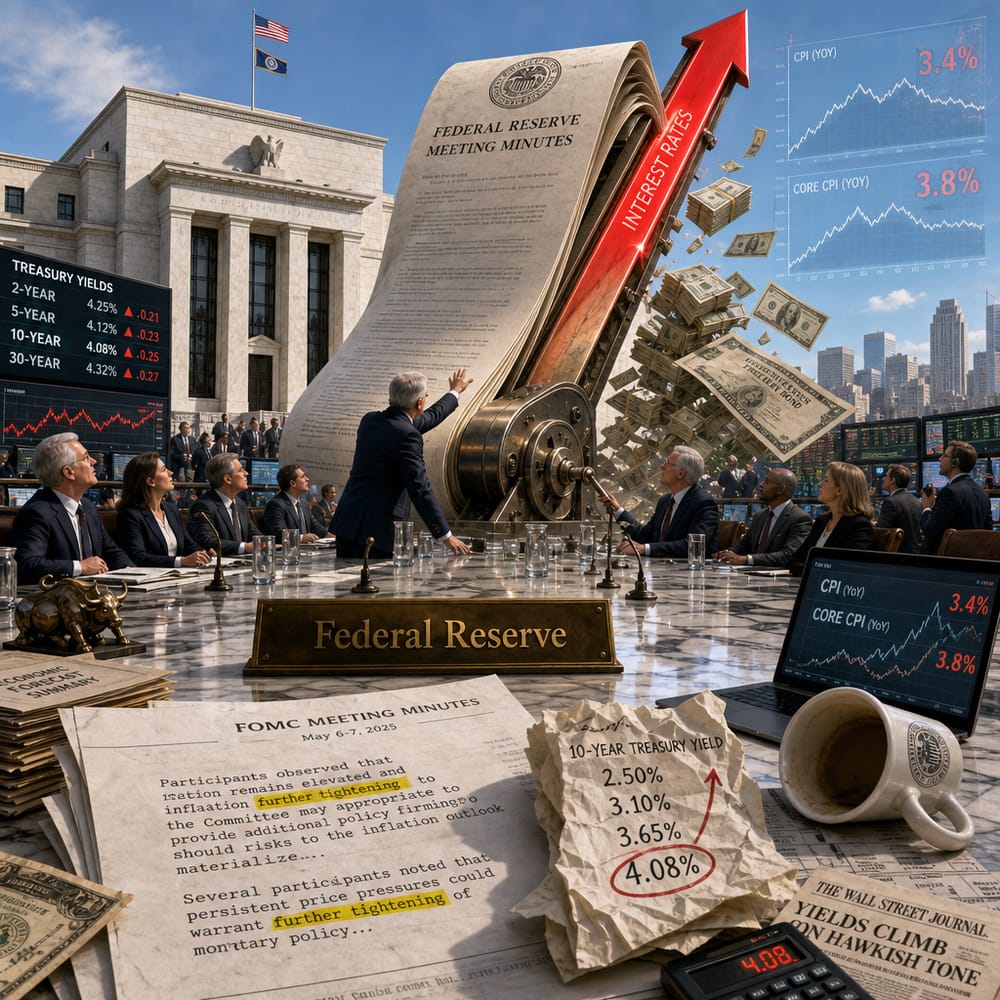
FED MINUTES HINT AT POSSIBLE RATE HIKES AMID INFLATION CONCERNS
If you were hoping the Federal Reserve would offer you a soothing lullaby about rate cuts, think again. The Fed's recent minutes are more like a blaring alarm clock, hinting that the days of low interest rates may be coming to an end if inflation keeps playing hard to get. That's right, the central bank might be gearing up to ratchet up interest rates once more, potentially shaking things up for borrowers, consumers, and investors alike.
"Why should I care?" you might ask, sipping your morning coffee. Well, friend, the Fed's stance on interest rates is like the weather app on your phone – it tells you if you'll need an umbrella or sunglasses. In financial terms, interest rates affect everything from borrowing costs to economic growth to the mood swings of the stock market. Let's break it down.
WHAT THE FED'S SIGNAL MEANS FOR THE STOCK MARKET
When the Fed raises rates, it's basically telling the economy to slow its roll. Higher rates make borrowing more expensive for companies wanting to expand and consumers looking to splurge on cars or homes. This ripple effect can cool off economic growth, sometimes triggering a stock market shake-up as investors recalibrate expectations.
For some industries, the Fed's rate hikes are akin to a fork in the road. The tech sector, for instance, often feels the pinch. Think about it: tech companies love cheap borrowing to fuel their innovation engines. But when rates rise, their operating costs can climb, potentially putting a damper on those high-flying stock valuations.
But it’s not all doom and gloom. Financial institutions like banks and insurance companies might be popping the champagne. Why? Because higher interest rates can mean fatter interest margins for them – that's banker-speak for making more money off the loans they dish out.
WHAT DOES THIS MEAN FOR YOU, THE CONSUMER?
Brace yourself for this, dear reader: if the Fed decides to hike rates, your credit card bills, car loans, and mortgages could feel like they're wearing concrete boots. Higher interest rates translate to heftier monthly payments, which might mean fewer Starbucks lattes or canceling that HBO subscription.
It’s not just loans that get pricier. Saving accounts might finally give you something to smile about after the snooze-fest of near-zero rates. If you’re a saver, a higher rate environment means your bank might start offering you a little more than couch-change interest on your deposits.
But hold on, there’s a twist. All of this could actually be part of a grander scheme. The Fed might be playing the role of party pooper in a quest to tame inflation, which has been acting like it's had one too many energy drinks lately. By making borrowing costlier, the Fed can discourage spending and cool down those red-hot price increases on everything from groceries to gasoline.
A POTENTIAL SHIFT IN MONETARY POLICY
While the Fed's minutes hint at a possible rate hike, it’s crucial to note they’re operating with a "data-dependent" approach. Picture them as a cautious driver who won't press the gas pedal on more hikes until they’ve checked the blind spots and the road ahead looks clear.
Still, the possibility of rate hikes is enough to keep investors on their toes. The stock market might experience some turbulence as investors adjust their portfolios to account for higher borrowing costs and potential slowdowns in economic growth.
In times of rate uncertainty, it’s crucial for investors to keep their eyes peeled on consumer and corporate behavior. Are companies tightening their belts? Are consumers pulling back on spending? These are the tea leaves that can offer insight into what the economic road ahead might look like.
THE BOTTOM LINE
The Fed's minutes have dropped a breadcrumb trail suggesting potential rate hikes if inflation doesn’t simmer down, which means borrowing could get pricier and the economy might slow its pace. As an investor, keeping tabs on the Fed's moves is like keeping an eye on your GPS – it helps guide you through the financial landscape.
So, what’s the takeaway? Whether you’re an investor, a borrower, or just someone trying to make sense of it all, understanding the Fed's rate direction is crucial. It’s not just about predicting the economic weather; it’s about knowing when to bring an umbrella.
This article is for informational purposes only and is not investment advice. Always do your own research or consult a licensed financial professional before making investment decisions.
© Copyright 2024. All Rights Reserved.
© Copyright 2024. All Rights Reserved.