

Fed Minutes Highlight Persistent Inflation Concerns
Sunday, August 23, 2026
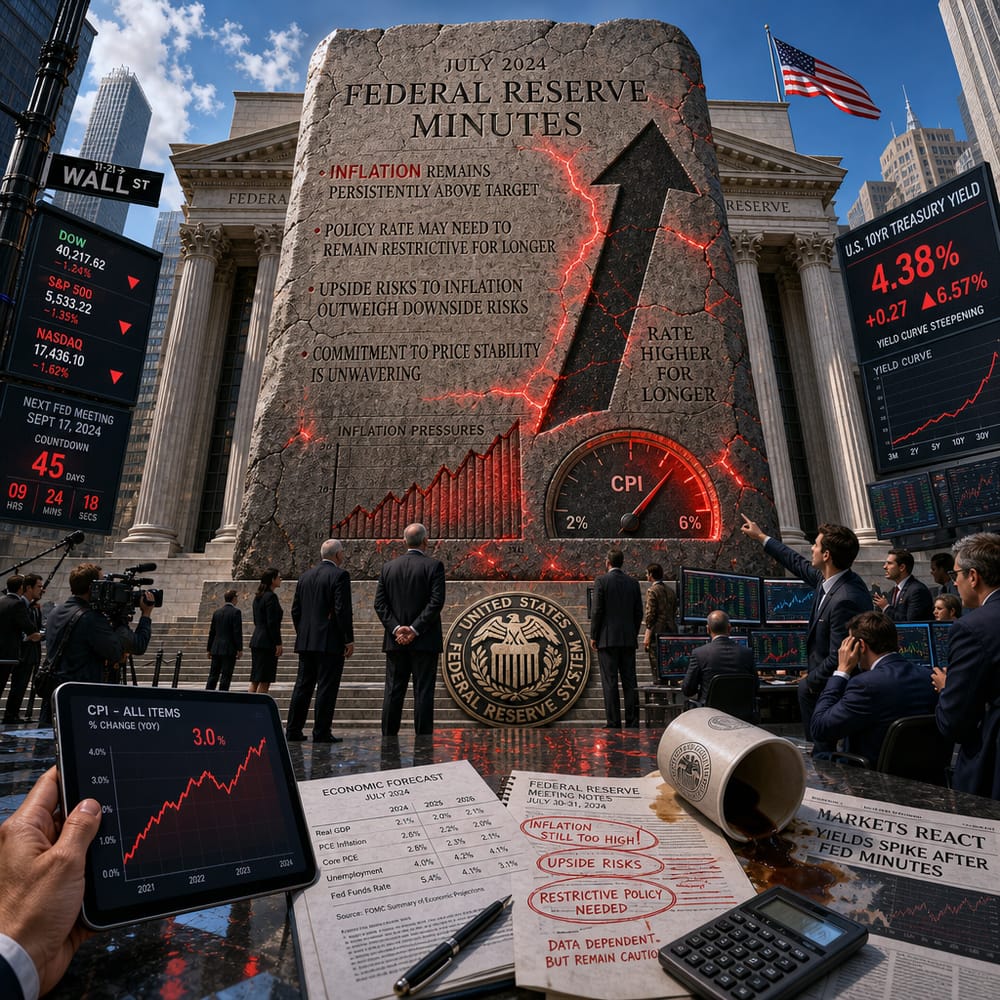
FED MINUTES HIGHLIGHT PERSISTENT INFLATION CONCERNS
Stop me if you've heard this one before: The Federal Reserve is worried about inflation. I know, it's hardly breaking news. But dig into the minutes from the Fed's July meeting, and you'll find more than just the same old song and dance. Underneath the surface, these minutes are a not-so-subtle nod to the economic high-stakes drama that could affect your wallet, your mortgage, and even your next car purchase.
For the headline-averse, here's the scoop: Persistent inflation has the Fed’s brow furrowed deeper than a stockbroker watching their favorite meme stock tank. And when the Fed gets worried, interest rates start to dance the cha-cha. Yep, we’re talking potential future rate hikes. But what does this mean for us folks who aren’t making seven figures on Wall Street?
IMPLICATIONS OF POTENTIAL FUTURE RATE HIKES
Alright, first, a quick crash course on why interest rates matter. When the Fed hikes rates, borrowing costs for things like mortgages and car loans go up. That’s their way of saying, "Cool it with the spending, people!" It’s all about slowing down inflation — basically, the uptick in prices for things like gas, groceries, and your favorite guilty pleasure snack.
But there's a flip side. Higher borrowing costs can put a chill on consumer spending — the lifeblood of our economy. If you've been eyeing that brand-new SUV or thinking about trading up to a better house, you might want to make those moves before the rate hikes start to change the math on your monthly payments.
HOW PERSISTENT INFLATION IMPACTS CONSUMER SPENDING
Let’s not sugarcoat it: Persistent inflation is like that one relative who overstays their welcome — annoying and potentially expensive. As prices rise, consumers start to feel the pinch. And when people’s wallets are under siege, discretionary spending — that’s the stuff you spend on non-essentials — takes a hit. This could mean fewer Friday night dinners out and more budget-friendly meals at home.
But why should you care? Because consumer spending accounts for a whopping 70% of the U.S. GDP. If folks tighten their purse strings, it could slow economic growth, and let’s be real, nobody wants another recession party.
THE FED’S GAME PLAN
So, what’s the Fed’s game plan? Well, their toolbox isn’t exactly brimming with options. Their primary weapon against inflation is raising interest rates. It’s a bit like taking away the punch bowl at a party. You stop the inflation party but risk making everyone — or at least those in the markets — a little grumpy.
However, this interest-rate game isn’t just about putting a leash on inflation. It’s a delicate balancing act to maintain economic growth while ensuring prices don’t spiral out of control. Think of it as walking a tightrope while juggling flaming torches — not for the faint of heart.
MARKET REACTIONS AND OPPORTUNITIES
Now, how do markets react to such news? Usually, with all the finesse of a cat on a hot tin roof. Stocks, bonds, and everything in between can get jittery at the mere hint of a rate hike. But remember, volatility can be an opportunity. Savvy investors might see this as a chance to snap up undervalued stocks — if they’re willing to ride out the bumps.
For those watching sectors, interest rate hikes often spell good news for financial stocks. Banks and lenders, for instance, can benefit from higher rates. And if you're already stretching your budget, consider investments in commodities or inflation-protected securities — those might offer some shelter from the storm.
In the end, the Fed’s minutes serve as a reminder that inflation isn’t just a topic for economists and central bankers. It’s a financial weather vane for the rest of us. So, while you enjoy that fancy coffee and avocado toast, keep an eye on those potential rate hikes — they could affect more than just your caffeine fix.
And with that, we can only wait to see if inflation will finally ease, or if we’ll all be practicing our best cha-cha steps to the beat of Fed rate hikes. Either way, keep your investments nimble, your financial plans adjustable, and your sense of humor intact. After all, in a world where markets can turn on a dime, laughter might be your best hedge.
This article is for informational purposes only and is not investment advice. Always do your own research or consult a licensed financial professional before making investment decisions.
© Copyright 2024. All Rights Reserved.
© Copyright 2024. All Rights Reserved.