

Fed Minutes Highlight Hawkish Stance and Move to Prepare for Market Stress
Thursday, October 08, 2026
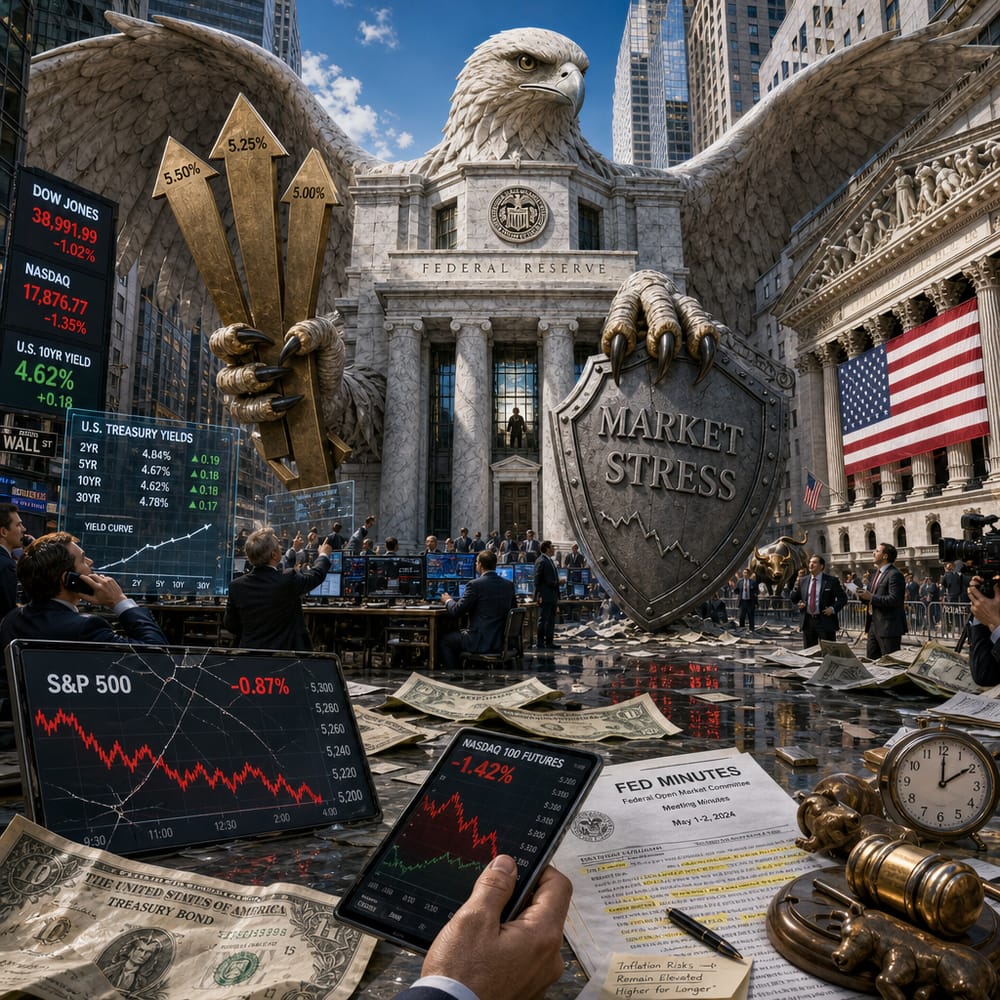
THE FED'S HAWKISH STANCE: HOW IT'S ROCKING MARKETS AND WHAT IT MEANS FOR YOU
Picture a seesaw in the middle of the playground, with the Federal Reserve at the fulcrum, delicately balancing the global economy. One wrong move, and someone’s going to hit the dirt. The latest minutes from the Fed’s recent meeting are like the kid on the seesaw who suddenly gets a little too jumpy. With hawkish chatter of potential interest rate hikes, the playground dynamics are beginning to shift. Let’s dig into what this means for our beloved U.S. markets, from bonds to equities, and everything in between.
First, let's talk about bond yields, the bread and butter of rate-sensitive investors. Rising interest rates are like kryptonite for U.S. Treasury bonds. When the Fed even whispers about rate hikes, bond yields tend to shoot up faster than a cat on a hot tin roof. Higher yields might be appealing to investors seeking income, but they spell trouble for existing bonds whose fixed payments become less attractive. Picture a game of musical chairs, where everyone scrambles for the new, shinier seat that promises more return.
But wait, there’s more! Rising bond yields often unleash a ripple effect on the stock market. The S&P 500, Nasdaq, and Dow Jones are all watching the Fed’s signals like hawks—or maybe doves, hoping the central bank will pump the brakes. Rate hikes can stunt economic growth, so what starts as a cautious whisper at a Fed meeting can end up a full-blown discourse among traders trying to gauge how equities will fare. Tech stocks often feel the pinch hardest. They're like the front-row kids at a Gallagher show—closest to the action and most likely to get wet.
What sectors are holding their breath for the Fed’s next move? Rate hikes tend to clobber rate-sensitive sectors like utilities and real estate. These sectors, which have relatively high debt levels, often face increased borrowing costs. That's a one-two punch that can deter growth. It's also why these sectors are as jittery as a long-tailed cat in a room full of rocking chairs when rate hikes are on the table.
Now, if you're an investor, you might be wondering how everyone else is feeling about the Fed preparing for market stress. Well, picture this: the Fed is the parent turning on the living room lights at your high school party, and investors are the kids scrambling to hide the evidence. The news of potential rate hikes and market stress preparedness is enough to send them running for safer, historically stable investments.
Gold, the ultimate safe haven, has been trading near a nine-week low, but if history repeats itself, increased market stress typically makes it glitter a bit more in investors’ eyes. So, if you're clutching a piece of that shiny metal, you might not want to toss it just yet.
But here’s the twist—what about the upbeat Wall Street? Lately, Wall Street has been partying like it's 1999, enjoying a wild ride fueled by all things AI and a laissez-faire regulatory approach. The question is, can the party keep going when the Fed’s monetary policy playlist turns to a slower tune? Surging yields could shake things up, making traders more cautious and potentially bursting a few bubbles along the way.
So, what’s the takeaway in this monetary melodrama? As the Fed continues its balancing act, the key for retail investors is to stay nimble. Watch those bond yields and keep a close eye on how different sectors react to the slightest flicker of the Fed’s eyebrows. Diversification remains your best friend in uncertain times. And if the Fed does indeed prepare for more market stress, consider whether it might be a chance to adjust your portfolio strategy, perhaps embracing assets with lower correlations to traditional equities and bonds.
In the end, whether the Fed's actions lead to a gentle nudge or a seismic shift in the markets, one thing is certain: it’s a game of economic chess, and you’ll want to be three moves ahead. So keep your ear to the ground, your portfolio diversified, and remember that even in the most hawkish times, there’s always an opportunity—if you know where to look.
This article is for informational purposes only and is not investment advice. Always do your own research or consult a licensed financial professional before making investment decisions.
© Copyright 2024. All Rights Reserved.
© Copyright 2024. All Rights Reserved.