

Fed Minutes Confirm Growing Dissent on Rate Path
Wednesday, August 26, 2026
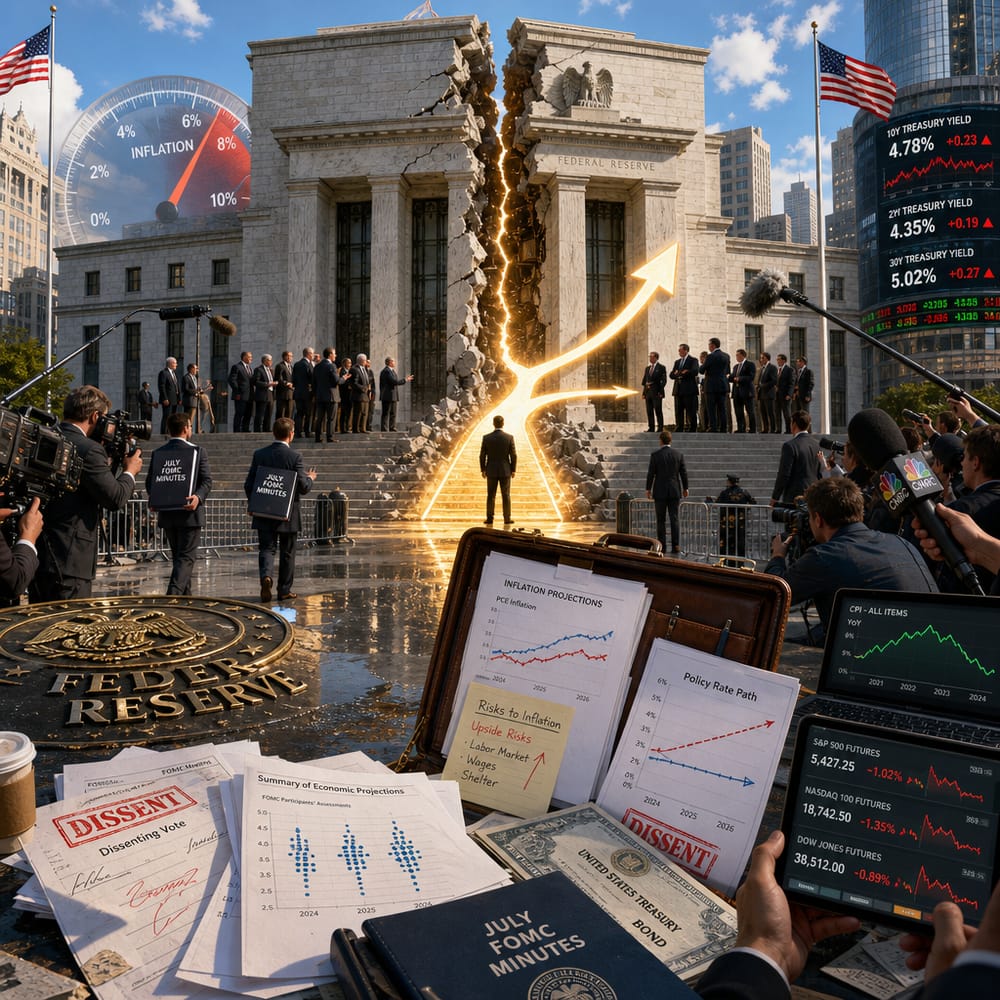
FED MINUTES CONFIRM GROWING DISSENT ON RATE PATH
Imagine a room full of economists debating monetary policy like it's game night and everyone has a different rulebook. That's essentially the picture painted by the latest minutes from the Federal Reserve's July meeting. It looks like the Federal Open Market Committee (FOMC), the cabal of number-crunchers deciding your interest rates, can't quite agree on what the next act in this economic play should be.
THE DISAGREEMENT: A TALE OF TWO PATHS
The minutes reveal a growing split among Fed officials regarding how tight they need to crank the policy if inflation doesn’t behave and ease as they hope. While some officials are ready to throw on the brakes, worrying that inflation might make a return like that unwanted distant relative, others think that might just crash the party (also known as the economy). If inflation continues its stubborn streak, they argue there's no choice but to keep hiking rates. Others fear that might risk squashing economic growth quicker than a bad stock meme on social media.
So, what is driving this dissent? Some officials are keeping a wary eye on the recent figures that showed inflation — like a bad song stuck in your head — isn’t leaving anytime soon. The personal consumption expenditures (PCE) price index, a favorite metric for inflation among Fed circles, rose a bit last month, defying hopes that it would chill out. On the flip side, consumer spending is still going strong, like a marathon runner who missed the memo about pacing.
THE INFLUENCE ON FUTURE POLICY DECISIONS
So, what do we get when the Fed can’t make up its mind? Uncertainty. And if there’s one thing markets hate, it’s uncertainty. This internal tug-of-war within the Fed could mean more twists and turns ahead for monetary policy. The central bank could soon find itself making policy decisions akin to a tightrope walk, trying to balance inflation concerns with economic growth fears. It’s a high-stakes game of “Choose Your Own Adventure,” and every choice comes with its own set of challenges.
Investors, naturally, are left to play psychic, attempting to forecast the Fed’s next move like an amateur meteorologist predicting the weather. And just like predicting whether you'll need an umbrella tomorrow, this can be tricky. This uncertainty can lead to volatility in financial markets as traders recalibrate their bets on interest rates. Expect stock markets to flutter more than a butterfly caught in a windstorm and bond yields to dance like they’ve got ants in their pants.
POTENTIAL MARKET REACTIONS
Now, if some Fed officials get their way and rates rise again, it’s not just the economy that will feel it. Your wallet might too. Higher interest rates tend to send ripples through everything from mortgages to credit cards. Suddenly, that adjustable-rate mortgage or credit card balance you’ve been carrying might become more expensive. Conversely, if the Fed goes soft, keeping rates steady, markets could breathe a sigh of relief, rewarding stocks and bonds with a nice little boost.
But it’s not just about you and me. The global stage is closely watching the Fed’s every move. Foreign markets, like an insecure teenager, often look to the U.S. for cues. If the Fed raises rates, it could strengthen the dollar, making American exports less competitive abroad and impacting multinational companies’ bottom lines. On the other hand, a dovish Fed could mean a weaker dollar, giving those same companies a leg up.
INTERNAL DRAMA AND BIGGER IMPLICATIONS
This internal drama at the Fed doesn’t just make for great headlines; it signals potential for unexpected shifts in U.S. economic policy. The stakes are high, and the implications of a misstep could be colossal. A premature hike could derail growth, while too soft a stance could let inflation run wild. It’s a bit like trying to balance a plate on a stick — one wrong move, and things could come crashing down.
As we watch this saga unfold, it’s essential for retail investors to stay informed and adaptable. The Fed’s decisions are a key driver of market movements, and keeping an eye on their deliberations is more critical than ever. Whether you’re considering your next investment move or just trying to understand how these decisions impact your day-to-day life, paying attention to what’s happening with the Fed is as crucial as ever.
So, next time you find yourself scrolling through headlines, take a moment to check in on our friends at the FOMC. Because in the grand theater of economic policy, they are the ones holding the script — even if they can’t quite agree on the ending.
This article is for informational purposes only and is not investment advice. Always do your own research or consult a licensed financial professional before making investment decisions.
© Copyright 2024. All Rights Reserved.
© Copyright 2024. All Rights Reserved.