

Fed-induced pullback following midweek rally
Monday, August 31, 2026
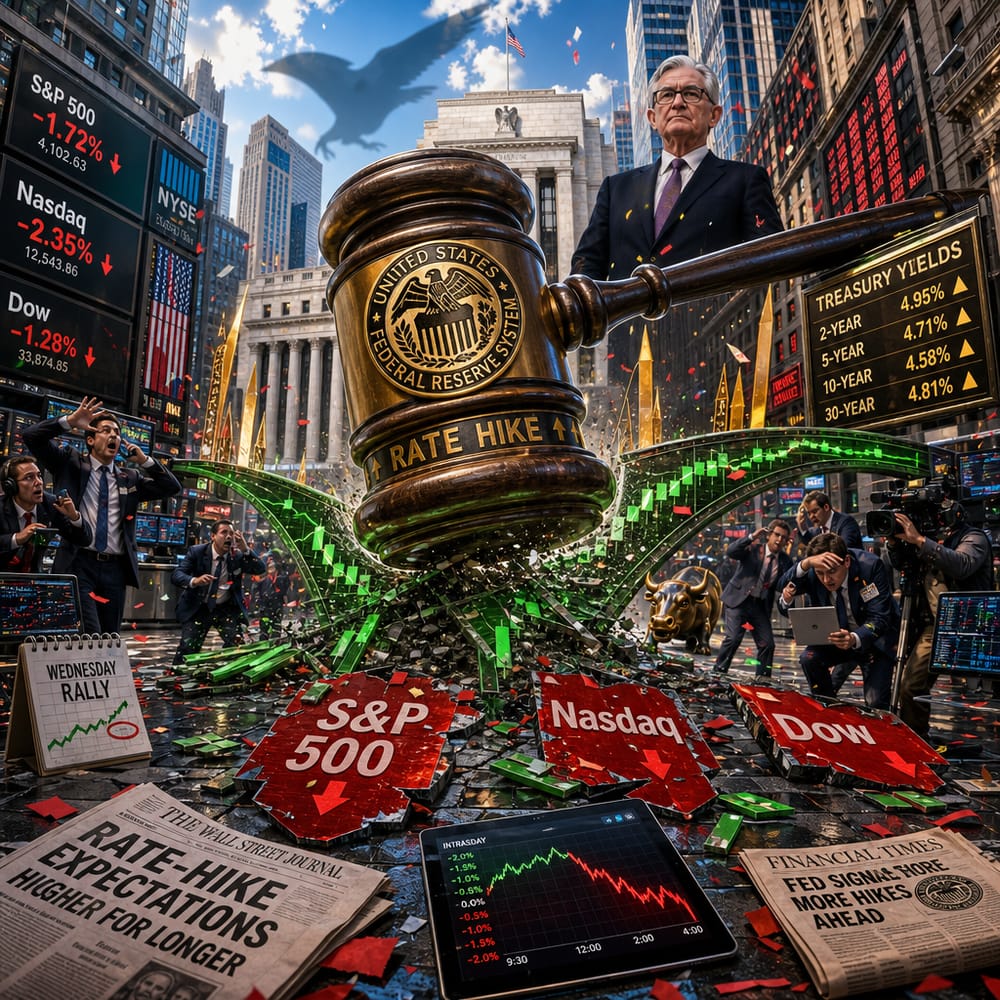
THE FED SPEAKS, AND THE MARKETS LISTEN (AND REACT)
Imagine this: you're peacefully sipping your morning coffee, checking the markets after yesterday's rally, when—bam!—Fed Chair Kevin Warsh hits the mic and suddenly it's a different ballgame. That midweek market euphoria? Poof. Gone.
So, what did Warsh say that sent the markets into a tizzy? In financial jargon, they call it "hawkish"—as in, the kind of talk that suggests the Fed's getting ready to pump the brakes on the U.S. economy a bit harder. Warsh's speech at the Jackson Hole meeting wasn't your run-of-the-mill market analysis. It was more like him throwing cold water on those market bulls. The speculation is that we're in for a rate hike, maybe as soon as next month. And when the Fed sneezes, Wall Street catches a cold.
But wait, there's more—markets didn't just react; they recoiled. The S&P 500, the all-seeing eye of the U.S. market, felt the chill and retreated from its lofty levels. Over at the Nasdaq, tech stocks that were riding high suddenly felt a bit wobbly. And the Dow, plodding along, decided now's a good time to take a breather.
Warsh's words were like a cold shower for investors dreaming of an endless summer of stock gains. His focus on inflation risks and his "decidedly hawkish direction" suggests the Fed isn't done dealing with pesky price hikes. And let's be real, a rate hike means borrowing costs go up, making everything from mortgages to business loans pricier. Investors aren't exactly thrilled about that.
The sectors most vulnerable to this kind of news? Look no further than tech and growth stocks. These are the guys who really feel the pinch when borrowing gets more expensive. If you're piled into high-flying tech names, you might be feeling a bit queasy right now.
So, how are investors adjusting their playbooks in response to these surprise tactics from the Fed? Some are scrambling to rebalance their portfolios, looking to cushion against interest rate rises. Think utilities, consumer staples, and other sectors that promise stability even when the interest rate winds are blowing strong.
Meanwhile, Treasury yields are having their own little party. Higher expected interest rates mean higher yields, and those bonds are looking like a sweet deal for anyone feeling jittery about stocks right now.
In the grand scheme of things, Warsh's comments are a reminder that the Fed is, in fact, paying close attention. They're watching inflation like hawks—pun intended—and that means they're not going to sit idly by if prices start to spiral. They might just nudge rates up a notch or two to keep things in check.
The question is, how much of a nudge are we talking about? A quarter-point hike? Maybe more? Whatever it is, it's got traders moving funds and recalibrating strategies faster than you can say "Federal Open Market Committee."
And lest we forget, while Warsh's words have markets on edge, there's also the backdrop of geopolitical tensions and economic news from around the world. Oil prices are on the rise due to new U.S.-Iran tensions, reminding investors that overseas events still pack a punch back home. Meanwhile, tech is still leading the monthly gains on Wall Street, but with a Fed-induced headwind, who knows where things will go next?
So, what's the big takeaway from all this high-stakes market drama? It's a classic reminder: what the Fed says can move mountains—or at least the market indices. Investors, keep your eyes peeled and your portfolios nimble. The road ahead could be a bumpy one.
This article is for informational purposes only and is not investment advice. Always do your own research or consult a licensed financial professional before making investment decisions.
© Copyright 2024. All Rights Reserved.
© Copyright 2024. All Rights Reserved.