

Fed Holds Rates Steady in July—Now Facing Crosscurrents Amid Sticky Inflation
Tuesday, August 11, 2026
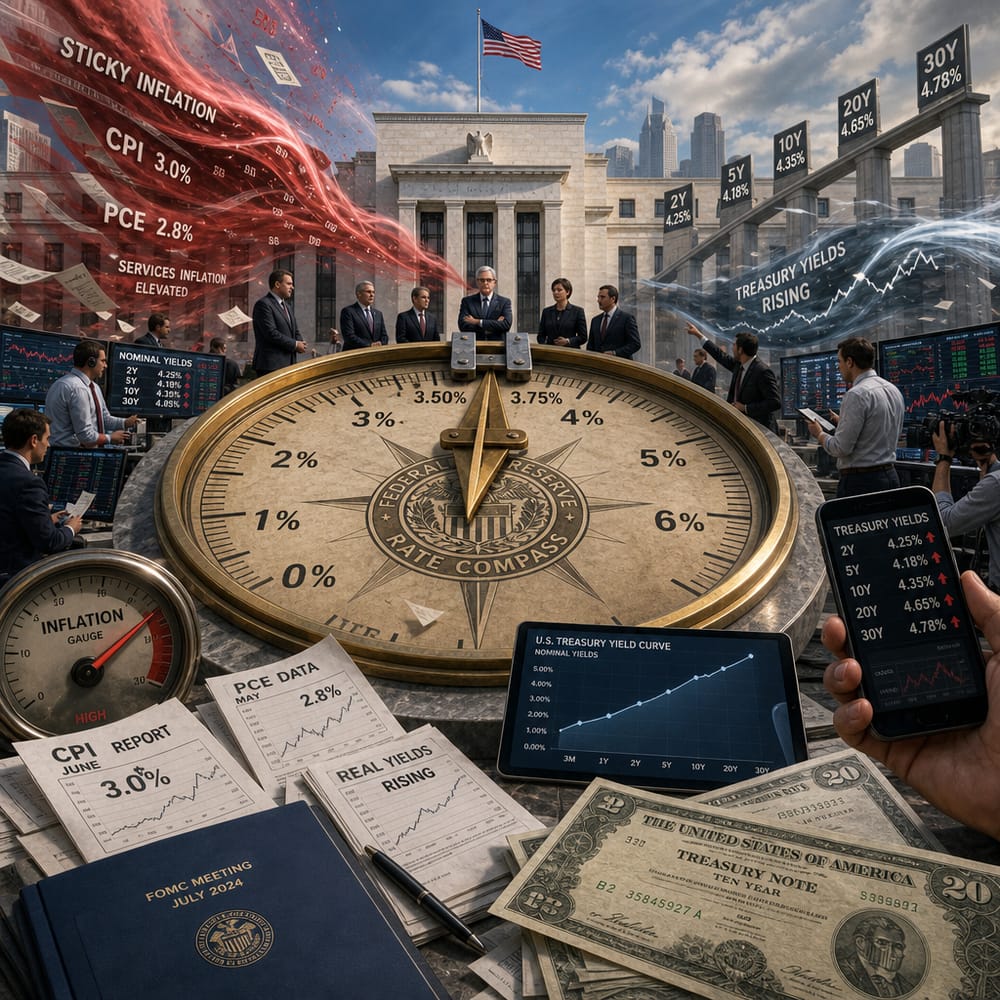
THE FED’S RATE DECISION: HOLD STEADY AND CARRY ON
The Federal Reserve’s latest meeting ended with all the drama of a soap opera without the cliffhanger. On July 29, the Fed decided to keep the federal funds rate between 3.50% and 3.75%. This isn’t exactly the stuff of Hollywood blockbusters, but in the world of finance, it's enough to keep us on the edge of our seats. So, why did the Fed decide to pause its rate hikes?
First off, let’s not forget the elephant in the room: inflation. Despite recent efforts to tame the beast, inflation is still hanging around like an uninvited guest who just won’t leave. The Consumer Price Index might have stopped behaving like a hyperactive kid on a sugar rush, but it still shows signs of stubbornness. For the Fed, this is a game of whack-a-mole, trying to keep inflation in check without stifling economic growth. No easy feat when the labor market has gone from a roaring lion to a house cat in recent months.
Now, let’s talk about the bond market, because it’s more interesting than you might think. Nominal and real Treasury yields have been climbing, indicating that investors expect the Fed to keep things tight in terms of monetary policy. Think of it like your parents raising their eyebrows—subtle but significant. The Fed noticed and decided not to rock the boat further, lest they send ripples that could destabilize the current economic tranquility.
Speaking of stability, let’s not ignore the external shocks lurking around like dark clouds on a sunny day. Take the perennial soap opera with Iran, for instance. The Strait of Hormuz isn’t just a fancy-sounding place; it’s a pivotal oil transit chokepoint, and tensions there send shivers down the spines of markets quicker than you can say “geopolitical instability.” Add to that the recent extreme weather events disrupting parts of the U.S., and the Fed’s caution starts to make sense. No one wants to be caught in the storm without an umbrella.
And then there’s the tech sector. Normally the crown jewel of American innovation, it’s been taking quite the beating lately. The S&P 500 has felt the pinch, with tech titans like Alphabet and AppLovin leading the retreat. If you’re a fan of roller coasters, you might like watching tech stocks; otherwise, keep a barf bag handy. The sector’s troubles add another layer of complexity for the Fed to consider. After all, a tech sector in turmoil is bad news for an economy that’s increasingly reliant on Silicon Valley’s gizmos and gadgets.
So, what happens now? The Fed’s communication strategy becomes crucial. Like a skilled diplomat, it needs to convey calm and confidence to the markets while leaving room to maneuver if things head south. Will Powell and his band of merry policymakers manage this balancing act? Stay tuned for the next episode.
As for future guidance, it’s all about adaptability. The Fed's keeping its options open, ready to pivot as new data rolls in. If inflation decides it’s not ready for a nap just yet, or if an unexpected global event throws a wrench in the works, rate hikes could be back on the table faster than you can say “interest rates.” On the flip side, if the economy starts to truly show signs of wear and tear, we might even see rate cuts. It’s like a financial Choose Your Own Adventure book, with Powell flipping the pages.
In the meantime, retail investors have their own adventure to navigate. The Fed’s cautious approach means fewer fireworks but also less risk of a misstep that could send their portfolios tumbling. For those keeping an eye on Treasury yields or perhaps dabbling in tech stocks, understanding the Fed’s mindset is like having a cheat sheet for the market quiz.
So there you have it—a holding pattern that’s all about calculation, patience, and a dash of caution. Whether you find this thrilling or as exciting as watching paint dry probably says more about your taste in economic drama than anything else. For now, investors can rest a little easier knowing that, while the Fed might not be making any sudden moves, they’re poised and ready for whatever comes next.
This article is for informational purposes only and is not investment advice. Always do your own research or consult a licensed financial professional before making investment decisions.
© Copyright 2024. All Rights Reserved.
© Copyright 2024. All Rights Reserved.