

Fed Holds Rates Steady at ~3.6% Despite Internal Dissent
Saturday, August 15, 2026
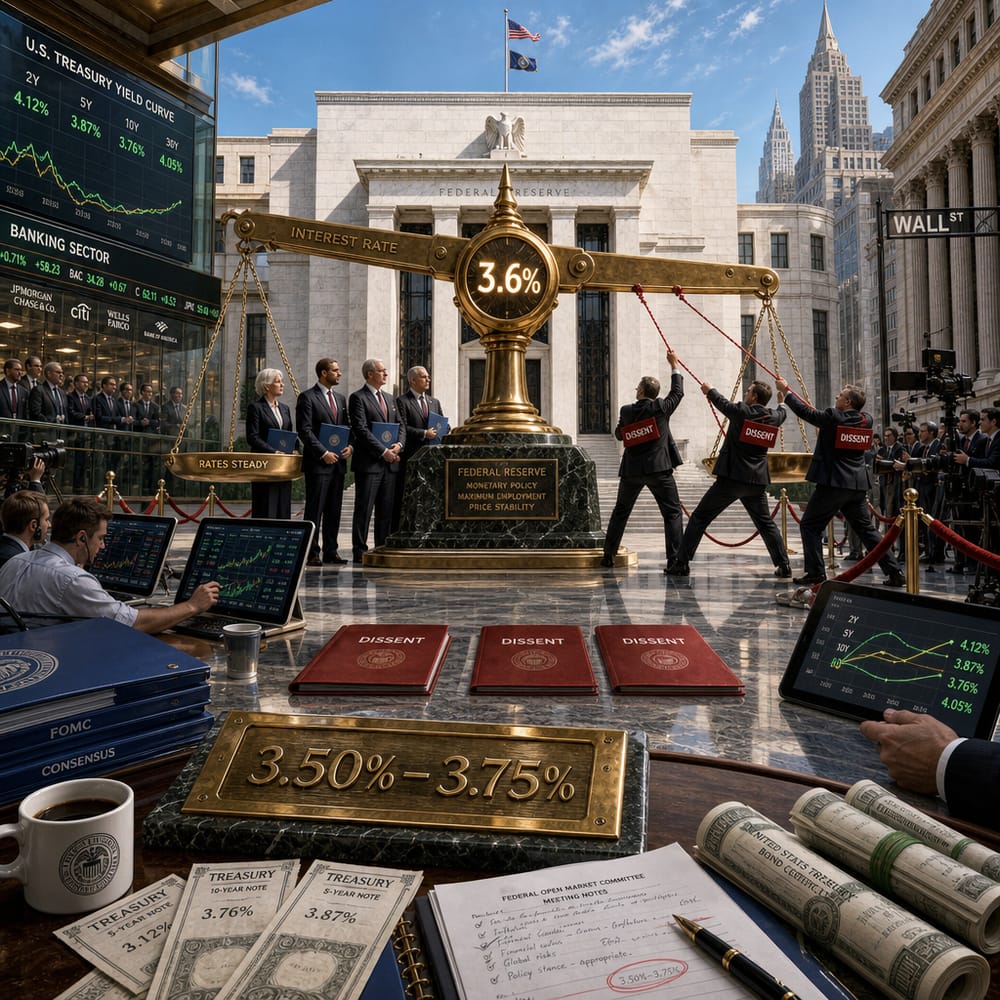
FED HOLDS RATES STEADY AT ~3.6% DESPITE INTERNAL DISSENT
Hold on to your hats, folks! The Federal Reserve just pulled a plot twist, deciding to keep interest rates at a steady 3.50%–3.75%. But here's the kicker: Three Fed officials wanted to crank rates up. That's some juicy drama for an institution that usually marches in lockstep. So why the dissent, and what could it mean for your wallet and the market's rollercoaster ride? Let's dive in.
FIRST, THE ROOT OF THE REBELLION
Why are some Fed folks itching to hike rates when the rest are cool with keeping them level? It all boils down to a stubborn little thing called inflation. Even as wholesale inflation has cooled off more than expected, some officials are still spooked. They're worried that if inflation isn't curbed now, it could spiral out of control later. Think of it as trying to keep a teapot from boiling over when you're not sure how hot the stove is.
Now, this internal discord isn't just an academic debate. It shows a crack in what has historically been a united front. If these disagreements spill over into public communications, it could muddle the Fed's message to markets, leaving investors scratching their heads—and potentially their portfolios.
WHAT COULD THIS MEAN FOR FUTURE RATE DECISIONS?
The whisper of dissent might seem like a subtle subplot, but it sets the stage for future rate decisions. If inflation remains sticky, more Fed officials might join the ranks of the hawks—the insiders pushing for higher rates. That spells uncertainty for interest rates down the line. Picture a tug-of-war with your mortgage payments and savings account rates hanging in the balance.
And let's be real, this isn't happening in a vacuum. The U.S. economy, like everyone else, has a front-row seat to the AI boom heating up San Francisco’s real estate market and the mixed bag of global economic pressures. The Fed's job has never been more delicate, like walking a tightrope over a pit of economic pitfalls.
MARKET REACTIONS: HOW'D THE PEOPLE TAKE IT?
Unsurprisingly, the market has opinions—and they're louder than a toddler with a drum kit. The initial reaction? A classic deer-in-the-headlights look. U.S. Treasury yields, which usually dance to the Fed's tune, have been doing the cha-cha. With rates holding steady, yields might not rocket skyward just yet, giving bond investors a moment to exhale.
The banking sector, always sensitive to interest rate shifts like a cat to a vacuum cleaner, might find itself in a sweet spot. Stable rates could keep borrowing costs predictable, helping banks pocket profits from interest on loans. But hey, don't pop the champagne yet. If inflation rears its ugly head, higher rates could slam the brakes on loan growth.
But here’s the twist. With AI stocks hotter than a jalapeño in a heatwave, any Fed move could send ripples through tech-heavy portfolios. Remember the AI-driven home price boom in San Francisco? Well, the tech sector's high-wire act could become more precarious if borrowing costs climb.
SO, WHAT NOW?
In this game of monetary policy chess, the Fed’s internal dissent is a move that could change the playbook. Will inflation force the Fed's hand to hike rates sooner rather than later? Or will the cooler inflation winds allow for a leisurely stroll to rate adjustments? Either way, expect this drama to unfold like a binge-worthy series, with market players hanging on each episode.
For now, keep your eyes peeled on the inflation numbers and housing market barometers. And as always, stay tuned to how the Fed navigates this delicate dance of fiscal policy—because when they move, the whole market listens.
So grab your popcorn, because the next chapter in the Fed's rate saga is bound to be a thriller.
This article is for informational purposes only and is not investment advice. Always do your own research or consult a licensed financial professional before making investment decisions.
© Copyright 2024. All Rights Reserved.
© Copyright 2024. All Rights Reserved.