

Fed Holds Rates Steady Amid Internal Dissent
Thursday, July 30, 2026
FED HOLDS RATES STEADY AMID INTERNAL DISSENT
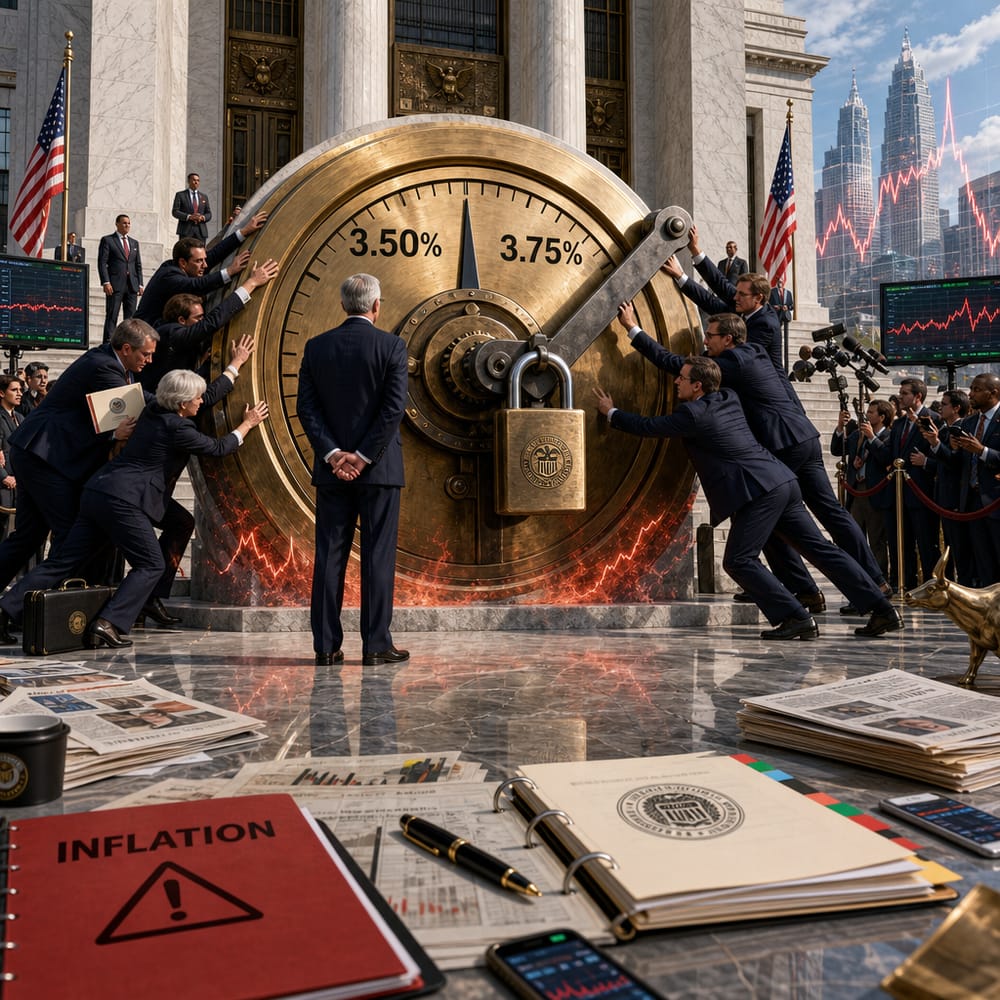
Hold the presses, because the Federal Reserve just threw a curveball with its decision to keep interest rates unchanged. If you're hearing the echoes of a family squabble, you're not alone—three Fed officials were ready to vote in favor of a rate hike, citing concerns about inflation. But Chairman Kevin Warsh threw his weight behind holding rates steady between 3.50% and 3.75%, leaving investors scratching their heads and checking their spreadsheets.
Why the fuss? Well, it's all about inflation, which the Fed has been battling like a dragon guarding its treasure trove. The decision to hold rates points to a cautious approach, but those three dissenters are a sign of internal desk-flipping over how to maneuver through these inflationary times without stepping on a monetary landmine.
WHAT DOES THIS MEAN FOR YOU?
In the world of Wall Street and high finance, the Fed's decisions are like gospel, dictating everything from mortgage rates to your credit card interest. So when the Fed decides to leave rates unchanged, it's telling a tale of caution amidst economic uncertainties.
The potential impacts trickle down like a slow stream, affecting everything from consumer loans to business investments. With rates holding steady, borrowers get some breathing room, possibly spurring spending and business expansions. But inflation is the lurking villain in this tale, and if it keeps climbing, those benefits might just evaporate like water on a hot sidewalk.
INTERNAL DISSENT: A HINT OF THINGS TO COME?
Now let’s dive into the juicy bit—the dissent. Three out of the ten voting members wanted to crank up the rates. This isn’t just an academic spat; it’s a peek into a divided house. Such division is rare and tells us the Fed isn't singing in harmony when it comes to dealing with inflation.
So, what might this mean for future policy decisions? The Fed might be holding its cards close this time, but the dissenters could tip the scales in the future. If inflation continues its upward dance, this internal debate might pave the way for a rate hike sooner than expected. Investors, keep your eyes on the Fed's next move, and maybe stash some popcorn because the show isn’t over yet.
MARKET REACTIONS: THE GOOD, THE BAD, AND THE UGLY
The market, always the drama queen, reacted with a drop reminiscent of a roller coaster's first plunge. Stocks took a nosedive, possibly because investors had partly priced in a potential hike, and the unchanged rates threw a wrench into their carefully laid plans. Yet, futures are already recovering, showing the market’s capacity for quick mood swings.
Bonds, on the other hand, had a field day. Long-term Treasury yields shot up to levels not seen since 2007. This suggests a broader expectation that inflation will remain a thorn in the Fed’s side for longer than anticipated, and markets are pricing in more aggressive rate hikes down the road.
In the tech realm, companies like Microsoft and Meta are experiencing their own contrasting fates. While Microsoft's burgeoning AI investments have investors cheering, Meta’s less rosy earnings projection sent its stocks into a tailspin. The tech sector is watching the Fed’s moves closely, given that interest rates impact borrowing costs, which are crucial for innovation and expansion.
THE LONG VIEW: STRATEGIC POSITIONING
For those of you watching your 401(k) like a hawk, the Fed's decision is a sign that some uncertainty lies ahead. Investors might need to brace for more volatility as the narrative develops, with inflation and interest rates playing leading roles.
Take stock of your portfolio. Be aware of sectors sensitive to rate changes, like tech and real estate, which could feel the sting of unexpected rate movements. On the flip side, financial stocks might gain from a steeper yield curve if longer-term rates keep rising.
So, as we wait for the dust to settle, keep your financial plans flexible. The Fed's cautious hold this time might lead to a bolder move next, especially if inflation refuses to play nice. As always in the world of finance, stay informed and be ready to adapt. It’s not just about surviving the storm—but also coming out stronger on the other side.
This article is for informational purposes only and is not investment advice. Always do your own research or consult a licensed financial professional before making investment decisions.
© Copyright 2024. All Rights Reserved.
© Copyright 2024. All Rights Reserved.