

Fed Governor Waller Signals Hawkish Path: December Rate Hike Backed, 50‑bp Possible
Tuesday, November 10, 2026
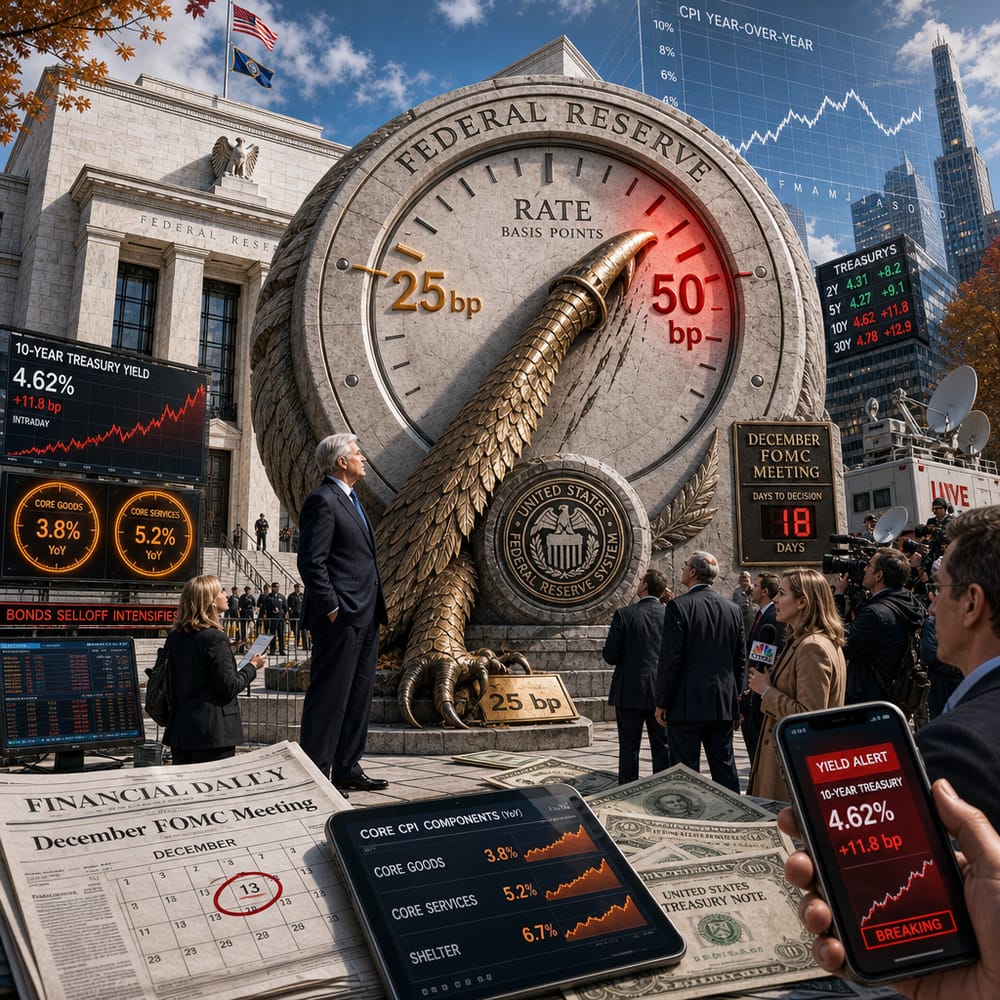
FED GOVERNOR WALLER SIGNALS HAWKISH PATH: DECEMBER RATE HIKE BACKED, 50-BP POSSIBLE
They say when the Fed speaks, the markets listen. Well, consider Federal Reserve Governor Christopher Waller’s latest remarks a Wall Street wake-up call. Picture this: you're peacefully scrolling your feed, dreaming of a lower mortgage rate, when Waller drops the bombshell — he’s on board with a December interest rate hike. And if those pesky inflation numbers refuse to play nice? He's got his eyes on a beefier 50-basis-point hike. Cue the market panic.
For those who aren't fluent in Fed-speak, let's break it down. A basis point is just a fancy finance way of saying 0.01%. So, a 25-basis-point (bp) hike means interest rates go up by 0.25%. A 50-bp hike? That's double the fun — but not necessarily for your wallet. It means the cost of borrowing could soar, impacting everything from credit cards to car loans.
But why is Waller going all hawkish on us — hawkish being economist lingo for favoring higher interest rates to keep inflation in check? It's because inflation is the economy's unruly teenager, and if it stays out past curfew (or in this case, shows up in the October Consumer Price Index data), the Fed has to ground it with rate hikes. Waller’s comments have already nudged Treasury yields — basically IOUs from the government — higher, as traders brace for what could be a bumpy ride ahead.
Now, what happens if the Fed goes full throttle with a 50-bp hike? First, let’s talk about your portfolio. Stocks tend to dislike higher rates because they can lead to higher borrowing costs for companies and lower consumer spending. In other words, those growth stocks in your 401(k)? They might look a little less attractive if the Fed decides to put the pedal to the metal.
Bonds, on the other hand, might start looking more like the prom king. When rates go up, new bonds are issued with higher yields, making them more appealing. But for existing bonds, it’s a downer because prices drop to adjust to the new, higher-yielding competition.
For the Fed, the credibility stakes have never been higher. If they choose the 50-bp path and inflation isn't as stubborn as feared, the economy could slow unnecessarily, landing the central bank in the hot seat for overreacting. But if they don’t act decisively and inflation continues its victory lap, the Fed risks losing its inflation-fighting bona fides. It’s a financial high-wire act with the market as its audience, eagerly watching to see if it will be a hero’s march or a stumble.
And let's not forget the little guy — everyday consumers bearing the brunt of higher prices on essentials. If the Fed's hand is forced, expect grumbles over those rising costs to amplify. Every decision the Fed makes trickles down to Main Street, rippling through sectors from housing to healthcare.
This isn’t just about a few numbers on a report — it’s about the economy’s entire narrative. Will the Fed write the next chapter as a cautionary tale of too much, too soon? Or will it skillfully navigate these choppy inflationary waters? October’s CPI data is the next clue in this economic mystery, and Waller’s not-so-subtle hints have set the stage for what could be a thrilling conclusion.
So, as you sip that overpriced latte pondering your next financial move, remember Waller's wink to the wary — it might just be time to hedge your bets and brace for impact. Whether you're a seasoned investor or just dipping your toes in the market waters, stay sharp, stay informed, and maybe, keep your inflation expectations in check just as the Fed is trying to do. Stay tuned, because the only thing certain in this economy is that nothing is certain at all.
This article is for informational purposes only and is not investment advice. Always do your own research or consult a licensed financial professional before making investment decisions.
© Copyright 2024. All Rights Reserved.
© Copyright 2024. All Rights Reserved.