

Fed Dissent Weakens U.S. Dollar
Sunday, August 02, 2026
FED DISSENT WEAKENS U.S. DOLLAR
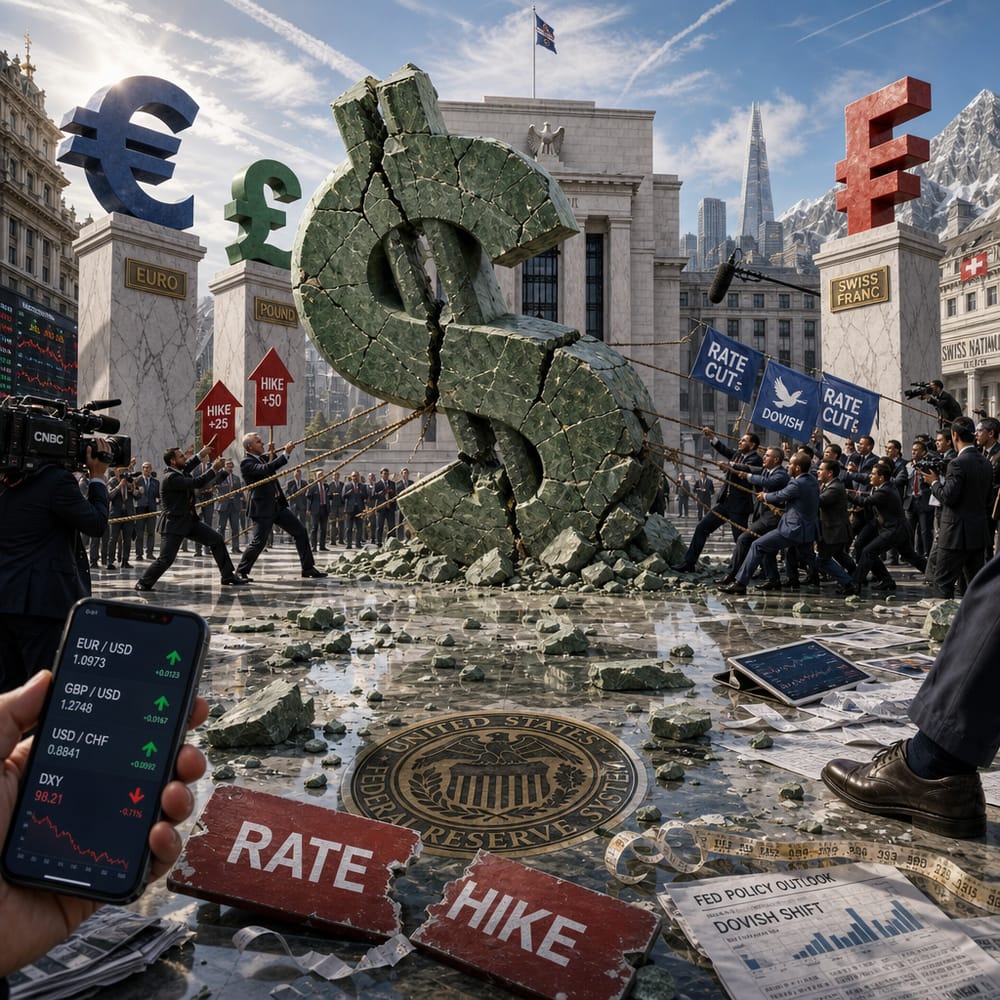
Imagine being stuck in a group chat where half the people are trying to turn up the music while the other half are begging you to keep it down. That, folks, is the Federal Reserve right now. Call it a monetary mashup, if you will. Amid this discord, the U.S. dollar is starting to look more like a contestant in a game show where everyone's a winner—except, right now, it isn’t.
So, what's the buzz? Well, while some Fed officials are itching to crank up the interest rates, the loudest voices are taking it down a notch with a dovish tone. And when the Fed talks, global markets listen, leaning in like it's the latest juicy celebrity gossip.
Let's break it down: when interest rates rise, holding onto that cold, hard cash becomes a little more attractive. You earn more just for letting it sit there, gathering dust. But when the Fed gets all dovish—think of a dove calmly cooing instead of a hawk screeching—interest rates stay low, and the dollar gets a bit weaker. It's like trying to impress your date with a soft whisper when they're way more into the bold, confident type. As a result, the U.S. dollar has been slipping against major currencies, losing its swagger. You might say we're seeing a bit of a dollar diet.
Let's talk global implications. When the dollar weakens, currencies like the euro (EUR/USD), the British pound (GBP/USD), and the Swiss franc (USD/CHF) get a bit of a boost. Suddenly, European vacations don't seem as pricey, your Swiss watch is a little more attainable, and for investors, it's an entirely different ballgame. Remember, a weaker dollar means U.S. goods are cheaper abroad, but imported goods—your Italian espressos and German cars—might just burn a bigger hole in your pocket.
But what does this mean for the long haul? If the Fed continues to play the role of the shy dove, this could signal a prolonged period of lower interest rates. That said, every now and then, you'll hear a hawkish squawk from those officials still advocating for a rate hike. It's a bit like the Fed's got a good cop, bad cop routine going on, and the market is just sitting there, unsure whether to cheer or jeer.
So, what are the long-term implications of this dovish trend? For one, investors might start shifting their portfolios, seeking higher yields elsewhere. Emerging markets could see more inflows as investors look for higher returns, making places like Brazil or India the new hotspot vacation destinations—not just for your backpacking cousin, but for your money too.
Moreover, with a weaker dollar, it's not just investment portfolios that get a shake-up. Companies with large international operations might see overseas profits take a hit when converted back to the buck. This could lead to some interesting earnings calls, with CEOs either shrugging it off or spinning it as a strategic pivot.
Now, the million-dollar question—or maybe the billion-yen question—is how this impacts future rate decisions. The Fed has made it clear they're keeping an eye on the economic indicators, from employment figures to inflation rates. But with this internal division, any future rate hikes might be more gradual, like easing into a cold pool rather than cannonballing in.
And let's not forget, markets are a bit like middle school dance floors—sometimes they're grooving to the beat, and sometimes they're awkwardly shuffling along. With the Fed sending mixed signals, expect a bit of both in the coming months.
In the grand scheme, the Fed's current stance is shaping investor expectations and global currency markets like a maestro with a rather unpredictable symphony. Whether they hit a harmonious note or create a cacophony remains the question.
So, grab your popcorn—or maybe your Swiss chocolate—and watch as the U.S. dollar plays its part in the ever-evolving financial drama. Just remember, when it comes to the Fed, the only certainty is uncertainty.
This article is for informational purposes only and is not investment advice. Always do your own research or consult a licensed financial professional before making investment decisions.
© Copyright 2024. All Rights Reserved.
© Copyright 2024. All Rights Reserved.