

Fed Chairman's Silence on Interest Rates Fuels USD Volatility
Sunday, August 30, 2026
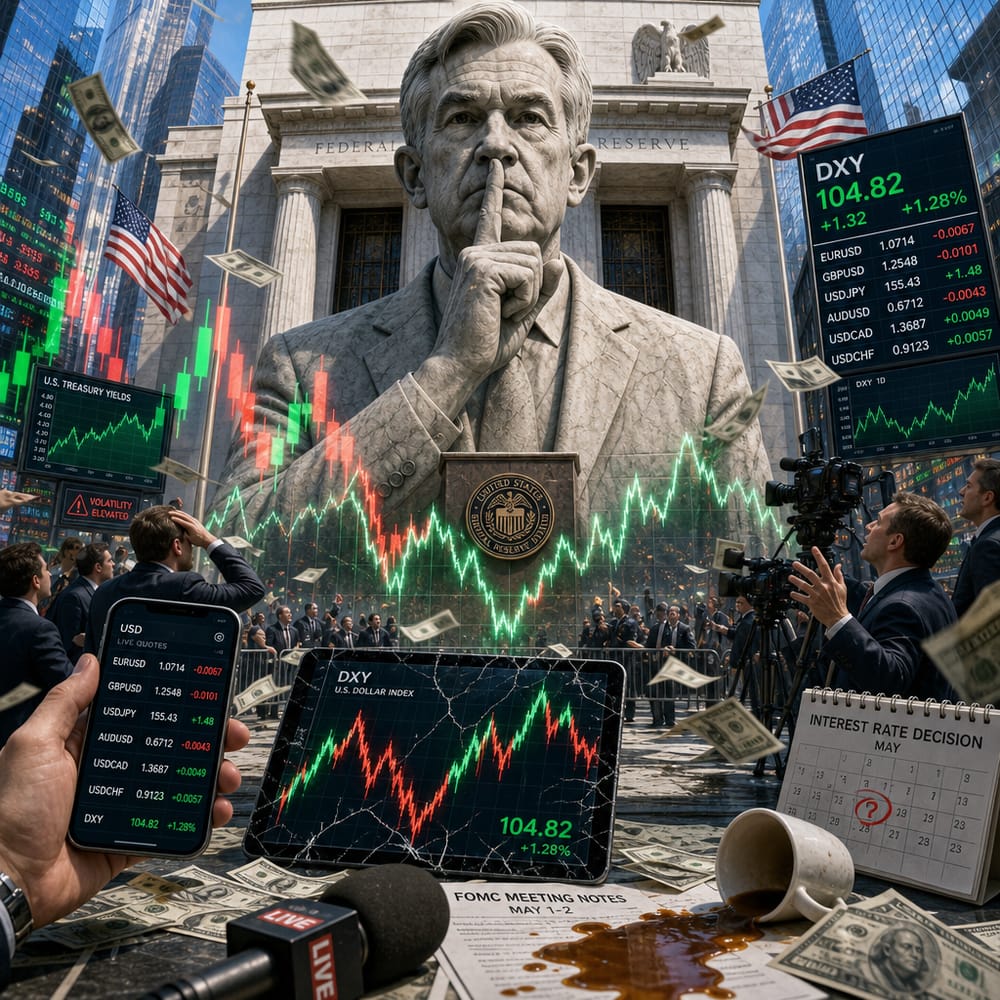
Shhh! Can you hear that? It’s the sound of silence—the kind that echoes through Wall Street when the Fed Chairman decides to zip his lips. While some see silence as golden, in the financial world, it’s more like a suspense movie where you don’t know if the hero will make it out alive. The protagonist in this drama? The U.S. dollar, which lately has been jittering like it’s had one too many espressos.
The Federal Reserve's new top dog, Kevin Warsh, has decided to play it coy. He’s keeping mum on the next move for interest rates, and traders are left scratching their heads, trying to divine the Fed’s next move like ancient oracles peering into crystal balls. This hush-hush approach is a sharp break from tradition, and it's stirring up some serious volatility in the world of foreign exchange.
WHY THE HUSH-HUSH MATTERS
You see, in the grand stage of global economics, central banks are like the kid holding a flashlight at campfire ghost stories. They guide the way and set the mood. When Warsh decided to keep his keynote address at the annual Jackson Hole symposium as tight-lipped as a magician guarding his secrets, it threw a spotlight on the Fed’s new communication strategy—or lack thereof. The market thrives on clues about future interest rates, and the absence of guidance has currency traders on edge.
Interest rates in the U.S. act like gravity for the dollar. When rates go up, the dollar becomes more attractive because investors get higher returns for holding assets in USD. When rates go down, the dollar tends to sag. But when the Fed goes radio silent, the dollar starts behaving more like a soap opera character—full of wild swings and unexpected turns.
THE SHORT-TERM SHAKE-UP
In the immediate aftermath of Warsh’s silence, the U.S. Dollar Index (DXY), which measures the dollar against a basket of major currencies, has been on a rollercoaster ride. One minute it’s up, the next it’s down. Investors are left guessing, and that means more volatility and swift changes in exchange rates.
Without clear direction, investors start speculating. Some bet that the Fed will soon raise rates to combat the pesky inflation that’s been overstaying its welcome. Others predict a rate cut to fend off potential economic slowdowns. This guessing game sends ripples through the forex market, impacting everything from multinational companies’ earnings to the cost of your next vacation abroad.
WHAT’S NEXT: THE SCENARIOS
So, what are the potential paths forward? Picture this: if Warsh and the Fed eventually decide to hike rates, the dollar could soar. This might sound like good news, but a stronger dollar means U.S. products become more expensive overseas. That’s great for tourists looking to splurge in Paris but not so great for American manufacturers and exporters.
On the flip side, if the Fed chooses to slice rates, seeking to stimulate the economy, the dollar could weaken. While that’s a boon for exporters, it can spell trouble for importers and anyone with a penchant for buying foreign goods—your imported wine might become a tad more expensive.
But here’s the kicker: Warsh might just continue with his no-commentary approach, keeping us all in suspense. If this becomes the norm, volatility in the forex markets could become the new normal, impacting everything from your stock portfolio to global trade dynamics.
THE GLOBAL RIPPLE EFFECT
The U.S. dollar doesn’t just go it alone. It dances with other currencies, impacting economies worldwide. A volatile USD creates waves that can affect everything from European exporters to emerging markets, which often have significant dollar-denominated debt. These economies can find themselves battered by currency fluctuations, and that’s not a storm anyone wants to weather without an umbrella.
In a world already dealing with geopolitical tensions and economic uncertainties, the Fed’s newfound penchant for silence could add another layer of complexity. So, while we wait for Warsh to break the silence, the market remains on edge, and so do we.
In this silence, there’s a story unfolding with every market tick. Keep your ears peeled and your eyes on the charts, because the future of the USD—and perhaps the global economy—depends on what happens next in this silent movie.
This article is for informational purposes only and is not investment advice. Always do your own research or consult a licensed financial professional before making investment decisions.
© Copyright 2024. All Rights Reserved.
© Copyright 2024. All Rights Reserved.