

Fed Chair Warsh Warns of AI-Driven Economic Risks
Tuesday, November 17, 2026
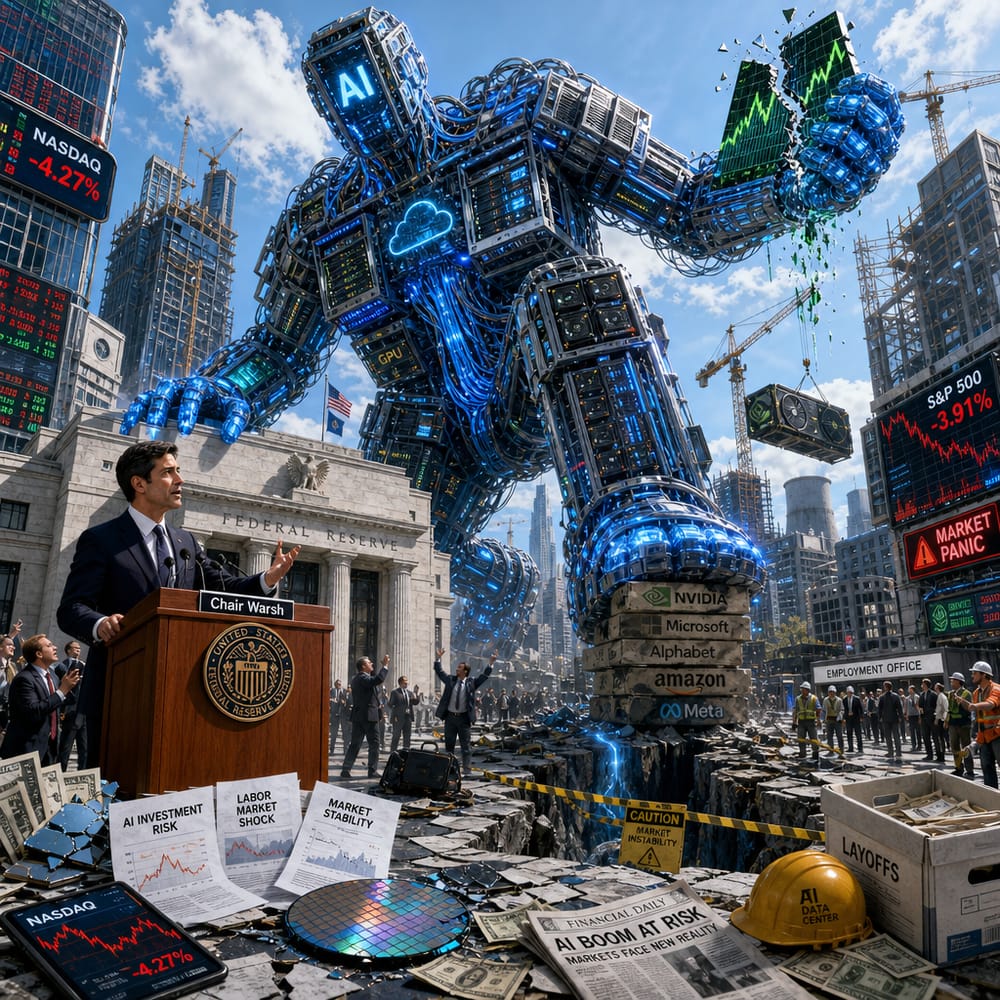
FED CHAIR WARS WARNS OF AI-DRIVEN ECONOMIC RISKS
If you thought AI was just a cool way to get your Netflix recommendations right or find your perfect match on a dating app, think again. The tech is racing ahead, and according to Federal Reserve Chairman Kevin Warsh, it might just be speeding towards a cliff. In a speech that had both Wall Street and Main Street perking up their ears, Warsh didn’t just tap the brakes on the AI hype train—he yanked the emergency stop cord.
AI has become the darling of investors, sucking in more capital than a black hole at a billionaire's convention. But Warsh's message is a simple one: proceed with caution, or you might just find yourself investing in the next dot-com bubble. His warning comes amid a backdrop of skyrocketing valuations and speculative bets on AI startups, reminiscent of the wild tech rides of the late '90s. So, what's the deal with AI possibly crashing the stock market and sending unemployment figures north?
THE RISKS LURKING BEHIND THE CODE
First, let's break down the risk. When Warsh talks about AI-driven economic risks, he's pointing to the massive amounts of money being shoveled into AI infrastructure and tech stocks. If AI growth were to slow — maybe due to overhyped expectations, technological bottlenecks, or even regulatory hurdles — the investors who bet their 401(k)s on these companies might find they were riding a unicorn that was actually a donkey with a party hat.
A slowdown could mean a tumble in stock prices. For retail investors, this means the tech stocks that have been the shining stars in their portfolios could dim significantly. CoreWeave, Nebius, and other so-called 'neocloud' companies have already seen their valuations take a hit amidst the Nvidia scandal, which was another red flag for Warsh. If AI's momentum hiccups, the shockwaves could ripple through the market and possibly lead to broader financial instability.
THE STOCK MARKET'S DELICATE AI DANCE
The stock market is like a high-stakes poker game, and AI stocks are the wild cards. The tantalizing potential of AI has driven tech stocks to dizzying heights. But, as with any bubble, all it takes is one sharp pin to burst it. If AI growth doesn't deliver as expected, you might find those wild cards turning into jokers.
Here's where the rubber meets the road: sectors most vulnerable to this AI-induced volatility include tech companies deeply tied to AI infrastructures, such as chipmakers and data center firms. Nvidia’s recent drama and stock tumble act as a cautionary tale. As AI companies navigate scandals and regulatory scrutiny, sectors like cloud computing and data management—once thought invincible—could face the music.
NAVIGATING THE VOLATILE AI SEAS
So, what’s a retail investor to do? How can you protect your nest egg in such a fast-paced, speculative environment? First, diversification is your friend. Don't put all your eggs in the AI basket, even if it looks like the goose that laid the golden egg. Balance your investments across different sectors to buffer against an AI market slowdown.
Moreover, keep an eye on the broader economic indicators. With potential interest rate hikes lurking and inflation still a talking point, the market is already jittery. Consider defensive stocks—those in sectors less tied to economic cycles, like utilities or consumer staples—as a hedge. They might not offer the thrill of a tech stock, but they can steady your ship when the seas get rough.
And while diving into AI stocks might be tempting, digging into each company's fundamentals is crucial. Look for companies with solid balance sheets and sustainable business models. Betting on the next big AI breakthrough is a gamble, but investing in a well-managed company is a calculated risk.
THE BOTTOM LINE
AI is not just an insatiable buzzword; it’s a driver of modern market trends. But as Warsh warns, it’s also a potential harbinger of financial instability if its growth plateaus. As retail investors, staying informed and adapting to changing tides isn't just smart—it's essential.
Remember, AI will shape our world in ways we can't yet fully imagine. But before you go all in, make sure you’ve got a strategy to weather any storms AI might bring. Investing isn’t just about the potential highs; it’s about preparing for the potential lows, too. Stay savvy, stay diversified, and keep your eyes wide open.
This article is for informational purposes only and is not investment advice. Always do your own research or consult a licensed financial professional before making investment decisions.
© Copyright 2024. All Rights Reserved.
© Copyright 2024. All Rights Reserved.