

Fed Chair Warsh Signals Possible Rate Hikes Amid Lingering Inflation
Friday, August 28, 2026
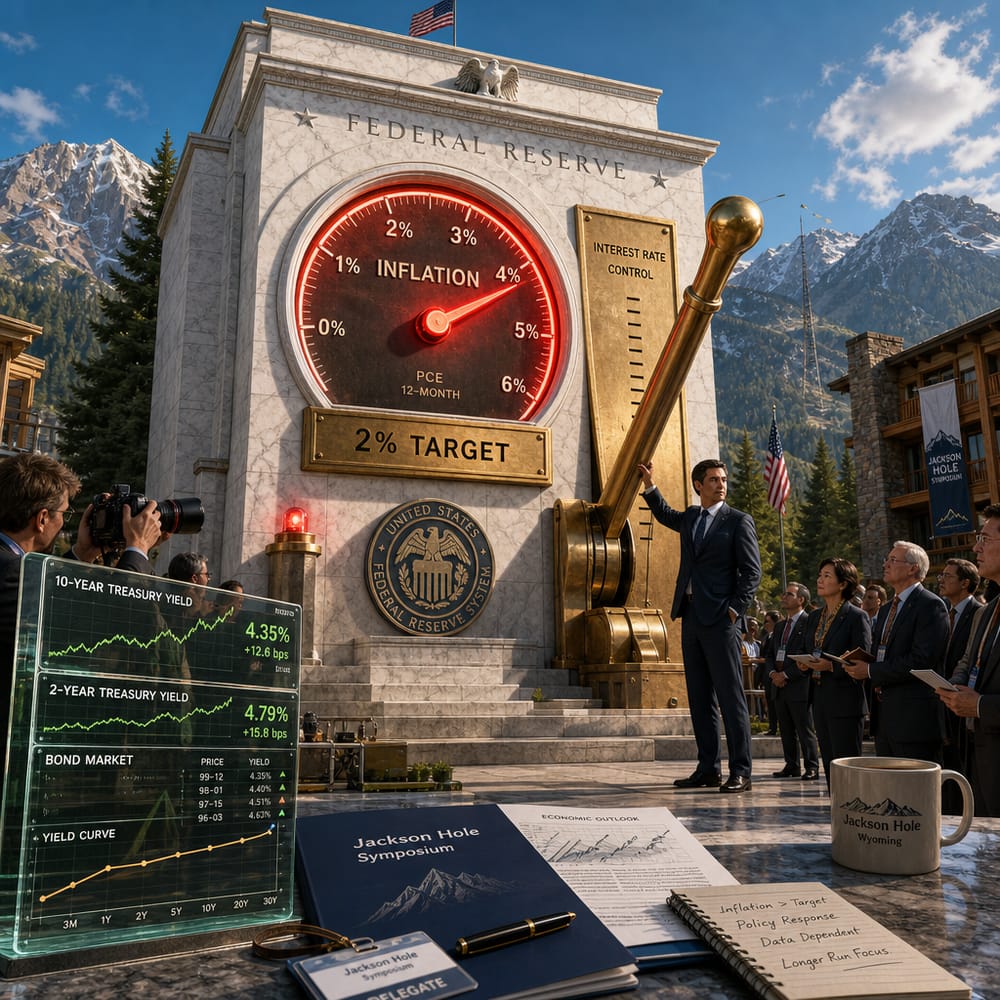
FED CHAIR WARSH SIGNALS POSSIBLE RATE HIKES AMID LINGERING INFLATION
Hold onto your wallets, folks, because Federal Reserve Chairman Kevin Warsh just dropped a bombshell at the Jackson Hole symposium, and it's sending ripples through the financial world. Warsh, with his signature blend of gravitas and mystery, hinted that we might see more interest rate hikes if inflation doesn't play nice and start slinking toward that elusive 2% target. But before we dive into the nitty-gritty, let's unpack what this means for us mere mortals scrolling through our phones.
Warsh's keynote address in Jackson Hole was the financial equivalent of a cliffhanger episode on your favorite binge-worthy show. He left us hanging by not committing to any specific actions, but his message was clear: Inflation is still running hot, and the Fed has "work to do" if things don't improve. This was a classic Warsh move — emphasizing a 'quieter Fed' approach, which means less chatter and more action. But what does a 'quieter Fed' really mean for the economy and our bank accounts?
THE 'QUIETER FED' APPROACH
First things first, a 'quieter Fed' doesn't mean the Federal Reserve is going on a silent retreat. Instead, it's about dialing back the endless barrage of forward guidance — those cryptic hints and winks that usually precede a full-blown policy change. By keeping its cards close to the vest, the Fed aims to reduce market volatility and keep investors from spiraling into a frenzy every time a Fed official clears their throat in public.
The idea is to let the economic data do the talking. If inflation continues its upward tango, the Fed might crank up interest rates without the usual pomp and ceremony. This approach could bring a bit of sanity to the financial markets, where traders often react to every Fed whisper like it's the latest TikTok trend.
IMPACT ON THE ECONOMY AND MARKETS
Now, let's talk about what this means for the economy and, more importantly, your bottom line. If the Fed does decide to hike rates, borrowing costs for everything from mortgages to car loans could rise faster than a cat meme goes viral. That's because higher interest rates make it more expensive to borrow money, which can cool off spending and slow down the economy.
But before you panic and start stuffing your cash under the mattress, remember that the goal here is to curb inflation. By making borrowing more expensive, the Fed hopes to rein in spending and tamp down price increases, ultimately stabilizing the economy. It's a delicate dance, and Warsh is the DJ trying to keep everyone on beat.
For investors, Warsh's comments are a double-edged sword. On one hand, the prospect of higher interest rates could mean volatility in the stock market, especially for companies that rely heavily on borrowing. On the other hand, if inflation is tamed, it could set the stage for more sustainable economic growth, which is ultimately good news for everyone.
MARKET REACTIONS AND INVESTOR SENTIMENT
In the wake of Warsh's speech, the market reaction was a mixed bag. Stock market indexes remained relatively steady, but Treasury yields experienced a roller-coaster ride. The yield on the 2-year Treasury note spiked, indicating that investors are bracing for potential rate hikes. Meanwhile, the 30-year Treasury bond yield edged lower, reflecting some level of confidence that inflation might eventually cool off.
Investors are now left to grapple with the implications of Warsh's hawkish tone. Is it time to buckle up for more rate hikes? Or is this a clever bluff to keep inflation expectations in check? Only time will tell, but one thing's for certain: Warsh's message has injected a fresh dose of uncertainty into an already unpredictable market.
For the savvy investor, this is a time to tread carefully. Diversifying your portfolio and focusing on quality stocks that can weather economic turbulence might be the way to go. And if you're feeling particularly adventurous, keep an eye on those Treasury yields; they could offer some interesting opportunities in the short term.
In the end, Warsh's speech at Jackson Hole was a reminder that the Fed still holds significant sway over the economic landscape. As investors, it's crucial to stay informed, remain nimble, and be ready to adapt as the Fed charts its next course. Because in this ever-evolving financial drama, the only constant is change, and the Fed is the key player keeping us all guessing.
This article is for informational purposes only and is not investment advice. Always do your own research or consult a licensed financial professional before making investment decisions.
© Copyright 2024. All Rights Reserved.
© Copyright 2024. All Rights Reserved.