

Fed Chair Warsh's Jackson Hole Speech Sways Markets
Saturday, August 29, 2026
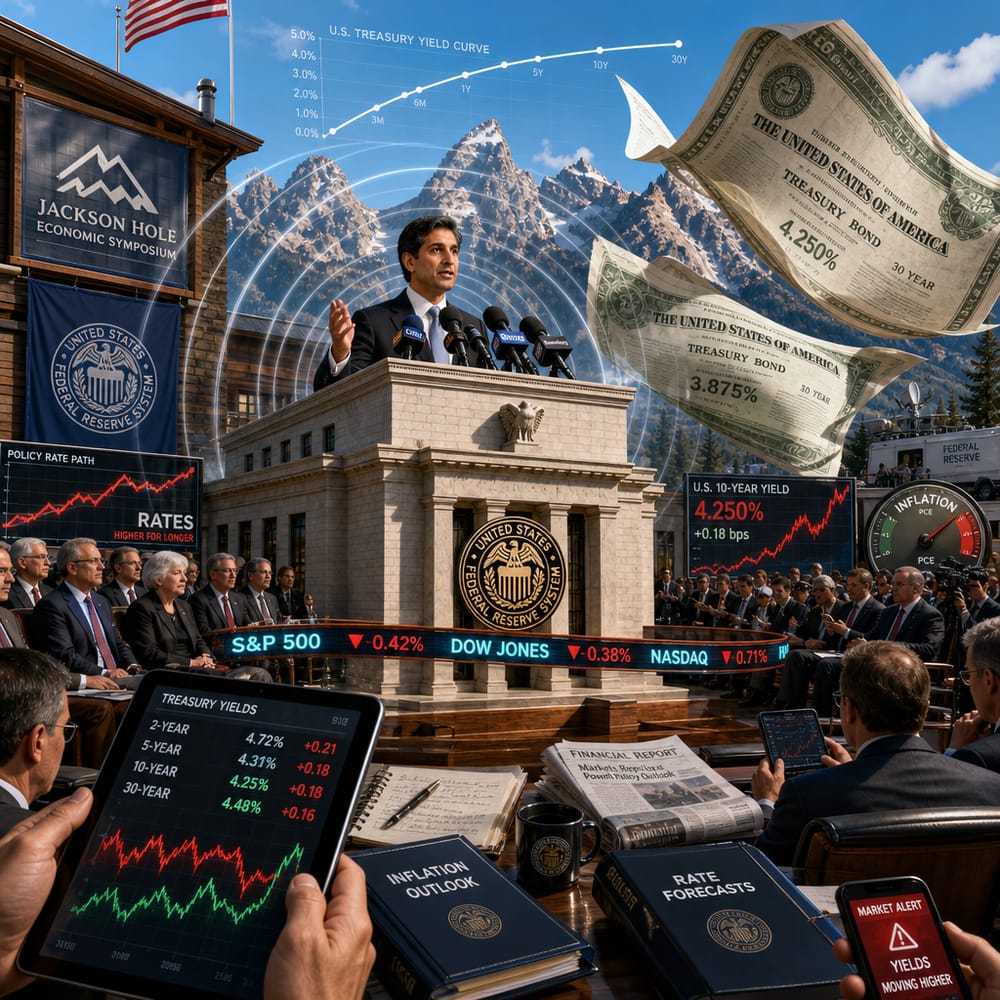
FED CHAIR WARSH'S JACKSON HOLE SPEECH SWAYS MARKETS
Like a seasoned conductor at a symphony, Federal Reserve Chair Kevin Warsh took to the stage at the Jackson Hole symposium, tuning the markets to the prospect of tighter monetary policies. But instead of harmonious applause, his remarks sent a tremor through the financial orchestra. Investors, clutch your spreadsheets—Warsh's signals of further rate hikes have put everyone on edge.
In a performance worthy of high drama, Warsh hinted that the Federal Reserve isn't done tightening the fiscal belt to stave off inflation, leaving investors in a tizzy. His speech, a masterclass in central banking theater, cleverly dodged direct rate hike announcements, yet managed to keep everyone guessing—and sweating. With inflation still in the "concerning" zone, the stage is set for more interest rate hikes. Now, what does that mean for our beloved markets?
In true Warsh fashion, he kept it coy, leaving traders to decode his cryptic messages. The bond market, ever sensitive to the Fed's whispers, reacted with the intensity of a caffeine junkie hearing the coffee pot percolate. Yields on U.S. Treasury bonds signaled their discontent, spiking in anticipation of more expensive money down the line. In layman's terms, higher interest rates generally mean a decline in bond prices, and boy did they take a hit.
Over in the equity markets, major indices played a subdued tune. The S&P 500, Dow, and Nasdaq saw modest declines—nothing earth-shattering, but enough to make traders glance nervously at their monitors. Stocks have always been the thrill-seekers of the financial world, but even they shiver at the thought of rate hikes making borrowing costlier and potentially slowing down economic growth. Investors are recalibrating their strategies, considering that money in your pocket might soon cost a penny more to borrow.
So, what is Warsh's endgame here? A steady diet of rate hikes might be the bitter medicine needed to cool an overheated economy. For the short-term, expect continued volatility in both bond and equity markets. Traders will be poring over every morsel of economic data, from job reports to inflation numbers, trying to second-guess the Fed's next move. The joyride of low rates might be entering its final laps.
In the long-term, the implications could be a double-edged sword. Higher rates aim to rein in inflation, ultimately protecting the value of your hard-earned dollars. But they also risk slowing economic growth, potentially taking the wind out of the sails of the current market rally. Investors might have to buckle up for a bumpier ride, with growth stocks potentially facing more headwinds compared to their value counterparts, which traditionally weather rate hikes better.
Yet, all hope is not lost. A level-headed approach to portfolio rebalancing could help soften the blows of an unpredictable market. Bonds might regain their allure, especially if higher yields make them more attractive compared to equities. It's all about playing the long game, folks.
Warsh's speech is a reminder that economic policies are a tightrope walk, with careful balance needed to avoid a stumble. As the markets hang on every word from the Fed, retail investors should keep their ears peeled and their portfolios diversified. Because in the symphony of the markets, it's not just about keeping tune—it's about improvising when the conductor changes the score.
In the end, while Warsh kept the exact rate hike playbook under wraps, his performance was enough to keep markets, and investors, on their toes. So, as we ride this rollercoaster, strap in and get ready to navigate the twists and turns of evolving monetary policy. After all, in the world of investing, fortune favors the prepared mind.
This article is for informational purposes only and is not investment advice. Always do your own research or consult a licensed financial professional before making investment decisions.
© Copyright 2024. All Rights Reserved.
© Copyright 2024. All Rights Reserved.