

Fed Chair Warsh’s Jackson Hole Remarks Spark Late-Week Market Pullback
Sunday, August 30, 2026
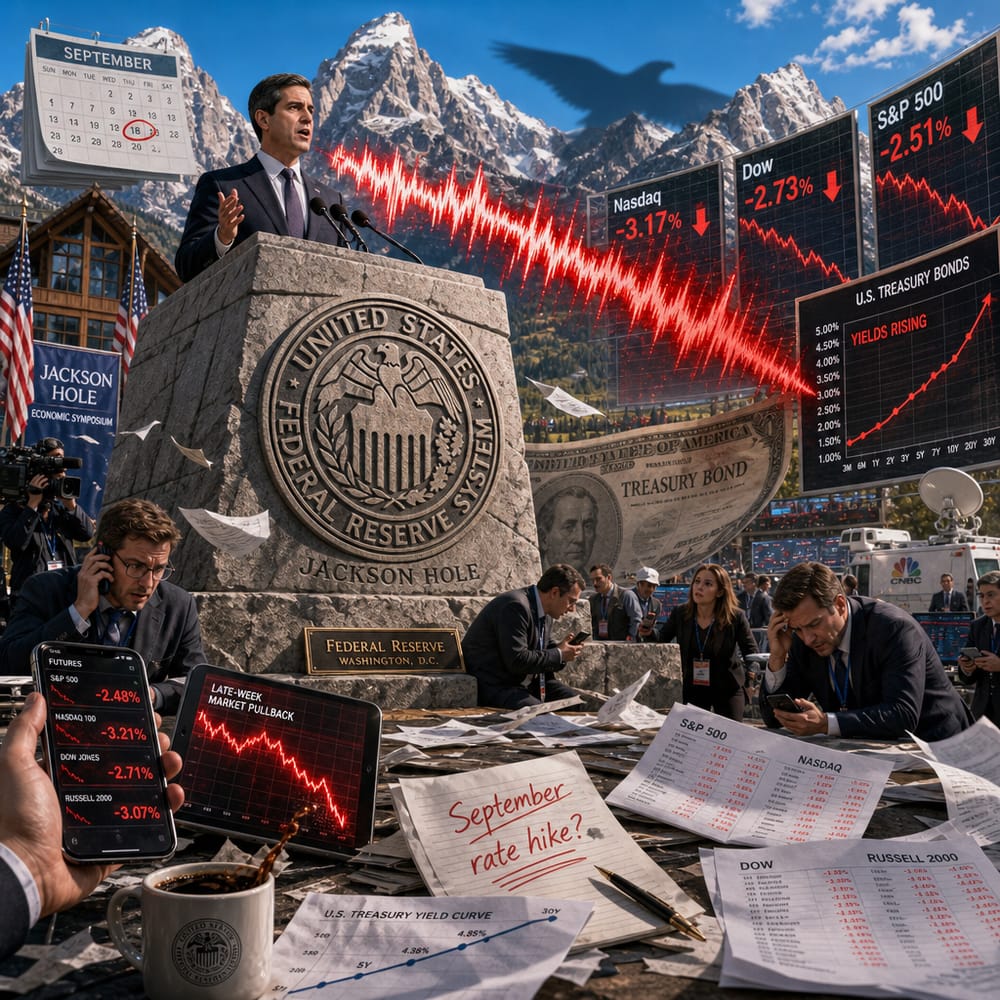
When Fed Chair Kevin Warsh took the stage at the Jackson Hole symposium, he didn’t need a crystal ball to set markets on edge. His hawkish quip about inflation being "concerning" was more than enough to spark a late-week market pullback. Investors, holding their breath for the Fed's next move, saw the fog of uncertainty grow even thicker with his reticent stance on future rate hikes.
The S&P 500, Nasdaq, Dow, and Russell 2000 all took a dive as if they were synchronized in their descent. Meanwhile, U.S. Treasury bonds seemed to chuckle in the corner, with yields nudging upward and investors scrambling for safety. Kevin Warsh, it seems, has once again stirred the pot — and just in time for pumpkin spice season.
So, what’s the deal with this potential September rate hike that’s making Wall Street break into a cold sweat? Let’s brew up some clarity.
THE IMPACT OF A RATE HIKE
Picture this: Jerome Powell’s regime ushered in a decade of low-interest nirvana, where money was cheap, and stocks thrived like it was an endless summer. However, if Warsh's hawkish tone translates into action, those golden days could start feeling a bit like autumn — beautiful but chilly.
A rate hike, for the uninitiated, means the cost of borrowing money is going up. Mortgages, car loans, and business credits would all become more expensive. And when money isn’t as easy to come by, consumers and businesses tighten their belts. The ripple effect? A dampened economic pace and potential hiccups in corporate earnings. That's a recipe for stock market volatility, right there.
EQUITY MARKETS: BULLS VERSUS BEARS
For equity markets, Warsh’s stance is akin to a flashing neon sign saying, "Uncertainty ahead." The growth-loving technology sector, represented by the Nasdaq, felt the tremors immediately. These companies often rely on cheaper borrowing to fuel their innovation engines. With higher rates, the cost-benefit scales might tip unexpectedly, leaving investors twitchy.
Similarly, small-cap stocks, encapsulated in the Russell 2000, are particularly sensitive. Many of these smaller firms rely on debt to expand. A rate hike could press pause on their growth plans, causing investors to rethink their positions.
On the flip side, not all sectors shrink in fear. Financials, like the big banks in the S&P 500, might find their profits getting a gentle nudge upward. They typically thrive on the spread between what they earn from loans and what they pay on deposits, a spread that widens with higher rates.
THE BOND MARKET'S SMIRK
Switching gears to bonds, where old-school investors have been saying, "I told you so," for a while now. The bond market has been bracing for this scenario; yields have been quietly creeping up as if to say, "Welcome back to reality."
When rates rise, new bonds are issued at these higher yields, and older bonds with lower yields become less attractive. This dynamic reduces the price of existing bonds, meaning their prices drop. For bondholders, this pullback in price can sting, but for new buyers, the higher yields are a sweet incentive.
SECTOR SHAKE-UP
Every sector, every stock, and every bond will have its unique dance in the Fed’s interest rate ballet. So, who’s the wallflower, and who’s the star? Tech might be clutching their chest in dramatic fashion, while financials could be practicing their best dance moves.
Utilities and consumer staples — those reliable, dividend-paying sectors — might turn into your portfolio’s comfort food. They tend to weather economic storms better, offering stable returns when volatility is the name of the game.
As for investors? It’s time to put on those analyst hats and keep an eye on Fed signals like a hawk. Warsh’s reticence might have left us squinting into the future, but savvy investors know that opportunity often hides in uncertainty.
A SIGN OF THE TIMES
Warsh’s remarks are more than just a jolt to the market; they’re a sign of shifting tides. The Fed’s stance on interest rates is undeniably influential, shaking markets like a snow globe, with investors watching the flakes settle wherever they may.
For the everyday investor scrolling through their phone, the key takeaway is to stay informed and proactive. Whether you're a stock market maven or a bond enthusiast, the coming months could offer both opportunities and pitfalls. In an era of rising rates, the prudent investor will have a plan for both.
So, what’s the final word? Keep your coffee strong, your portfolio diversified, and your eye on the Fed — because the seasons may change, but the market's dance with interest rates is eternal.
This article is for informational purposes only and is not investment advice. Always do your own research or consult a licensed financial professional before making investment decisions.
© Copyright 2024. All Rights Reserved.
© Copyright 2024. All Rights Reserved.