

Fed Chair Warsh’s Jackson Hole Remarks Keep Dollar Firmer, Caps Action on EUR/USD
Monday, August 31, 2026
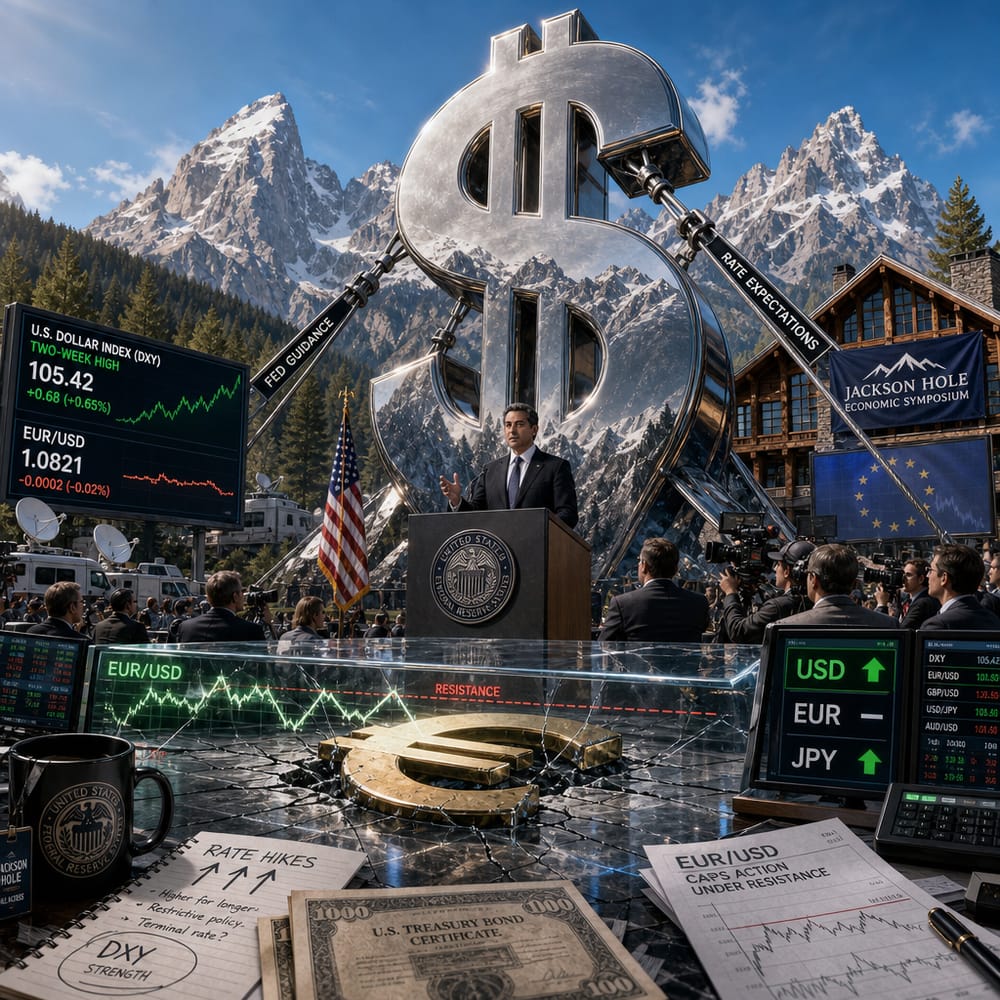
FED CHAIR WARSH'S JACKSON HOLE REMARKS KEEP DOLLAR FIRMER, CAPS ACTION ON EUR/USD
In the world of high finance, words are like gold, especially when they come from the mouth of the U.S. Federal Reserve Chair. With a few well-chosen phrases, Fed Chair Kevin Warsh turned the Jackson Hole Economic Symposium into his personal stage, reinforcing expectations for more U.S. rate hikes. The result? The U.S. dollar strutted to a near two-week high like it just won the central bank lottery, while the euro found itself stuck in the mud, trying desperately to inch forward.
So, what’s the big deal about Warsh’s hawkish chat? Well, imagine being in a seesaw battle between the U.S. dollar and the euro. Every time Warsh nods towards rate hikes, it’s like he’s handing the dollar a 20-pound dumbbell to crush the euro's hopes of climbing higher. This tug-of-war is what traders refer to as the EUR/USD dynamics, and boy, are they dynamic right now.
The dollar’s recent sprint can largely be attributed to Warsh’s speech which had the markets pulling out their rate hike bingo cards to see what’s next. When the Fed hints at higher interest rates, it’s like playing a financial version of the Pied Piper—investors can’t resist the allure of better returns in the Dollar Kingdom, away from the lower-yielding euro. Naturally, this pushes the EUR/USD exchange rate down, leaving the euro gasping for breath.
But let’s not forget our old friend across the pond: the European Central Bank (ECB). Now, the ECB could just sit there, twiddling its thumbs, but with the euro struggling, it’s probably time for some action. The ECB has tools in its financial toolkit—it could tweak its interest rates or unleash some unconventional monetary policy magic tricks to keep the euro from becoming the laughing stock of the currency world. However, the ECB’s already been in a bit of a pickle with inflation, so its options are limited if it wants to steer clear of stoking those flames.
Here’s the kicker: as U.S. interest rates rise, borrowing costs for everyone, from big companies to your average Joe looking for a mortgage, shoot up like fireworks on the Fourth of July. Meanwhile, the U.S. Dollar Index (a measure of the dollar’s strength against a basket of other currencies) also gets a boost, adding extra swagger to the dollar’s step. This means imported goods become cheaper for American consumers—a shopping spree waiting to happen, courtesy of Mr. Warsh.
However, let’s not paint the dollar as the hero of this story. Strength has its downsides. A robust dollar could spell trouble for U.S. exporters, making American goods pricier on the global stage. And while the eurozone wrestles with its own set of challenges—like trying to keep its economic engine humming—the strong dollar could add a few more weights to that already heavy load.
So, what’s next in this riveting episode of “As the Currency Turns”? Investors are like hawks now, eyes peeled for any tidbits from the Fed about future rate hikes. Meanwhile, all this hawkish stuff is keeping things interesting for the EUR/USD pair, which appears to be caught in a tight range, struggling to break free.
For retail investors, it’s a classic case of “Watch this space.” Rising U.S. interest rates might mean keeping an eye on those dollar-heavy investments, and if you’re dabbling in the forex market, the EUR/USD exchange rate could be your playground. But remember, central banks are like poker players—always holding some cards close to their vests. They’ve got to weigh their moves carefully to avoid crashing the economic party.
In this ever-volatile currency tango, the Fed’s stance has bolstered the dollar, stifling the euro’s comeback attempt. As Warsh’s comments continue to echo through the financial halls, traders and economists are left to ponder: How will the ECB respond? Will the euro rise to the challenge or be left to play catch-up in this wild monetary game? Only time, and possibly a few more speeches, will tell.
This article is for informational purposes only and is not investment advice. Always do your own research or consult a licensed financial professional before making investment decisions.
© Copyright 2024. All Rights Reserved.
© Copyright 2024. All Rights Reserved.