

Fed Chair Warsh's Jackson Hole Remarks Fuel Market Caution
Saturday, August 29, 2026
FED CHAIR WARSH'S JACKSON HOLE REMARKS FUEL MARKET CAUTION
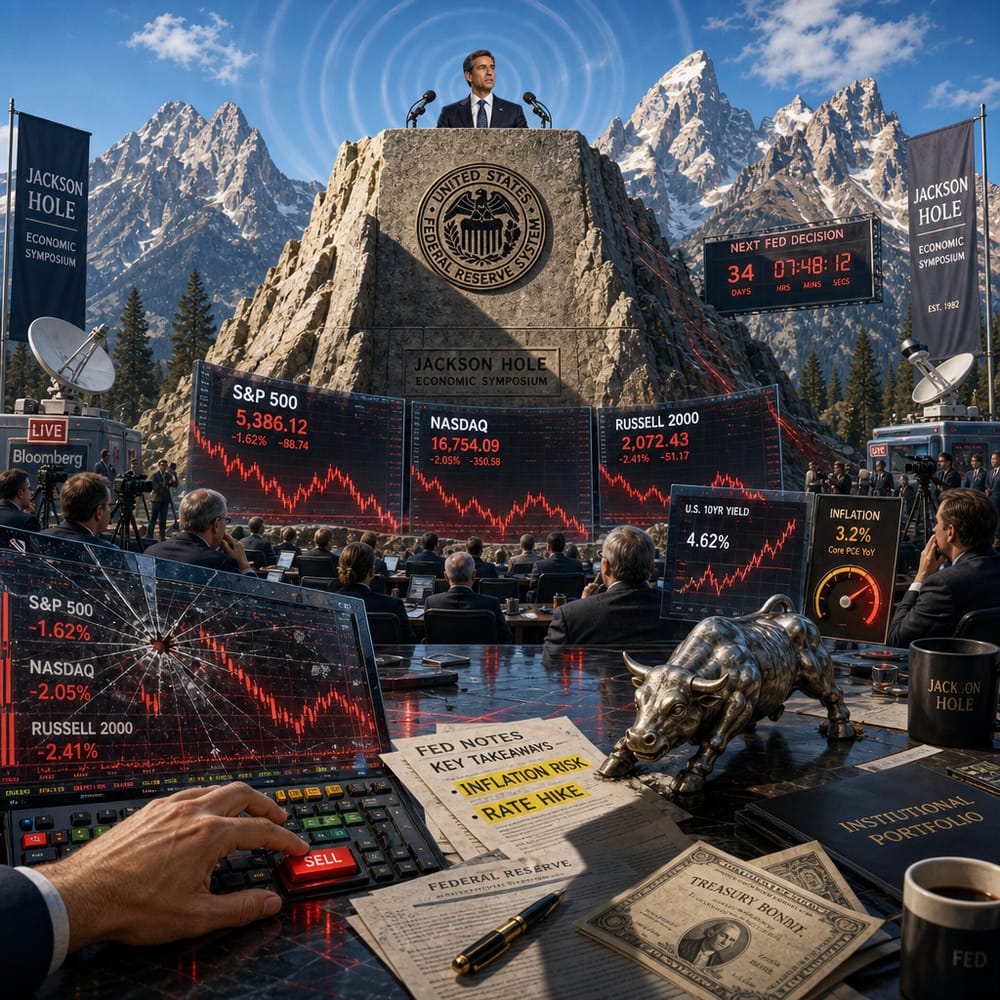
Think of Fed Chair Kevin Warsh’s latest comments as the financial equivalent of yelling “fire” in a crowded theater. Markets were already on edge, but those Jackson Hole remarks have triggered a fresh wave of jitters among investors. The S&P 500 and Nasdaq didn't just flinch; they stumbled, reflecting an intensified caution that’s become the norm in today’s volatile economic environment.
Now let’s unpack the drama. At the Jackson Hole Economic Symposium — an event that might sound like a snooze but is actually the Super Bowl of central banking — Warsh did something unexpected. He played it cool on interest rates, a move akin to a magician not revealing their best trick. But before you think Warsh left investors hanging, he doubled down on inflation concerns, a maneuver that left traders with more questions than answers.
The Fed Chair’s comments have a knack for stirring the market pot. When Warsh admits that inflation is more concerning than a surprise party at a toddler’s nap time, you can bet investors will react. It’s not just about what he says; it’s about what he doesn’t say. Warsh’s decision to keep mum on the Fed’s rate trajectory means investors are left with a guessing game. And if there's anything markets hate more than bad news, it's uncertainty.
WHY FED CHATTER MATTERS
Federal Reserve communication, or “Fed speak,” is like the market’s secret code. A single word can shift billions in stock values faster than you can say “rate hike.” When the Fed Chair talks, everyone from hedge fund managers to day traders leans in. The reason? The Fed’s stance on interest rates shapes everything from mortgage rates to the cost of borrowing for businesses. In short, it’s the puppet master pulling the financial strings.
High interest rates can cool down inflation faster than a bucket of ice water, but they also make borrowing more expensive. This can slow down economic growth, hit corporate profits, and send stock prices slipping. While Warsh didn’t explicitly signal a hike, his inflation talk has investors bracing for the possibility of tighter monetary policy. And brace they did—hence the market’s knee-jerk reaction.
SECTOR SHAKE-UP
So, who gets hit hardest when rate hikes loom? Spoiler alert: Tech stocks often take the brunt. Companies in the tech sector, which have thrived on cheap borrowing, could feel the pinch if borrowing costs rise. The Nasdaq, a tech-heavy index, has been feeling the heat, with investors cautious about future earnings growth.
On the flip side, financial stocks might just dust off their party hats. Higher interest rates can boost banks’ profit margins on loans, making finance one of the few sectors that can actually cheer on a rate hike. So while tech stocks might sweat, banks could be lining up for a victory lap.
WHAT'S NEXT?
Warsh’s comments have left a trail of breadcrumbs, and investors are eagerly trying to follow the path. The key question: Will the Fed press the rate hike button, or is this just a warning shot? As investors try to read between the lines, they’ll keep an eye on upcoming economic data, such as employment rates and consumer spending. These reports could either confirm the market's fears or offer a sigh of relief.
In this chaotic dance of rates and inflation, one thing is clear: Fed communications will remain a powerful force in shaping market sentiment. As for investors, the best strategy might be to buckle up and brace for the ride. Uncertainty may be the order of the day, but for those who can navigate these choppy waters, there could be opportunities lurking beneath the surface.
So if you’re scrolling through your portfolio with sweaty palms, take a deep breath. Keep your eyes on the Fed, be ready to pivot as needed, and remember: In the world of investing, even uncertainty can be a powerful tool in the hands of the savvy.
This article is for informational purposes only and is not investment advice. Always do your own research or consult a licensed financial professional before making investment decisions.
© Copyright 2024. All Rights Reserved.
© Copyright 2024. All Rights Reserved.